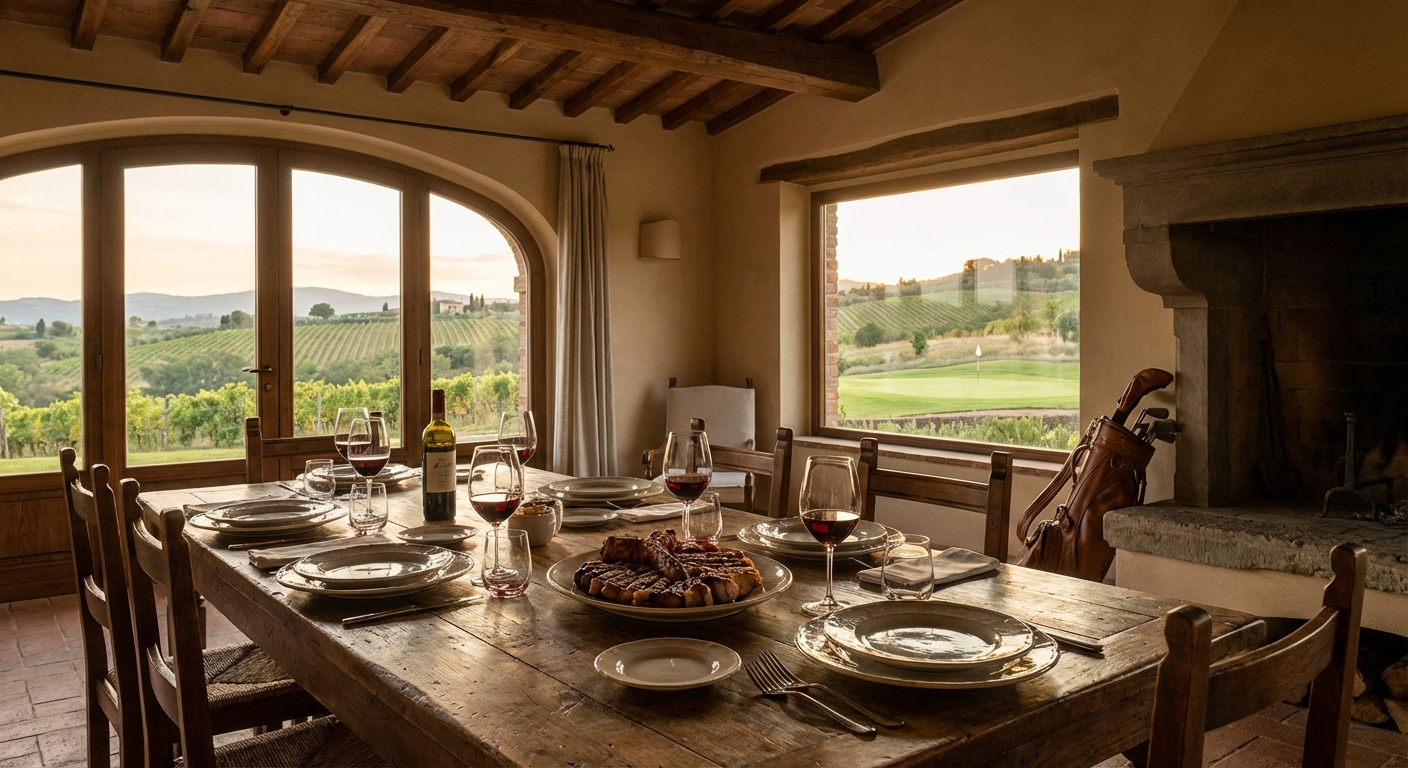
Traditional Tuscan Steakhouses Every Golfer Must Experience
After a challenging round on Tuscany’s rolling fairways, nothing satisfies quite like a perfectly grilled bistecca alla fiorentina. This isn’t just steak. It’s a culinary ritual that’s been perfected over centuries in trattorias where locals still argue about proper cooking times and the ideal thickness of the cut. For golfers planning their Tuscan adventure, knowing where to find the region’s best steakhouses transforms a good holiday into an unforgettable one.
Tuscany’s finest steakhouses combine centuries-old traditions with exceptional local beef, particularly [Chianina cattle](https://en.wikipedia.org/wiki/Chianina). The best establishments serve bistecca alla fiorentina weighing at least 1.2 kilograms, grilled rare over wood coals, and priced by weight. Reservations are essential at renowned spots like Perseus and Dario Cecchini, especially during peak golf season from April through October. Most steakhouses cluster around Florence, Chianti, and southern Tuscany near premier golf courses.
Understanding Bistecca alla Fiorentina Before You Order
The Florentine steak isn’t just any cut of beef.
It’s a T-bone or porterhouse from Chianina cattle, an ancient Tuscan breed known for lean, flavourful meat. The steak must be at least three fingers thick, typically weighing between 1.2 and 1.5 kilograms. Proper preparation requires cooking over chestnut or oak coals, seasoned only with salt, pepper, and perhaps a drizzle of quality olive oil after grilling.
The cooking style is non-negotiable at traditional establishments. The steak arrives rare, with a charred exterior and deep red centre. Asking for well-done will earn you confused looks or outright refusal at the best places.
Many golfers make the mistake of ordering one steak per person. A proper bistecca serves two to three people comfortably. Pair it with simple sides like cannellini beans or roasted potatoes. The meat is the star.
“A true bistecca alla fiorentina should be so tender you can cut it with a fork, yet have enough char to give you that smoky flavour that reminds you of Tuscan hillsides.” – Marco Stagi, third-generation butcher
Florence’s Essential Steakhouse Circuit
Florence holds the highest concentration of exceptional steakhouses in Tuscany.
Perseus stands out as a favourite among locals and visiting golfers alike. Located in San Frediano, this family-run trattoria has perfected the art since 1958. Their bistecca comes from carefully selected Chianina cattle, grilled to perfection over wood coals. The atmosphere feels authentically Florentine, with marble-topped tables and walls covered in vintage photographs.
Reservations are absolutely necessary. Call at least three days ahead during spring and autumn.
Trattoria dall’Oste offers another stellar option near the Oltrarno district. The Chianina beef here is exceptional, and the wine list features outstanding Chianti Classico selections. After playing best golf courses near Florence for combining culture with your game, this makes an ideal stop.
Buca Mario has operated since 1886 in a historic cellar near Piazza Santa Maria Novella. The vaulted brick ceilings and traditional Tuscan décor create an atmosphere that transports you back generations. Their bistecca weighs in at a generous 1.3 kilograms minimum, and they refuse to serve it anything beyond rare.
The restaurant fills up early. Arrive by 7:30 PM or book well ahead.
All’Antico Ristoro di’ Cambi in Santo Spirito serves what many consider Florence’s best value bistecca. The portions are massive, the prices reasonable by Florentine standards, and the quality rivals more expensive establishments. The trattoria maintains a no-frills approach that focuses entirely on exceptional meat and simple preparation.
Chianti’s Legendary Butcher and His Restaurants
No discussion of the best steakhouses in Tuscany is complete without Dario Cecchini.
This eighth-generation butcher in Panzano operates three distinct dining experiences, each offering a different take on Tuscan beef. His philosophy centres on using every part of the animal with respect and creativity.
Officina della Bistecca serves the classic bistecca alla fiorentina in a convivial, communal setting. Diners share long tables, pass wine bottles, and engage in the kind of spirited conversation that makes Italian dining memorable. The fixed-price menu includes the legendary steak plus antipasti, sides, and wine.
Reservations open exactly one month in advance. Set a reminder.
Solociccia takes a different approach, celebrating every cut except the bistecca. This restaurant showcases Cecchini’s belief that a cow offers far more than just the prized T-bone. The tasting menu features eight different preparations, from tartare to slow-cooked ribs.
Mac Dario offers Cecchini’s playful take on the hamburger, using premium Chianina beef ground fresh daily. While not traditional bistecca, it demonstrates his versatility and commitment to quality at every price point.
The butcher shop itself opens during the day, where Cecchini often performs impromptu recitations of Dante whilst preparing cuts. It’s theatre and tradition combined.
Southern Tuscany’s Hidden Steakhouse Treasures
The Maremma region and southern Tuscany offer exceptional steakhouses often overlooked by tourists.
Il Tufo Allegro in Pitigliano serves outstanding bistecca in a medieval setting carved into tufa stone. The restaurant sources beef from local farms and pairs steaks with wines from nearby Morellino di Scansano producers. After playing hidden gem golf courses in southern Tuscany away from tourist crowds, this makes a perfect evening destination.
The views over the Tuscan countryside are spectacular at sunset.
Osteria del Vecchio Castello in Montemerano combines Michelin-quality preparation with traditional recipes. Their bistecca comes from certified Chianina cattle, and the chef adds subtle touches that enhance rather than mask the beef’s natural flavour. The wine cellar holds over 400 labels, with particular strength in local Morellino and Brunello selections.
La Pieve near Saturnia offers an unexpected gem. This family-run establishment focuses on simple, perfect execution. The bistecca arrives exactly as it should, the sides showcase seasonal vegetables from their garden, and the prices remain remarkably fair for the quality delivered.
How to Order Like a Local at Tuscan Steakhouses
Ordering properly ensures you get the best experience and value.
- Ask about the beef’s origin and age. Quality establishments proudly share this information.
- Confirm the weight before ordering. Bistecca is priced per etto (100 grams), typically ranging from €4 to €7 depending on the restaurant.
- Request your preferred weight if dining as a couple. Most restaurants will cut a steak to your specifications.
- Accept the rare preparation. This is how bistecca is meant to be enjoyed.
- Order sides separately. They’re not included with the steak.
- Request house wine or ask for local recommendations. The sommelier knows what pairs best.
Many steakhouses display their raw cuts before cooking. Don’t hesitate to inspect your steak beforehand. This is expected and welcomed.
Common Mistakes That Ruin the Bistecca Experience
Even experienced travellers make errors that diminish their steakhouse meal.
| Mistake | Why It Matters | Better Approach |
|---|---|---|
| Ordering individual steaks | Wasteful and expensive | Share one large bistecca between two or three people |
| Requesting well-done | Ruins the meat’s texture and flavour | Trust the traditional rare preparation |
| Skipping reservations | Miss out on the best restaurants entirely | Book 3-7 days ahead, more during peak season |
| Ordering too many starters | No room left for the main event | Limit antipasti to one or two simple dishes |
| Choosing tourist-area restaurants | Lower quality, higher prices | Walk 10-15 minutes from major attractions |
| Ignoring the wine list | Missing perfect pairings | Ask for local Chianti or Brunello recommendations |
The biggest mistake is treating bistecca like a regular steak dinner. This is a cultural experience that deserves time and attention.
Pairing Your Steak with Tuscan Wines
The right wine elevates an already exceptional meal.
Chianti Classico represents the traditional pairing, with its bright acidity cutting through the beef’s richness. Look for Riserva designations from producers like Fontodi, Castello di Volpaia, or Isole e Olena.
Brunello di Montalcino offers more structure and complexity. The wine’s tannins complement the charred exterior beautifully. This pairing works especially well with larger, fattier cuts.
Super Tuscans like Sassicaia or Tignanello provide international-style options with bold fruit and oak influence. Some prefer these modern wines, though purists stick with traditional Sangiovese-based options.
For those staying at 5 Tuscan resorts that perfectly blend championship golf with spa luxury, many properties offer wine-pairing dinners featuring local steakhouses.
House wine at quality trattorias often surprises visitors with its quality. Don’t dismiss the vino della casa served in simple carafes. Many restaurants source from small producers who don’t bottle commercially.
Steakhouses Near Major Tuscan Golf Courses
Strategic planning allows you to combine excellent golf with outstanding dining.
Near Ugolino Golf Club: Perseus and Trattoria dall’Oste both sit within 15 minutes of this historic Florence course. The combination of challenging golf and exceptional bistecca makes for a perfect day.
Chianti Region Courses: After playing how Tuscan vineyard golf courses combine wine country charm with exceptional play, head to Dario Cecchini’s establishments in Panzano. The drive through wine country takes 20-30 minutes from most Chianti courses.
Southern Tuscany Layouts: Il Tufo Allegro and La Pieve near Saturnia serve golfers playing Terme di Saturnia Golf Club. Both restaurants sit within 10 kilometres of the course.
Maremma Coastal Courses: Osteria del Vecchio Castello in Montemerano provides an excellent option after rounds at Argentario or Punta Ala. The 30-minute drive rewards you with some of southern Tuscany’s finest beef.
Planning your ultimate Tuscany golf and wine tour itinerary for couples becomes easier when you know which steakhouses sit near which courses.
Seasonal Considerations for Steakhouse Dining
Timing affects both availability and experience quality.
Spring (April-May) and autumn (September-October) represent peak seasons. Restaurants fill quickly, especially on weekends. Book at least a week ahead during these months. The weather is perfect for outdoor seating where available.
Summer brings tourists and heat. Many Florentines leave the city in August, and some traditional trattorias close for annual holidays. Call ahead to confirm opening times. Evening temperatures make dining more comfortable than midday meals.
Winter offers the most authentic experience. Fewer tourists mean easier reservations and more interaction with regular customers. The cooler weather makes hearty bistecca even more appealing. Some restaurants offer special winter menus featuring braised beef dishes alongside traditional grilled options.
Late autumn through winter also coincides with truffle season. Several steakhouses offer special preparations incorporating white truffles from San Miniato or black truffles from local forests.
Budget Expectations and Value Considerations
Understanding costs helps avoid surprises when the bill arrives.
A proper bistecca alla fiorentina typically costs between €50 and €90 depending on weight and restaurant. This feeds two to three people comfortably. Add €10-15 per person for sides, €20-40 for wine, and €5-8 for cover charge and service.
Budget €40-60 per person for a complete bistecca dinner at quality establishments. Tourist-focused restaurants charge more for lesser quality. The best value comes from neighbourhood trattorias frequented by locals.
Several factors affect pricing:
- Certified Chianina beef costs more than generic Tuscan beef
- Central Florence locations charge premium prices
- Restaurants with extensive wine cellars have higher markups
- Establishments near major tourist sites inflate costs
The investment is worthwhile at proper steakhouses. You’re paying for heritage breeds, traditional preparation methods, and decades of expertise.
Making Reservations Without Speaking Italian
Language barriers shouldn’t prevent you from securing tables.
Most established steakhouses now accept email reservations in English. Send requests 5-7 days ahead stating your preferred date, time, and party size. Include your phone number for confirmation.
Several restaurants use online booking platforms like TheFork or OpenTable. These systems handle everything in English and provide instant confirmation.
For phone reservations, learn these key phrases:
- “Vorrei prenotare un tavolo” (I’d like to book a table)
- “Per due persone” (For two people)
- “Alle otto di sera” (At eight in the evening)
Hotel concierges provide invaluable assistance. They know which restaurants require connections and can secure tables that might otherwise be unavailable. This service particularly helps at exclusive establishments or during peak periods.
What to Order Beyond the Bistecca
While steak is the main attraction, other dishes deserve attention.
Start with crostini di fegato, chicken liver pâté on toasted bread. This classic Tuscan appetiser pairs beautifully with wine whilst you wait for the main course.
Panzanella offers a refreshing summer option, combining day-old bread with tomatoes, onions, and basil in a simple vinaigrette. The dish showcases Tuscan resourcefulness and seasonal eating.
Fagioli all’uccelletto (cannellini beans with tomato and sage) provides the traditional bistecca accompaniment. The beans’ creaminess balances the meat’s intensity.
Patate arrosto (roasted potatoes) with rosemary and garlic offer another classic side. Simple preparation lets quality ingredients shine.
For dessert, cantucci con vin santo (almond biscuits with sweet wine) provides a light finish after a substantial meal. Dip the crunchy biscuits in the wine and savour the combination.
Understanding the Steakhouse Atmosphere and Etiquette
Traditional Tuscan trattorias operate differently than formal restaurants.
Expect communal seating at some establishments. Sharing tables with strangers is common and encouraged. This creates opportunities for conversation and cultural exchange. Embrace the experience rather than requesting private seating.
Service moves at a leisurely pace. Meals last two to three hours. Servers won’t rush you or bring the bill until requested. This reflects Italian dining culture, where meals are social events.
Dress codes remain casual at most steakhouses. Clean, presentable attire suffices. You’ll see everything from golf shirts to business casual. Avoid beachwear or athletic clothing.
Tipping practices differ from Anglo-American customs. A coperto (cover charge) of €2-4 per person appears on every bill. This covers bread and table service. Additional tips of 5-10% are appreciated for exceptional service but not mandatory.
Cash is still preferred at many traditional establishments, though credit cards are increasingly accepted. Confirm payment methods when booking.
Where Golf and Gastronomy Intersect
The connection between golf and exceptional dining runs deep in Tuscany.
Many golf resorts maintain relationships with nearby steakhouses, offering transportation or priority reservations. Ask your concierge about these arrangements when planning your first golf holiday in Tuscany.
Some courses host special dinner events at partner restaurants. These occasions combine golf tournaments with traditional Tuscan feasts, creating memorable experiences beyond the fairways.
The leisurely pace of Italian dining complements golf’s rhythm. Both activities reward patience, technique, and appreciation for tradition. Both offer opportunities to disconnect from daily stress and focus on simple pleasures.
Several steakhouses display golf memorabilia or attract regular golf crowds. You’ll often find yourself discussing course conditions or sharing recommendations with fellow diners who’ve just finished their rounds.
Making the Most of Your Steakhouse Experience
Preparation enhances enjoyment and ensures nothing gets lost in translation.
- Arrive hungry. Skip lunch or eat lightly if you have an evening reservation.
- Research the restaurant’s history beforehand. Understanding the tradition adds depth to the experience.
- Ask questions. Passionate owners and servers love sharing knowledge about their craft.
- Take your time. Rushing through bistecca misses the point entirely.
- Engage with other diners. Some of the best travel memories come from unexpected conversations.
- Order the house specialities. Chefs take pride in their signature preparations.
- Accept recommendations. Your server knows what’s exceptional that evening.
Photography is generally welcomed, though be discreet and respectful. Capture the moment without disrupting other diners or making a spectacle.
Why These Steakhouses Matter to Your Golf Holiday
A golf trip to Tuscany offers more than championship courses and stunning landscapes.
The region’s culinary traditions, particularly its approach to beef, represent centuries of agricultural heritage and cultural identity. Experiencing authentic bistecca alla fiorentina connects you to this heritage in ways that tourist restaurants never can.
The best steakhouses in Tuscany maintain standards that honour both the cattle and the craft. They refuse shortcuts, insist on proper preparation, and create environments where tradition thrives. These establishments offer windows into Tuscan culture that complement the region’s architectural treasures and natural beauty.
For golfers seeking complete immersion in Tuscan life, a meal at a legendary steakhouse ranks alongside playing championship golf courses in Tuscany that challenge even seasoned players. Both experiences demand skill, respect tradition, and reward those who approach them with proper appreciation.
Bringing Tuscany’s Steakhouse Culture Home
Your bistecca experience doesn’t end when you leave Tuscany.
The lessons learned at these steakhouses apply anywhere. Source quality meat from reputable suppliers. Keep preparation simple. Respect the ingredient. Share meals with good company.
Many golfers return from Tuscany inspired to recreate the experience. Whilst duplicating authentic bistecca alla fiorentina proves challenging without Chianina beef and wood-fired grills, the philosophy translates beautifully.
Focus on quality over quantity. Choose one exceptional cut rather than multiple mediocre options. Invest in proper seasoning and cooking techniques. Create an atmosphere that encourages lingering conversation.
The memories forged over perfectly grilled bistecca, excellent wine, and spirited discussion will outlast any scorecard. These moments, shared between rounds on Tuscany’s magnificent courses, transform a golf holiday into something far more meaningful. They remind us that the best experiences in life, whether on the course or at the table, come from honouring tradition whilst remaining fully present in the moment.