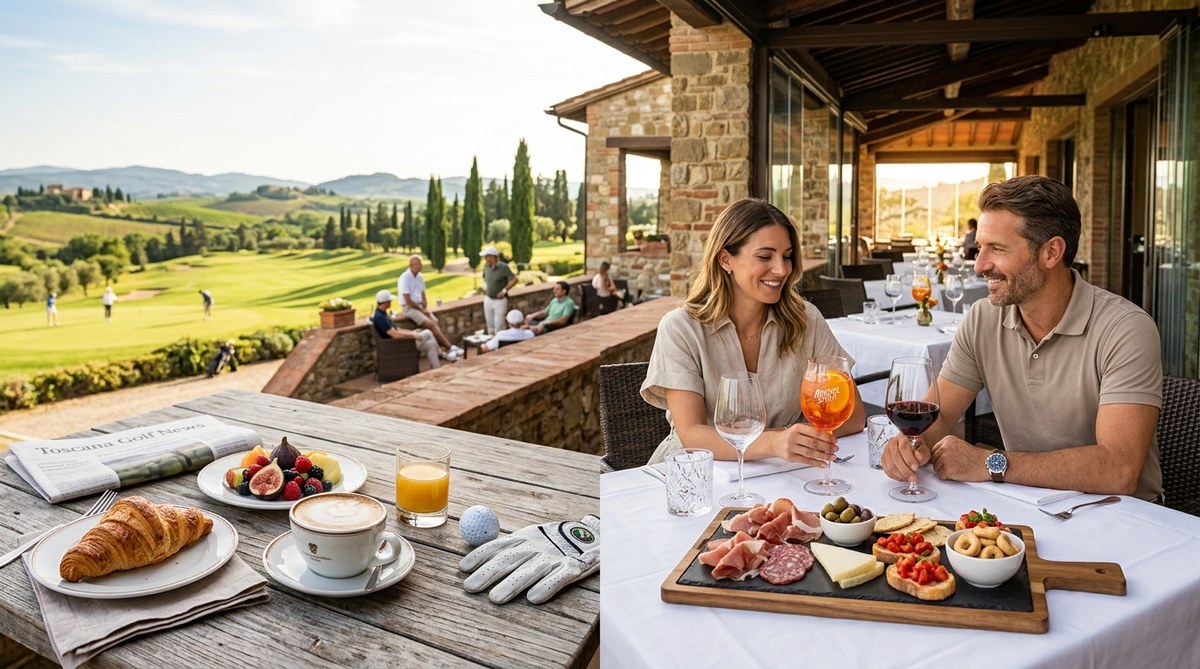
From Breakfast to Aperitivo: Dining Experiences in Tuscany’s Golf Clubhouses
Imagine finishing eighteen holes beneath cypress-lined fairways, then settling into a terrace overlooking rolling vineyards with a glass of Brunello and handmade pappardelle. That’s not a fantasy. That’s Tuesday afternoon at a Tuscan golf club.
The dining culture at Tuscany’s golf resorts goes far beyond the typical clubhouse sandwich. These venues treat food with the same reverence they give their fairways, creating spaces where regional ingredients, centuries-old recipes, and modern culinary techniques come together in settings that rival the region’s best restaurants.
Tuscany golf club dining offers authentic Italian culinary experiences from breakfast through aperitivo hour, featuring locally sourced ingredients, regional wines, and seasonal menus that change with truffle harvests and olive pressings. Clubhouses blend traditional Tuscan architecture with modern comfort, creating dining spaces where the food experience matches the quality of championship golf courses surrounding them.
Morning rituals at the clubhouse
Breakfast at a Tuscan golf club starts earlier than you might expect. Many clubhouses open their doors by 6:30 AM, catering to golfers who want to catch the morning light or beat the afternoon heat.
The Italian breakfast tradition translates beautifully to the golf setting. Expect a proper espresso bar, not a drip coffee machine. Baristas who know the difference between a macchiato and a cappuccino prepare your drink whilst you scan the course conditions.
Pastries arrive fresh from local bakeries or the resort’s own kitchen. Cornetti filled with apricot jam or Nutella sit alongside more substantial options like frittatas made with seasonal vegetables from nearby farms. Some clubs serve porridge or yogurt bowls for those wanting lighter fare before their round.
The best clubhouses understand timing. They’ll prepare a grab-and-go option if you’re teeing off in fifteen minutes, or create a leisurely spread on the terrace if you’ve got an hour to spare.
Midday meals between nines
The turn between front and back nine offers more than a bathroom break at Tuscan golf clubs. It’s a proper dining opportunity.
Many golfers stop for a panino at the halfway house. But these aren’t pre-wrapped sandwiches from a refrigerator. We’re talking about prosciutto sliced to order, fresh mozzarella, and bread baked that morning. The fillings change with what’s in season: grilled vegetables in summer, porchetta in autumn, truffle cream in winter.
Salads feature ingredients you’ll recognize from the landscape around you. Panzanella made with yesterday’s bread, tomatoes still warm from the sun, and basil picked an hour ago. Caprese with buffalo mozzarella that arrived from a dairy in Maremma that morning.
Some clubs offer hot dishes at the turn. Pasta appears frequently, served in portions that satisfy without weighing you down for the back nine. Risotto with saffron, tagliatelle with wild boar ragu, or simple spaghetti aglio e olio prepared perfectly.
“The food at our clubhouse follows the same philosophy as our course design. We use what the land gives us, respect tradition, but never resist improvement when it makes sense.” – Executive chef at a championship course near Siena
Afternoon aperitivo culture
Aperitivo hour transforms Tuscan golf clubhouses into social hubs. This pre-dinner tradition typically runs from 18:00 to 20:00, perfectly timed for golfers finishing their rounds.
The ritual centers on drinks and small bites. Prosecco, Aperol spritzes, and local vermouths flow freely. Many clubs feature extensive gin selections, often including Tuscan botanicals like juniper harvested from nearby hills.
The accompanying food goes well beyond nuts and olives, though you’ll find excellent versions of both. Expect crostini topped with chicken liver pâté, cured meats from Tuscan producers, local cheeses ranging from fresh pecorino to aged varieties, marinated vegetables, and often warm items like arancini or fried sage leaves.
The setting matters as much as the food. Terraces face west to catch the sunset. Comfortable seating encourages lingering. The atmosphere stays relaxed but refined, much like the art of the 19th hole itself.
Full restaurant experiences
Many Tuscan golf clubs operate serious restaurants that would attract diners even without the golf connection. These aren’t afterthoughts or concessions. They’re destination dining venues.
Menus change with the seasons, sometimes weekly. Spring brings artichokes, fava beans, and fresh peas. Summer features tomatoes, zucchini, and basil. Autumn means mushrooms, game, and white truffles. Winter showcases hearty soups, braised meats, and preserved vegetables.
The wine lists deserve special mention. These aren’t generic Italian selections. Sommeliers curate bottles from nearby estates, often including wines you can’t find outside the region. A round at a Chianti course pairs naturally with playing golf in Chianti, followed by wines from vineyards visible from the dining room.
Tasting menus appear frequently, offering four to seven courses that showcase the chef’s skills and seasonal ingredients. These meals turn dinner into an event, perfect for celebrating a good round or consoling yourself after a difficult one.
How to make the most of your dining experience
Planning helps you experience the full range of what Tuscany golf club dining offers. Here’s a practical approach:
- Book restaurant reservations when you book tee times. Popular clubs fill their dining rooms quickly, especially during peak season.
- Ask about seasonal specialties when you arrive. Chefs often prepare dishes that aren’t on the printed menu, based on what came from the market that morning.
- Time your rounds to match dining opportunities. An early tee time lets you finish in time for a proper lunch. An afternoon round positions you perfectly for aperitivo.
- Communicate dietary requirements in advance. Italian kitchens accommodate restrictions willingly, but advance notice produces better results than last-minute requests.
- Consider the half-board option if staying at a resort. Many properties offer breakfast and dinner packages that provide better value and guaranteed seating.
Regional variations worth knowing
Tuscany’s golf clubs reflect their local food cultures. The differences matter.
Coastal clubs near Maremma feature more seafood. Expect cacciucco (fish stew), grilled branzino, and pasta with clams. The wines lean toward Vermentino and other whites that complement seafood.
Inland clubs in Chianti territory focus on meat and game. Wild boar appears in multiple forms: salami, ragu, roasted whole. Beef from Chianina cattle, a local breed, stars in bistecca alla fiorentina. The wines are predominantly red: Chianti Classico, Brunello, Vino Nobile.
Clubs near Florence often incorporate more refined, city-influenced cooking. You’ll find lighter preparations, more delicate flavors, and presentations that lean toward modern Italian rather than rustic Tuscan.
Southern clubs around Montepulciano and Montalcino celebrate their wine heritage. Food exists partly to showcase the local vintages. Menus suggest pairings. Sommeliers offer tastings. The entire experience revolves around wine appreciation.
What sets Tuscan golf dining apart
| Element | Typical Golf Club | Tuscan Golf Club |
|---|---|---|
| Ingredient sourcing | National suppliers | Local farms and producers |
| Menu changes | Seasonal or annual | Weekly or daily |
| Wine selection | Generic Italian | Estate and regional focus |
| Dining pace | Efficient service | Leisurely, multi-course |
| Atmosphere | Casual sports venue | Refined country elegance |
| Chef background | Hospitality training | Fine dining experience |
Common mistakes to avoid
Even experienced travelers sometimes miss opportunities or make missteps with Tuscany golf club dining:
- Skipping breakfast at the club. Hotel breakfasts rarely match what the golf club offers, and you’ll miss the morning atmosphere.
- Assuming clubhouse means casual food. Many Tuscan golf restaurants require the same respect you’d give any fine dining venue.
- Not asking about wine pairings. Sommeliers know their cellars intimately and can suggest bottles that enhance your meal significantly.
- Rushing through aperitivo. This isn’t a drinks-only hour. The food matters, and the social aspect forms part of the experience.
- Ignoring daily specials. Printed menus show what’s always available, but the best dishes often appear on a chalkboard or through verbal recommendations.
Practical considerations for planning
Several factors influence your Tuscany golf club dining experience:
Timing your visit around food seasons adds another dimension to your trip. Truffle season runs from October through December. The golfer’s guide to Tuscan truffle season dining offers specific insights, but know that menus transform completely when white truffles arrive.
Dress codes vary by club and meal. Breakfast and lunch stay casual at most venues. Dinner often requires collared shirts and closed-toe shoes, though rarely jackets. Call ahead if you’re unsure.
Language shouldn’t create barriers. Staff at golf clubs catering to international visitors speak English well. That said, learning a few Italian food terms enriches your experience and shows respect for the culture.
Dietary preferences receive accommodation, but Italian kitchens work best when you eat what they do well. Vegetarians find abundant options. Vegans need to communicate clearly. Gluten-free pasta appears on most menus now.
Beyond the clubhouse
Some golf resorts in Tuscany extend dining experiences beyond their main restaurant. Look for these opportunities:
Private dining rooms accommodate groups celebrating special occasions. These spaces often occupy historic sections of converted villas, adding atmosphere you can’t replicate in the main dining room.
Cooking classes let you learn techniques from the club’s chef. These sessions typically happen on non-golf days and include market visits, hands-on preparation, and eating what you’ve made.
Wine cellar dinners take place in temperature-controlled spaces beneath the clubhouse. Limited to small groups, these meals pair multiple courses with rare bottles from the club’s collection.
Picnic services prepare elaborate takeaway meals for golfers who want to eat on the course or at a scenic viewpoint. Some clubs even deliver to specific holes if you’re playing a leisurely round.
What to expect at different price points
Tuscany golf club dining spans a range of experiences and budgets:
Premium resort clubs like Castello di Casole operate restaurants that compete with Michelin-starred establishments nearby. Expect tasting menus from €80-150 per person, extensive wine cellars, and service that anticipates your needs.
Mid-range clubs offer excellent food at more accessible prices. A three-course dinner runs €40-60. Wine lists include good local producers without the premium markup. The cooking stays true to Tuscan traditions.
Daily-fee courses provide simpler but still quality options. Lunch might cost €15-25. The food emphasizes local ingredients prepared simply. Wine comes by the glass or in house bottles that offer good value.
Regardless of price point, the commitment to authentic ingredients and proper preparation remains consistent across Tuscany’s golf dining scene.
Seasonal highlights throughout the year
Each season brings specific dishes worth planning around:
- Spring: Artichoke risotto, fava bean soup, lamb with fresh herbs, strawberry desserts
- Summer: Panzanella salad, grilled vegetables, seafood pasta, gelato
- Autumn: Porcini mushroom dishes, wild boar ragu, truffle everything, chestnut desserts
- Winter: Ribollita soup, braised meats, polenta, citrus-based desserts
The best clubs adjust their menus weekly to capture ingredients at peak freshness. This means your experience differs significantly depending on when you visit, even at the same venue.
Connecting dining with your golf journey
The relationship between where you stay and where you dine shapes your overall experience. Some golfers prefer staying at one resort and eating all meals there. Others enjoy playing different courses and sampling various clubhouse restaurants.
Planning your first golf holiday in Tuscany becomes easier when you consider dining as an integral part of the trip, not an afterthought. The clubs that excel at both golf and food create complete experiences that justify the journey.
Consider building your itinerary around both championship courses and notable dining venues. Some clubs deserve visits purely for their restaurants, even if you don’t play that day.
Why food matters as much as fairways
Tuscany golf club dining represents more than convenient meals between rounds. It’s an expression of the same attention to detail, respect for tradition, and commitment to excellence that defines the region’s golf courses.
The ingredients come from the same landscape you’re playing through. The wines grow on hillsides visible from the fairways. The recipes carry generations of knowledge. The settings occupy buildings with centuries of history.
When you sit down for dinner after your round, you’re not just refueling. You’re participating in a culture that values craftsmanship, celebrates seasonality, and believes that how you eat matters as much as what you eat.
That philosophy transforms a golf trip into something richer. The memories you take home include not just birdies and bunkers, but also the taste of fresh pasta, the aroma of white truffles, the satisfaction of a perfectly paired wine, and the pleasure of lingering over a meal as the Tuscan sun sets behind the eighteenth green.