Seasonal Golf in Tuscany: When to Visit for Perfect Playing Conditions
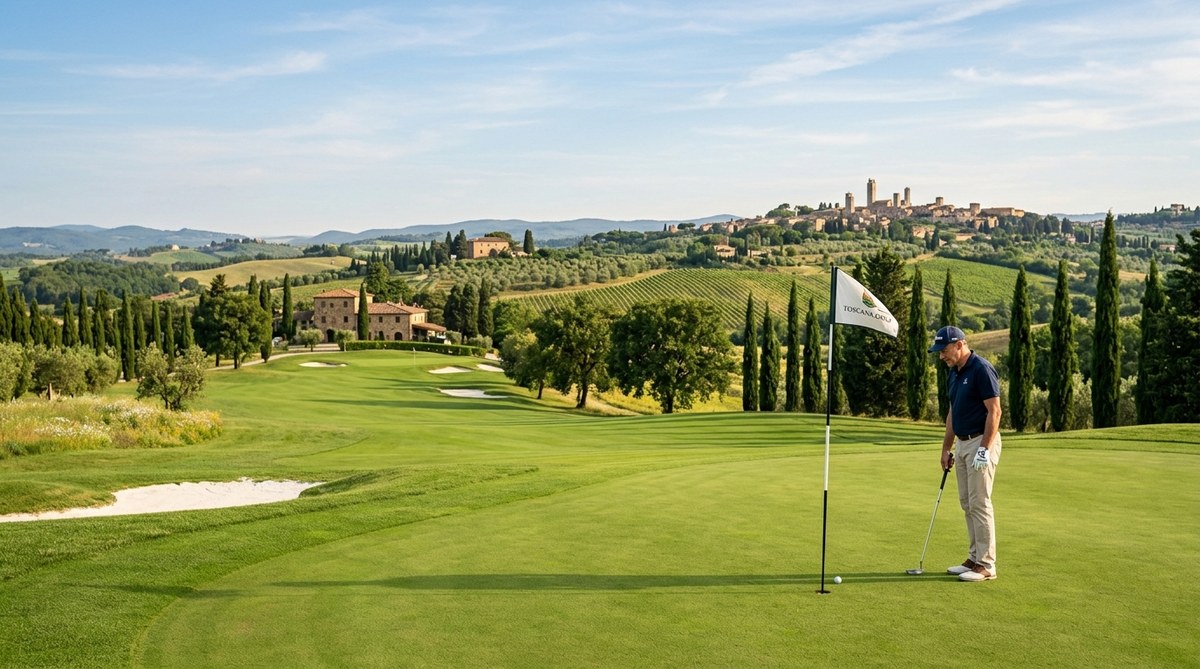
Picture rolling fairways framed by cypress trees, vineyard-lined courses where you can sip Brunello after your round, and Renaissance villas converted into luxury clubhouses. Golf in Tuscany offers something few destinations can match: world-class play surrounded by centuries of culture, exceptional wine, and landscapes that look like oil paintings come to life.
Tuscany features over 20 championship courses blending modern design with historic settings. Spring (April to June) and autumn (September to October) offer ideal playing conditions, with mild temperatures and pristine greens. Most courses lie within easy reach of Florence, Siena, and the Chianti wine region, making it simple to combine golf with cultural experiences and exceptional dining.
Why Tuscany stands apart as a golf destination
Most golfers know Scotland for links courses and Spain for coastal resorts. Tuscany takes a different approach entirely.
The region’s courses weave through medieval estates, olive groves, and working vineyards. You might tee off beside a 12th-century abbey or finish your round overlooking the same hills Michelangelo sketched.
The climate helps too. Tuscany enjoys milder winters than northern Europe and less scorching summers than southern Spain. Courses stay playable year-round, though certain months deliver better conditions than others.
What really sets Tuscany apart is the ability to build a complete holiday around golf. Play 18 holes in the morning, tour a Renaissance palace after lunch, then enjoy a Michelin-starred dinner paired with local Sangiovese. Few destinations offer this combination without compromising on any element.
Tuscany’s golf course landscape
The region hosts roughly 25 courses ranging from intimate 9-hole layouts to championship 18-hole designs. Most opened within the past 30 years, meaning they feature modern drainage, irrigation systems, and course management practices.
Several courses occupy former aristocratic estates. Where renaissance architecture meets modern golf course design in Tuscany showcases how designers incorporated historic buildings and centuries-old gardens into contemporary layouts.
Geography varies significantly across the region:
- Northern courses near Florence: Rolling hills, cypress-lined fairways, views of the Apennine mountains
- Chianti region: Vineyards bordering holes, elevation changes, strategic water features
- Maremma coastal area: Flatter terrain, Mediterranean vegetation, sea breezes affecting play
- Southern Tuscany: Wide valleys, thermal springs nearby, dramatic elevation changes
Course difficulty ranges from beginner-friendly to genuinely challenging. Championship golf courses in Tuscany that challenge even seasoned players details layouts that test low-handicap golfers with tight fairways, well-protected greens, and strategic hazards.
Seasonal playing conditions throughout the year
Understanding Tuscany’s seasons helps you choose the best time for your golf holiday. Each period offers distinct advantages and potential drawbacks.
| Season | Temperature Range | Course Conditions | Crowds | Best For |
|---|---|---|---|---|
| Spring (March-May) | 12-22°C | Excellent greens, lush fairways | Moderate | Photography, wine tours |
| Summer (June-August) | 20-32°C | Firm fairways, faster greens | Highest | Extended daylight, coastal courses |
| Autumn (September-November) | 14-24°C | Perfect conditions, harvest season | Moderate | Overall best play, truffle dining |
| Winter (December-February) | 5-12°C | Softer conditions, occasional rain | Lowest | Budget rates, uncrowded courses |
Spring brings wildflowers and bright green landscapes. Courses play longer due to softer conditions from winter rain. Morning dew can linger until mid-morning, so later tee times often provide better ball roll.
Summer delivers long days and guaranteed sunshine. Temperatures can reach 30°C or higher in July and August, making early morning or late afternoon rounds more comfortable. Coastal courses benefit from sea breezes that keep temperatures pleasant.
Autumn might be the sweet spot. Why spring and autumn are the best seasons for Tuscan golf holidays explains how September and October combine excellent weather, pristine course conditions, and harvest season festivities.
Winter golf remains viable. Rain arrives more frequently, and some courses close for maintenance in January. But you’ll find empty courses, reduced green fees, and a different kind of beauty in the misty Tuscan hills.
Planning your Tuscan golf itinerary
Building a successful golf holiday requires balancing course selection, accommodation location, and off-course activities. Here’s a practical approach:
-
Choose your base location first. Staying in one place simplifies logistics and reduces driving time. Florence offers cultural attractions and access to northern courses. Siena puts you in the heart of Chianti wine country. The Maremma coast suits golfers who want beach access alongside their rounds.
-
Book tee times before accommodation. Popular courses fill up weeks or months ahead during peak season. Secure your preferred times, then choose lodging that minimizes travel to those courses. Most championship courses lie within 30 to 60 minutes of major towns.
-
Build in rest days. Playing five consecutive days sounds appealing until your third round. Schedule non-golf days for wine tours, museum visits, or simply relaxing at your resort. Your body and your scorecard will thank you.
The best golf courses near Florence for combining culture with your game guide helps if you’re basing yourself in the region’s cultural capital.
For those wanting to venture off the typical tourist path, hidden gem golf courses in southern Tuscany away from tourist crowds reveals lesser-known layouts that deliver exceptional experiences without the crowds.
Combining golf with Tuscany’s other attractions
One of the strongest arguments for a Tuscan golf holiday is how easily you can blend play with the region’s other offerings.
Wine experiences integrate naturally. Many courses sit adjacent to working vineyards. How Tuscan vineyard golf courses combine wine country charm with exceptional play details courses where you can literally walk from the 18th green to a tasting room.
The dining scene rivals anywhere in Europe. Michelin-starred restaurants near Tuscany’s premier golf courses maps out where to celebrate a good round with exceptional cuisine.
Autumn brings truffle season, when restaurants feature fresh porcini mushrooms and white truffles in their menus. The golfer’s guide to Tuscan truffle season dining explains how to time your visit with this culinary highlight.
Cultural attractions abound. Florence’s Uffizi Gallery, Siena’s Piazza del Campo, and dozens of medieval hill towns all lie within easy reach of major golf courses. Most require just a half-day visit, leaving plenty of time for an afternoon round.
“The beauty of golf in Tuscany is that nobody questions why you’re only playing nine holes or taking a day off. There’s simply too much else to experience. I’ve had clients play 18 in the morning, tour a winery at lunch, then spend the evening in a cooking class. That’s a proper Tuscan golf holiday.” – Resort concierge, Chianti region
Accommodation options for golf holidays
Where you stay shapes your entire experience. Tuscany offers several distinct accommodation styles, each with advantages for golfers.
Golf resorts provide the most convenient option. You wake up steps from the first tee, enjoy practice facilities whenever you want, and benefit from golf-specific amenities like club cleaning and storage. Where to stay for the ultimate Tuscan golf holiday: a resort comparison breaks down the top properties.
For luxury seekers, 5 Tuscan resorts that perfectly blend championship golf with spa luxury showcases properties where you can follow your round with a thermal spa treatment or massage.
Boutique properties offer more intimate experiences. Converted villas and small hotels provide character and personalized service that large resorts can’t match. You’ll drive to courses rather than walking, but many golfers prefer this trade-off. Boutique vs grand resort: choosing your ideal Tuscan golf accommodation helps you decide which suits your preferences.
Agriturismo stays put you on working farms. These family-run properties offer authentic Tuscan hospitality, home-cooked meals using estate-grown ingredients, and often lower rates than resorts. The trade-off is fewer amenities and more driving to courses.
Practical considerations for international golfers
Traveling to Tuscany for golf requires some advance planning, but nothing complicated.
Getting there: Florence and Pisa both have international airports. Florence sits closer to most northern courses, while Pisa offers more flight options and lower fares. Rome’s airports work too if you’re combining Tuscany with other Italian destinations.
Bringing clubs: Most airlines flying to Italy allow golf bags as checked luggage, though fees vary. Some golfers prefer renting clubs at their resort to avoid airline hassles. Rental quality has improved significantly, with many courses offering recent-model equipment from major brands.
Driving: You’ll need a car unless you’re staying at a golf resort and never leaving the property. Italian drivers have a reputation, but Tuscan country roads see light traffic and are generally easy to navigate. Automatic transmission costs extra but saves stress if you’re not comfortable with manual.
Language: English is widely spoken at golf courses and tourist-oriented businesses. Learning a few Italian phrases enhances your experience, but you won’t struggle to communicate at any major course.
Booking strategy: Reserve tee times at least 4 to 6 weeks ahead for spring and autumn visits. Summer and winter allow more flexibility. Some courses offer better rates when booking directly rather than through third-party sites.
How to plan a week-long golf holiday in Tuscany without the stress provides a detailed timeline from initial research through arrival.
Course etiquette and local customs
Tuscan golf clubs maintain standards similar to other European destinations, with a few local touches worth knowing.
Dress codes lean traditional. Collared shirts, tailored shorts or trousers, and golf shoes are expected. Some clubs prohibit denim even in the clubhouse. When in doubt, dress more formally rather than less.
Pace of play matters. Four-hour rounds are standard for foursomes. Rangers patrol courses during busy periods. If you’re falling behind, you’ll be asked politely but firmly to speed up or let faster groups through.
Caddies are available at some championship courses but not universal. Trolleys (pull carts) are standard, and most courses allow electric carts for players with medical needs. Walking is encouraged and expected at many traditional clubs.
The 19th hole culture runs strong. Italians take their post-round socializing seriously. The art of the 19th hole: Tuscany’s most luxurious golf clubhouse experiences showcases the region’s finest clubhouse settings.
Tipping isn’t obligatory but is appreciated for exceptional service. Caddies expect 20 to 30 euros. Bag handlers and locker room attendants appreciate 5 to 10 euros.
Regional variations worth considering
Tuscany’s size and geographic diversity mean different areas offer distinct golf experiences.
The Chianti region between Florence and Siena delivers classic Tuscan scenery. Playing golf in Chianti: where vineyards meet fairways details courses where wine culture and golf intersect most dramatically.
Maremma, along the southern coast, remains less developed than central Tuscany. Why Maremma is Tuscany’s hidden gem for golf and coastal luxury explains the appeal of this quieter area with excellent courses and beach access.
The area around Florence offers the highest concentration of courses and easiest access to cultural attractions. You sacrifice some of the rural tranquility found elsewhere but gain convenience and variety.
Southern Tuscany around Montepulciano and Montalcino features dramatic landscapes and fewer tourists. Courses here tend toward the challenging side, with significant elevation changes and strategic design.
Photography opportunities for golf enthusiasts
Tuscany’s visual appeal extends well beyond the golf course, but the courses themselves offer stunning photography.
Golden hour (the hour after sunrise and before sunset) transforms Tuscan courses into something magical. Long shadows, warm light, and often morning mist create conditions that make even average photographers look skilled.
The 7 most scenic golf courses in Tuscany for photography enthusiasts identifies layouts with the most dramatic backdrops and photogenic holes.
Bring a camera or quality smartphone. You’ll regret not capturing certain moments: your approach shot with a medieval castle in the background, the view from an elevated tee over vineyard-covered valleys, or the clubhouse terrace at sunset.
Most courses allow photography as long as you don’t slow play. Some restrict drone use, so check beforehand if you’re planning aerial shots.
Making the most of your Tuscan golf experience
Success in planning a Tuscan golf holiday comes down to managing expectations and priorities.
Be realistic about how much golf you’ll actually play. The temptation to schedule 18 holes every day fades quickly when you’re standing in a 15th-century cathedral or tasting wine in a medieval cellar. Most golfers find three to four rounds in a week-long trip provides the right balance.
Book a mix of courses. Play one or two championship layouts for the challenge and prestige, then fill in with more relaxed courses that let you enjoy the scenery without fighting the course.
Consider a couples-friendly itinerary if traveling with a non-golfing partner. The ultimate Tuscany golf and wine tour itinerary for couples shows how to keep everyone happy.
Don’t overschedule. Leave gaps in your itinerary for spontaneous discoveries: a village festival you stumble upon, a restaurant recommended by your hotel owner, or simply an afternoon nap after an early round.
Your Tuscan golf adventure awaits
Golf in Tuscany delivers an experience that transcends the game itself. You’ll remember the courses, certainly. But you’ll also remember the evening light on cypress trees, the taste of fresh pasta after your round, and the feeling of stepping back in time as you walk fairways that wind through centuries of history.
Start planning now, especially if you’re targeting spring or autumn. The best courses and accommodations fill up months ahead. Planning your first golf holiday in Tuscany: everything you need to know walks you through every step.
Whether you’re a single-digit handicapper seeking championship tests or a casual player who wants beautiful surroundings and excellent wine, Tuscany has a course and an experience waiting for you.