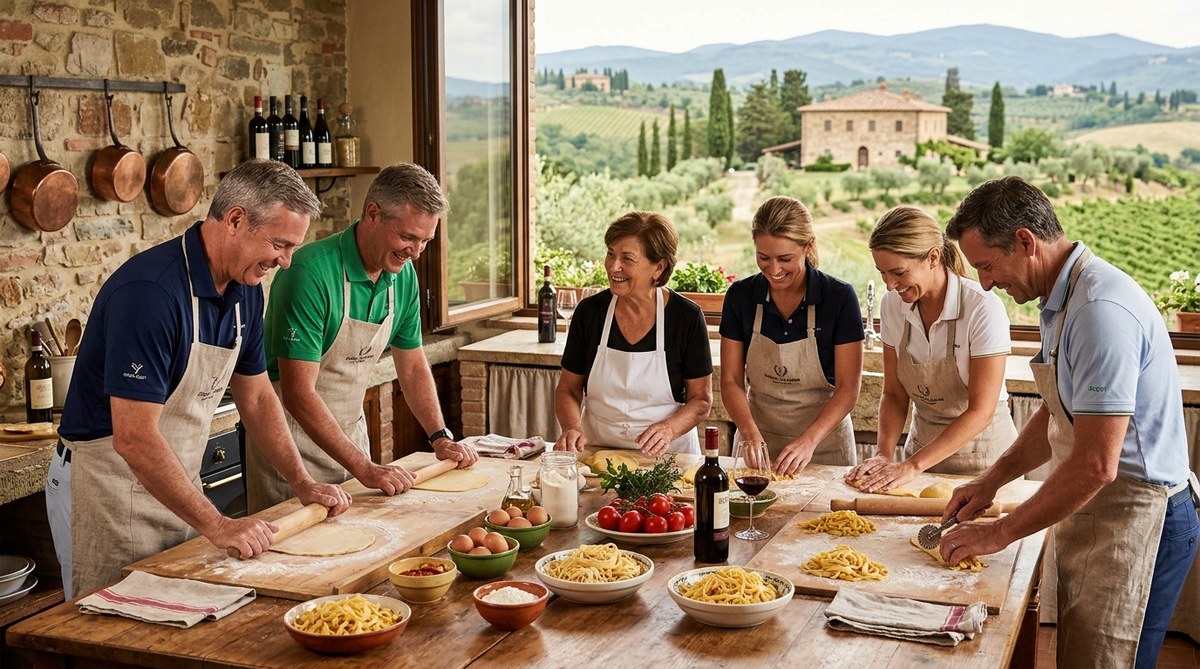
The Ultimate Tuscan Pasta-Making Class for Golf Groups
A morning spent shaping pici by hand, a long lunch under a pergola with a glass of Chianti Classico, and an afternoon tee time on a championship course carved from olive groves. That rhythm is what makes a Tuscan golf holiday unforgettable. For group organisers and discerning golfers alike, blending the precision of the fairway with the warmth of the kitchen creates a day that lingers long after the final putt. A Tuscan pasta making class for golf groups is not just a cooking lesson. It is a shared experience that bonds players, deepens your understanding of the region, and gives everyone a story to tell back at the 19th hole.
A Tuscan pasta making class for golf groups is the perfect off-course activity for corporate teams and golfing friends. It blends hands-on cooking with regional wine, builds camaraderie, and fits neatly into a luxury golf itinerary. Choose a class near your resort, book a private session, and focus on fresh pasta shapes like pappardelle or pici. Avoid overcomplicating the menu. The best groups keep it simple, cook together, and then enjoy the meal they made.
Why a Cooking Class Belongs on Your Golf Itinerary
Golf holidays in Tuscany often follow a familiar pattern. You play 18 holes, enjoy a clubhouse lunch, and retreat to the spa. That is a wonderful formula, but adding a hands-on culinary experience changes the energy of the trip. A Tuscan pasta making class for golf groups gives everyone a shared goal that has nothing to do with swing mechanics or course strategy. It levels the playing field. The low handicapper and the weekend player stand side by side at the same wooden table, dusted in flour, laughing at a wonky raviolo.
For corporate group organisers, this is gold. Team building often feels forced. Cooking together does not. It encourages natural conversation, gentle competition, and a sense of collective achievement. When you sit down to eat the pasta you made, the group feels closer. That matters when you are planning a return trip or trying to impress clients.
Choosing the Right Class for Your Group
Not all cooking classes in Tuscany suit a golf group. You need a venue that understands timing, dietary preferences, and the value of a relaxed atmosphere. Here is what to look for.
Location and Timing
Pick a class close to your resort. After a morning round, nobody wants to sit in a minibus for an hour. Many luxury golf resorts in Tuscany now offer on-site cooking schools or partner with nearby farmhouses. For example, if you are staying at a property near Castiglion del Bosco or Royal Golf La Bagnaia, you can find excellent classes within a 15 minute drive. Aim for a class that starts around midday. That gives you time for a relaxed lesson, a long lunch, and an afternoon tee time if you want to play again.
Private vs Shared Classes
For golf groups, private classes are almost always the better choice. You get the instructor’s full attention, the menu can be tailored to your group, and you control the pace. Shared classes often mix in strangers, which can dilute the group dynamic. A private Tuscan pasta making class for golf groups costs more, but the return on team bonding and personalisation justifies the premium.
Menu Selection
A common mistake is trying to make too many dishes. Focus on two or three pasta shapes. Pici, the thick, hand rolled spaghetti from Siena, is perfect for beginners. Pappardelle, the wide egg pasta ribbons, look dramatic and are forgiving to cut. Ravioli filled with ricotta and spinach gives the group a filling challenge. Avoid lasagne or stuffed pastas that require long resting times. You want to cook, eat, and get back to the fairway or the pool.
The Anatomy of a Great Class
A well run class follows a clear flow. Here is a typical structure that works for golf groups.
- Welcome with a glass of Prosecco or a local white wine. This sets a relaxed tone and allows late arrivals to settle in.
- Introduction to ingredients. The chef explains the flour, eggs, and seasonal fillings. You learn why Tuscan pasta relies on simple, high quality components.
- Hands on pasta making. Everyone gets a rolling pin or a piece of dough. The chef moves between participants, correcting technique and offering tips.
- Sauce preparation alongside the pasta. A simple sugo al pomodoro or a butter and sage sauce that complements the shape.
- Sit down lunch. The group eats together, paired with wines from the estate. This is the moment when the class truly pays off.
Common Mistakes and How to Avoid Them
Even experienced home cooks make errors when learning Tuscan pasta techniques. This table highlights the most common problems and the simple fixes that keep your class running smoothly.
| Common Mistake | Why It Happens | How to Fix It |
|---|---|---|
| Dough is too dry | Too much flour added during kneading | Use a light touch. Add flour only when the dough sticks to your hands. |
| Pasta sticks together | Not enough semolina dusting | Dust the finished shapes generously with coarse semolina, not flour. |
| Ravioli burst open | Filling is too wet or edges are not sealed | Drain ricotta overnight. Press edges firmly with your fingers. |
| Sauce overpowers the pasta | Too much garlic or herb | Tuscan sauces are subtle. Let the pasta flavour lead. |
| Timing goes off | Group works at different speeds | Ask the chef to stagger the start. Slower cooks get a head start. |
Expert advice from Chef Matteo of a private cooking school near Siena: “The biggest compliment my guests give me is silence. When a table of golfers stops talking because they are too busy enjoying the pasta they made, I know I have done my job. Keep the menu simple. Three shapes, two sauces, one great wine.”
Building a Half Day Itinerary Around Your Class
A Tuscan pasta making class for golf groups fits beautifully into a half day schedule. Here is a suggested flow that keeps everyone happy.
- 07:30 Early breakfast at the resort. Light options only.
- 08:30 Tee time on a nearby course. A round of 18 holes.
- 11:30 Transfer to the cooking venue. Short drive, drinks on arrival.
- 12:00 Cooking class begins. Hands on for 90 minutes.
- 13:30 Lunch with wine pairings. Relaxed, unhurried.
- 15:00 Return to resort. Free time for spa, pool, or a nap.
- 16:30 Optional afternoon nine holes or aperitivo at the clubhouse.
This rhythm avoids the rush. Nobody feels pressured to finish a plate and sprint to the first tee. The class becomes the centrepiece of the day, not an add on.
What Makes Tuscan Pasta Different
British golfers visiting Tuscany often notice the difference immediately. Tuscan pasta is not about heavy sauces or complicated layers. It is about texture, simplicity, and respect for the grain. The region uses a specific blend of soft wheat flour and semolina. The eggs are often from free range hens that scratch among olive trees. The result is a dough that feels silky and holds sauce in a way dried pasta cannot.
When you book a Tuscan pasta making class for golf groups, you are not just learning a recipe. You are understanding a philosophy. The same patience you apply to reading a green or shaping a putt applies to rolling out pici. That connection between sport and craft is what makes the experience resonate.
Practical Tips for Group Organisers
If you are organising for a corporate group or a society of golfing friends, keep these points in mind.
- Confirm dietary restrictions at least two weeks before the class. Tuscany is excellent with gluten free and vegetarian options, but the chef needs notice.
- Arrange transport that includes a wine stop on the way back. A visit to a small cantina adds another layer to the day.
- Ask the cooking school if they offer a printed recipe booklet. Guests love taking home the recipes they made.
- Consider a small competition. Award a prize for the best shaped pasta or the most creative ravioli. It keeps spirits high.
- Book during the shoulder seasons of spring and autumn. The weather is mild, the kitchens are less crowded, and the ingredients are at their peak.
For more inspiration on structuring your entire trip, read our guide on group golf tours in Tuscany how to organise an unforgettable trip for 8-16 players. It covers accommodation, tee time booking, and how to weave cultural experiences like cooking classes into your week.
Why This Works for Discerning Travellers
Affluent golfers do not want a holiday that feels like a checklist. They want depth. A Tuscan pasta making class for golf groups delivers that depth without demanding too much time or energy. It is a luxury experience that feels authentic, not staged. You are not watching a chef perform. You are standing beside them, learning a skill that you can recreate at home.
The best classes also connect to the landscape. The flour comes from local mills. The olive oil is pressed from groves you might have driven past on the way to the course. The wine is grown on slopes you can see from the kitchen window. That sense of place is what separates a good golf trip from a great one.
If you are still planning your resort stay, take a look at our comparison of where to stay for the ultimate Tuscan golf holiday a resort comparison. Many of those properties offer direct partnerships with cooking schools, making the booking process seamless.
Bringing the Experience Full Circle
A Tuscan pasta making class for golf groups is more than a midday diversion. It is the moment when the group stops being a collection of individual players and becomes a team. You share flour, you share wine, and you share the pride of a meal made together. That feeling carries into the next round. The banter is better. The silence on the course is comfortable. And when someone asks about the trip, you do not just talk about the birdie on the 12th. You talk about the pici.
So book the class. Trust the chef. Let the group get their hands dirty. And when you sit down to eat, raise a glass to the simple truth that some of the best moments in Tuscany happen away from the fairway.
For more ideas on pairing food with your golf holiday, see our article on Michelin starred restaurants near Tuscany’s premier golf courses. It offers a curated list of dining options that complement a day on the course and a night at the table.