Combining Coastal and Inland Golf: A Two-Week Tuscan Itinerary
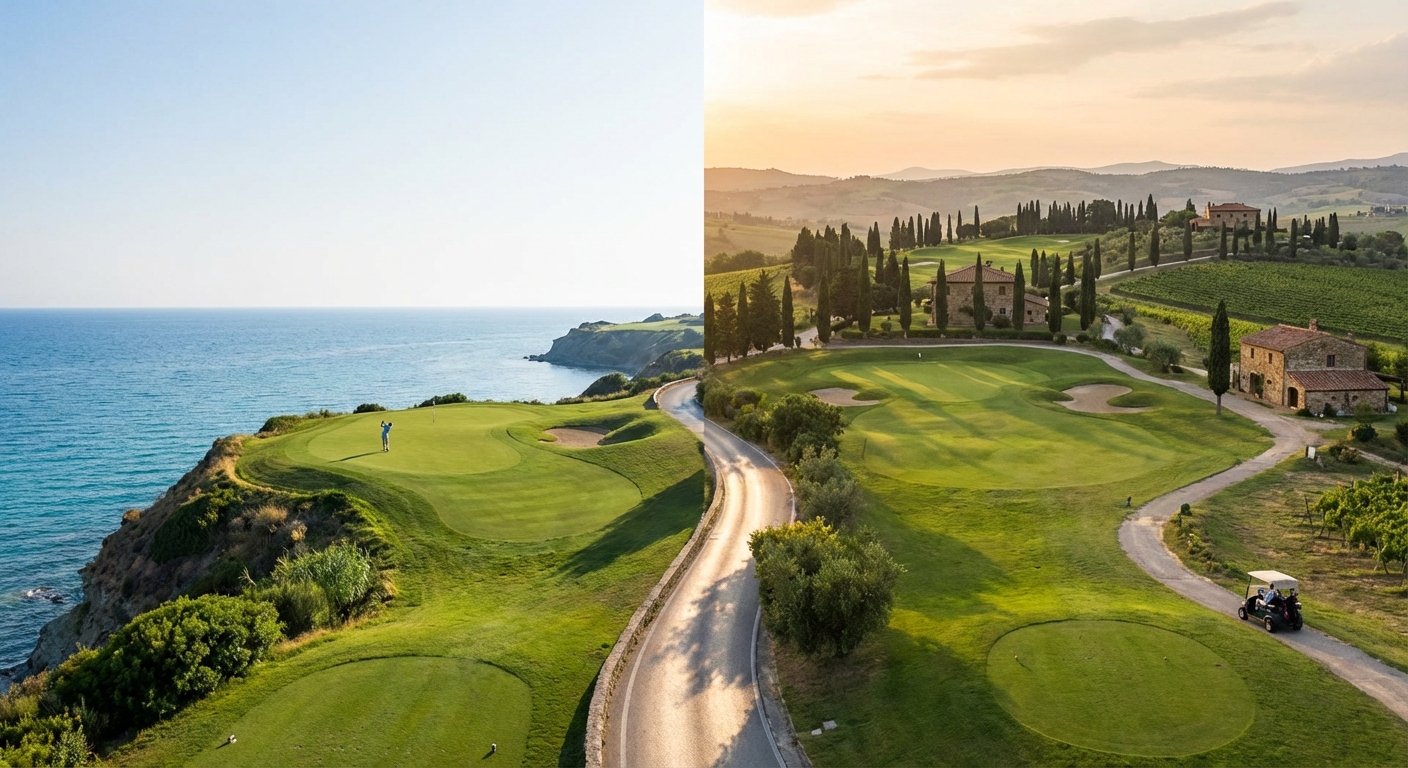
Imagine teeing off against a backdrop of cypress-lined fairways in the morning, then sipping Brunello beside medieval towers by sunset. A two week Tuscany golf itinerary delivers exactly this blend of championship play and cultural immersion, weaving together coastal links, inland vineyard courses, and enough Renaissance art to satisfy even the most cultured travel companion.
A fortnight in Tuscany allows you to play eight to ten exceptional courses whilst exploring Florence, Siena, coastal Maremma, and Chianti wine country. Split your time between three distinct regions, book tee times three months ahead, and leave buffer days for cultural excursions. Expect green fees from €80 to €200, with resort packages offering better value than piecing together individual rounds.
Why Two Weeks Is the Sweet Spot for Tuscan Golf
Fourteen days gives you breathing room. You can play golf without racing from course to course like you’re competing in a stage rally.
Most golfers underestimate travel time between Tuscan courses. What looks like 40 kilometres on a map often means an hour of winding hill roads. Two weeks lets you settle into three or four bases rather than living out of a suitcase.
You’ll also want rest days. After five consecutive rounds, even the keenest player appreciates a morning at the Uffizi or an afternoon wine tasting in Montalcino. Your knees will thank you too.
The rhythm works perfectly: play three days, rest one, repeat. This pattern lets you tackle championship golf courses in Tuscany that challenge even seasoned players without burning out.
Building Your Three-Region Framework
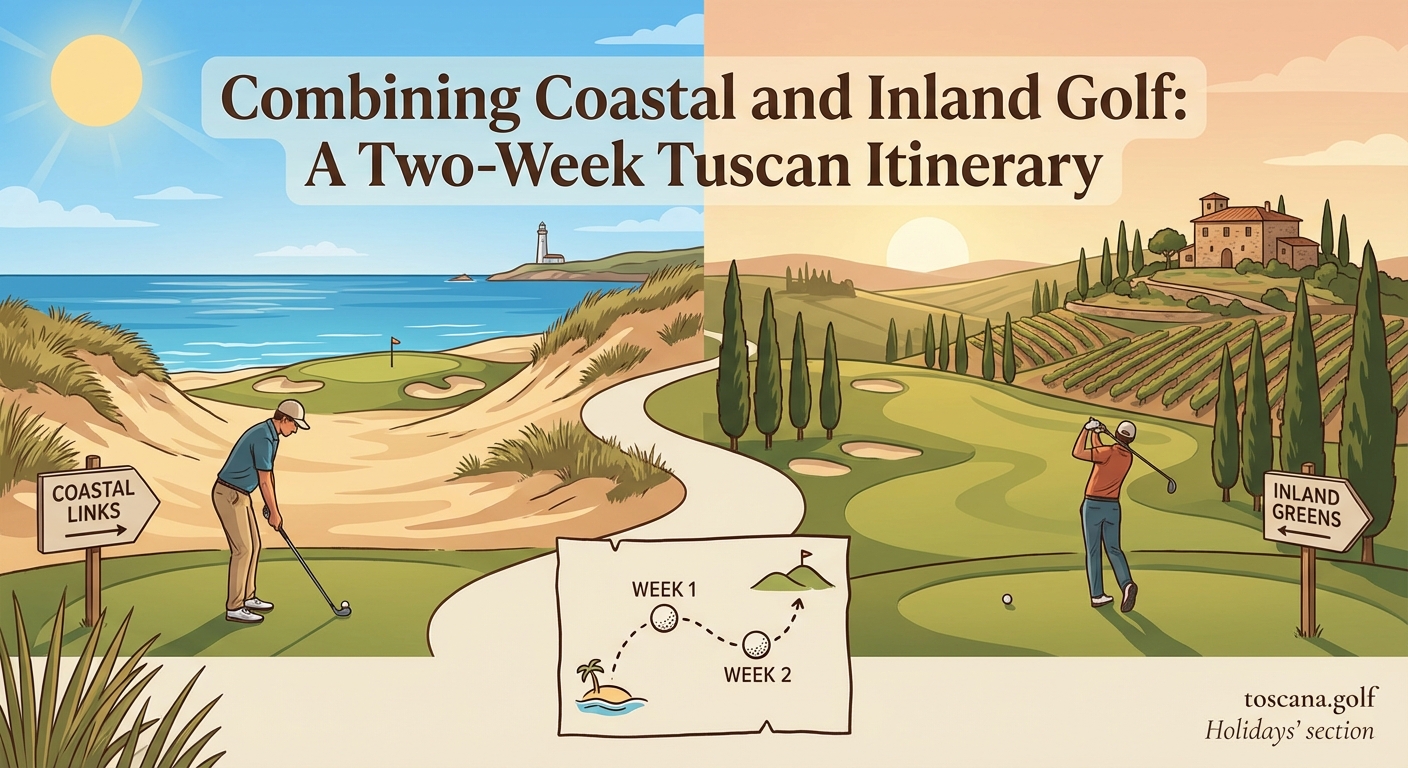
Split your fortnight into three distinct zones, each offering different golf and cultural experiences.
Week One: Florence and Chianti (5 nights)
Base yourself in or near Florence. You’re within striking distance of four excellent courses whilst having easy access to the Duomo, Ponte Vecchio, and enough gelato shops to require extra walking.
The best golf courses near Florence for combining culture with your game sit 20 to 45 minutes from the city centre. Morning tee times let you finish by early afternoon, leaving time for museum visits or aperitivo in Piazza della Signoria.
Week One: Coastal Maremma (4 nights)
Head southwest to the Tuscan coast. This less-travelled region offers links-style courses, thermal springs, and seafood that rivals anything you’ll find in Liguria.
Why Maremma is Tuscany’s hidden gem for golf and coastal luxury becomes obvious the moment you see Mediterranean views from the 7th tee. The region stays quieter than Florence even in peak season.
Week Two: Southern Tuscany (5 nights)
Finish in Val d’Orcia or around Siena. Rolling hills, fortified hilltop towns, and vineyard courses define this area. The hidden gem golf courses in southern Tuscany away from tourist crowds reward the extra driving with memorable experiences.
Your Day-by-Day Framework
Here’s a practical structure that balances golf, culture, and recovery.
Days 1-5: Florence and Chianti Base
-
Arrival day: Land in Florence or Pisa, collect rental car, settle into accommodation. Walk Florence’s historic centre if energy permits.
-
Golf day one: Morning round at Ugolino Golf Club, Florence’s oldest course. Afternoon visit to Boboli Gardens.
-
Culture day: Full day in Florence. Uffizi Gallery, Duomo climb, leather market browsing.
-
Golf day two: Playing golf in Chianti where vineyards meet fairways at Castelfalfi or Poggio dei Medici. Stop at a winery on the return journey.
-
Golf day three: Morning round, afternoon drive to coastal Maremma with stop in Volterra.
Days 6-9: Maremma Coast
-
Arrival and beach: Settle into coastal accommodation. Afternoon beach walk or thermal bath visit.
-
Golf day four: Punta Ala Golf Club, one of Tuscany’s finest coastal courses. Seafood dinner in Porto Ercole.
-
Culture and nature day: Visit Pitigliano’s cliff-top town or hike in Parco dell’Uccellina. Wine tasting in Morellino di Scansano territory.
-
Golf day five: Morning round at Argentario Golf Club. Afternoon drive inland toward Siena.
Days 10-14: Southern Tuscany
-
Siena exploration: Full day in Siena. Piazza del Campo, Duomo, Torre del Mangia climb, evening passeggiata.
-
Golf day six: Toscana Resort Castelfalfi or Castello di Casole. The latter offers championship-level challenges in a stunning setting.
-
Val d’Orcia day: Visit Pienza, Montalcino, and Montepulciano. Brunello tasting essential. No golf, just culture and wine.
-
Golf day seven: Morning round at a southern course. Afternoon spa treatment or pool time.
-
Departure buffer: Keep this flexible. Play a final round if departure flight allows, or spend the morning in San Gimignano before heading to the airport.
Practical Booking Timeline
Start planning six months ahead for peak season travel (May, June, September, October). Three months works for shoulder seasons.
| Timeline | Action | Why It Matters |
|---|---|---|
| 6 months out | Book accommodation at golf resorts | Best rooms and package rates disappear fast |
| 4 months out | Reserve tee times at championship courses | Popular courses fill weekends and mornings first |
| 3 months out | Book rental car and any private transfers | Automatic transmission vehicles run short in summer |
| 2 months out | Make restaurant reservations | Michelin-starred spots near courses book solid |
| 1 month out | Confirm all bookings and print vouchers | Italian courses sometimes misplace email confirmations |
Choosing Where to Stay
You face a choice between golf resorts and town-based hotels.
Golf resort advantages:
- Wake up 200 metres from the first tee
- Package deals bundling accommodation, golf, and meals
- Practice facilities for evening short game work
- Other golfers to share stories with at the bar
Town hotel advantages:
- Authentic Italian atmosphere
- Better restaurant variety
- Cultural sites on your doorstep
- Lower cost if playing multiple courses
Many golfers split the difference. Stay at a resort for three or four nights when playing that course multiple times, then shift to town hotels when sampling different layouts daily.
The where to stay for the ultimate Tuscan golf holiday guide breaks down specific properties in detail, but here’s the short version: Castelfalfi for families, Argentario for coastal luxury, Castello di Casole for all-out indulgence.
Balancing Golf and Culture
Your travel companion might not share your passion for links golf. Two weeks demands compromise.
The alternating day method:
Play golf one day, dedicate the next to culture. This rhythm works brilliantly. You get recovery time. They get proper museum visits without feeling rushed.
The half-day approach:
Book morning tee times (7:00 or 8:00 starts). Finish by 1pm. Spend afternoons together visiting towns, tasting wine, or lounging by the pool.
The separate morning strategy:
You play golf. They visit markets, take cooking classes, or enjoy spa treatments. Reunite for lunch and afternoon activities.
Most successful golf holidays use a combination of all three, varying the pattern based on location and energy levels.
“The biggest mistake I see is golfers trying to play every single day. By day eight, they’re exhausted, their swing falls apart, and they’re too tired to enjoy Siena. Build in rest days. Your scorecard and your relationship will both improve.” — Marco Bellini, PGA Professional, Tuscany Golf Academy
What to Pack Beyond Your Clubs
Airlines lose golf bags. Ship your clubs ahead using a specialist service or rent quality sets at each course. Many Tuscan clubs offer Callaway, TaylorMade, or Titleist rental sets for €40 to €60 per round.
Essential items:
- Soft spikes (some older courses ban metal)
- Light rain jacket (afternoon showers happen)
- High SPF sunscreen (Tuscan sun burns)
- Comfortable walking shoes for town days
- Smart casual attire for clubhouse dining
- Handicap certificate or WHS app access
Leave at home:
- Jeans (banned in most clubhouses)
- Sleeveless shirts (dress codes remain traditional)
- Heavy jumpers (September can hit 28°C)
Managing Costs and Budgets
Two weeks of Tuscan golf isn’t cheap, but smart planning controls expenses.
Typical daily costs per person:
- Accommodation: €150-400
- Green fees: €80-200
- Meals: €60-100
- Car rental: €30-50
- Fuel and parking: €20-30
- Wine and extras: €40-80
Total daily range: €380-880 per person, or €5,300-12,300 for the fortnight.
Money-saving strategies:
- Book resort packages bundling accommodation and golf
- Play municipal courses one or two days (€50-80 vs €150-200)
- Eat lunch at course restaurants, dinner in town trattorias
- Visit free attractions (churches, town squares, viewpoints)
- Buy wine directly from producers, not hotel minibars
Splurge-worthy extras:
- One Michelin-starred dinner (restaurants near premier courses justify the cost)
- Private wine tour with sommelier guide
- Couples massage at a resort spa
- Helicopter transfer between coast and Florence (yes, really)
Navigating Tuscan Driving and Logistics
Driving in Tuscany tests patience. Roads wind. GPS sometimes sends you down gravel tracks. ZTL zones (restricted traffic areas) in city centres trigger automatic fines.
Key driving tips:
- Allow 50% more time than GPS suggests for any journey
- Park outside historic centres and walk in
- Fill up fuel in towns, not on motorways (€0.30 per litre difference)
- Carry cash for some course car parks (card machines fail)
- Download offline maps before leaving WiFi
Distances between key golf areas:
- Florence to Chianti courses: 25-45 km (30-60 minutes)
- Florence to Maremma coast: 180 km (2.5-3 hours)
- Maremma to Siena: 120 km (2 hours)
- Siena to southern courses: 40-70 km (45-90 minutes)
Weather Patterns and Seasonal Considerations
Tuscany golf runs year-round, but conditions vary dramatically.
Peak season (May, June, September, October):
- Temperatures 20-28°C
- Minimal rain
- Courses in perfect condition
- Highest green fees
- Booking essential
Shoulder season (April, early November):
- Temperatures 15-22°C
- Occasional rain
- Good course conditions
- Lower rates
- Easier tee time availability
Winter golf (December-February):
- Temperatures 8-15°C
- Frequent rain
- Some courses close or limit play
- Significant discounts
- Resort spas become the main attraction
The best time to visit Tuscany for golf depends on your heat tolerance and budget flexibility, but September edges ahead for most visitors. Warm weather, harvest season atmosphere, and courses recovered from summer stress.
Dining Strategy for Golf Travellers
You’ll eat roughly 42 meals over two weeks. Make them count.
Breakfast:
Hotel buffets work fine. Load up on protein before morning rounds. Italian breakfasts (cappuccino and cornetto) won’t sustain you through 18 holes.
Lunch:
Course restaurants serve proper sit-down meals, not just sandwiches. Budget 90 minutes. The pasta is usually excellent.
Alternatively, pack panini from a morning bakery stop and picnic at the turn.
Dinner:
Rotate between resort dining, town trattorias, and one or two special occasion restaurants. Book ahead for anywhere Michelin-recommended.
Where to find Tuscany’s best wine pairings after your round becomes a nightly adventure. Local Chianti, Brunello, or Morellino pair beautifully with bistecca fiorentina.
Course Variety and Playing Different Styles
Tuscany offers remarkable variety within a compact area.
Parkland courses:
Tree-lined fairways, elevation changes, strategic bunkering. These dominate the Florence and Chianti areas. Think target golf with dramatic backdrops.
Links-style coastal courses:
Firmer conditions, sea breezes, lower trajectories required. Maremma’s courses reward ground game and creative shot-making.
Vineyard courses:
Vines frame fairways. Undulating terrain. Stunning but occasionally distracting views. How Tuscan vineyard golf courses combine wine country charm with exceptional play explains the unique challenges.
Mountain courses:
Rare but spectacular. Dramatic elevation changes, thin air affecting distance, cooler temperatures. Usually found in northern Tuscany near the Apennines.
Play at least one of each style during your fortnight. The variety keeps golf interesting and highlights different aspects of your game.
Common Mistakes and How to Avoid Them
After helping dozens of golfers plan Tuscan golf holidays, certain errors appear repeatedly.
Mistake one: Overpacking the schedule
Playing 12 rounds in 14 days sounds ambitious. It becomes exhausting. Aim for 7-9 rounds maximum.
Mistake two: Ignoring siesta culture
Booking 2pm tee times in July means playing in 32°C heat. Morning slots finish by lunch, leaving afternoons for cooler activities.
Mistake three: Underestimating travel time
That course looks close on the map. Then you hit roadworks, get stuck behind a tractor on a single-lane road, and arrive flustered 20 minutes late.
Mistake four: Skipping course research
Not all Tuscan courses suit all golfers. Some demand length. Others reward accuracy. The 7 most scenic golf courses in Tuscany for photography enthusiasts might prioritise views over challenge.
Mistake five: Forgetting handicap certificates
Many clubs require proof of handicap. Screenshot your WHS app or carry a printed certificate.
Making the Most of Non-Golf Days
Rest days prevent burnout and give you stories beyond birdie putts.
Cultural highlights worth a full day:
- Florence: Uffizi, Accademia (book months ahead), Duomo complex
- Siena: Piazza del Campo, Duomo, contrada neighbourhoods
- San Gimignano: Medieval towers, gelato world champion shops
- Volterra: Etruscan ruins, alabaster workshops
Wine experiences:
- Brunello tasting in Montalcino
- Chianti Classico estate tours
- Morellino di Scansano coastal producers
- Super Tuscan tastings in Bolgheri
Active alternatives:
- Thermal baths at Saturnia or Bagno Vignoni
- Hiking in Val d’Orcia
- Cycling between hilltop towns
- Cooking classes in farmhouse settings
Relaxation options:
Resort spas offer everything from basic massages to full-day wellness programmes. 5 Tuscan resorts that perfectly blend championship golf with spa luxury cater specifically to golfers seeking recovery treatments.
Sample Two-Week Budget Breakdown
Here’s what a mid-range fortnight actually costs for two people.
Accommodation (13 nights):
– 4 nights golf resort: €1,200
– 4 nights coastal hotel: €800
– 5 nights Siena area agriturismo: €900
– Total: €2,900
Golf (8 rounds each, 16 total):
– 4 championship rounds: €720
– 4 standard rounds: €480
– Total: €1,200
Car rental (14 days):
– Mid-size automatic: €650
– Fuel: €280
– Total: €930
Meals:
– Breakfasts (included): €0
– Lunches: €840
– Dinners: €1,400
– Total: €2,240
Activities and extras:
– Museum entries: €180
– Wine tastings: €320
– Spa treatments: €240
– Total: €740
Grand total: €8,010 for two people (€4,005 each)
Add flights and you’re looking at roughly €4,500-5,000 per person for a comprehensive two-week Tuscany golf holiday.
Extending or Shortening the Itinerary
Not everyone has a full fortnight available.
One-week version:
Focus on two regions only. Florence/Chianti for four nights, Maremma coast for three nights. Play five rounds, visit Florence and Siena, sample wine country.
Ten-day version:
Three regions but shorter stays. Three nights Florence, three nights coast, three nights southern Tuscany. Seven rounds total.
Three-week version:
Add northern Tuscany (Lucca, Versilia coast) or extend stays in favourite regions. Include rest days for deeper cultural immersion. Play 10-12 rounds without feeling rushed.
The two-week format hits the sweet spot between comprehensive coverage and manageable pacing.
Why This Itinerary Works for Couples
Golf holidays can strain relationships when one partner plays and the other tags along resentfully.
This itinerary solves that problem by building in equal appeal. The golfer gets championship courses and variety. The non-golfer gets Florence, Siena, wine country, coastal towns, and proper restaurants.
Morning golf, afternoon culture becomes the rhythm. Everyone’s happy.
The ultimate Tuscany golf and wine tour itinerary for couples expands on this approach, but the core principle remains: balance.
Your Fortnight Awaits
Two weeks in Tuscany transforms golf from sport to experience. You’ll remember the sunset over Siena’s terracotta roofs as vividly as that approach shot to a vineyard-framed green.
Start planning six months out. Book the anchor resort first, then build the itinerary around it. Leave room for spontaneity, but secure tee times at must-play courses early.
Most importantly, pace yourself. This isn’t a golf marathon. It’s a fortnight blending championship play with Renaissance cities, coastal beauty, and world-class wine. Your swing might not improve dramatically, but your appreciation for how golf fits into a richer travel experience certainly will.
Print this framework, adjust it to your preferences, and start blocking out those calendar dates. Tuscany’s fairways are waiting.