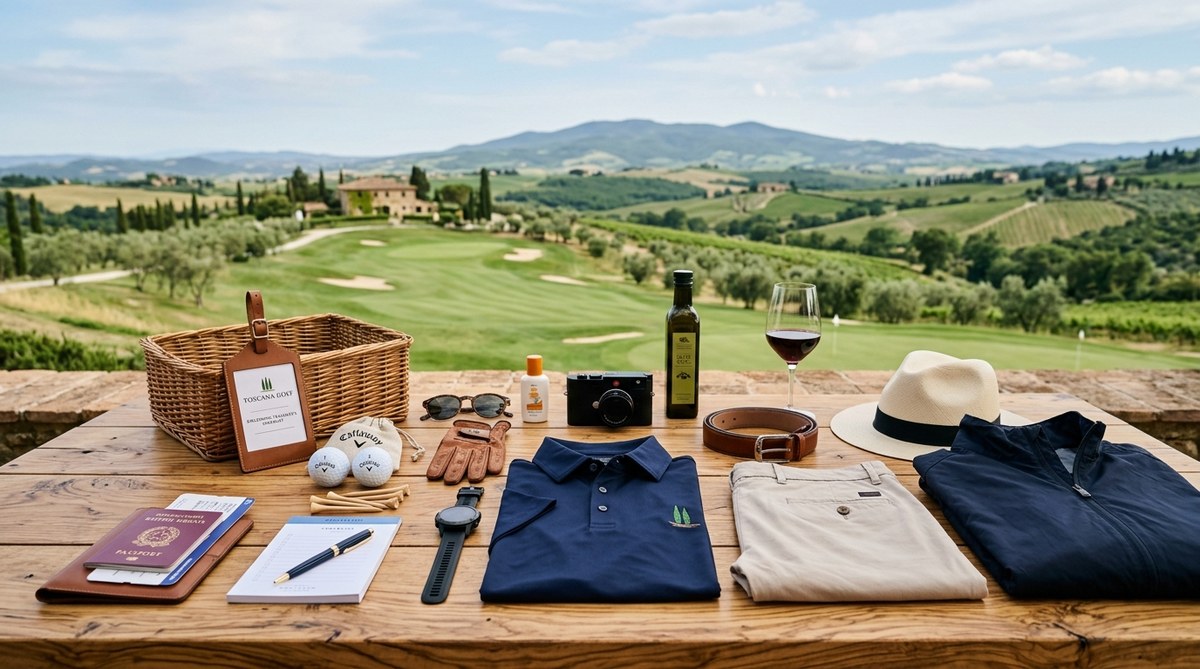
What to Pack for a Tuscan Golf Holiday: The Discerning Traveller’s Checklist
Packing for a golf holiday in Tuscany requires more thought than your typical weekend break. You’re combining the technical demands of championship courses with the cultural sophistication of Italy’s most elegant region. Get it wrong and you’ll spend your first day shopping for forgotten essentials instead of teeing off with cypress trees framing your approach shot.
A successful Tuscan golf holiday demands strategic packing that balances performance golf equipment with Italian resort elegance. Your luggage should accommodate variable spring and autumn weather, course-specific gear for championship layouts, upscale dining attire, and travel documents including your handicap certificate. Smart layering, quality fabrics, and versatile pieces ensure you’re prepared for morning rounds, afternoon wine tastings, and evening meals without overpacking.
Golf Equipment Essentials for Tuscan Courses
Your clubs are the obvious starting point, but the decision between travelling with your own set or hiring locally shapes everything else you pack.
Bringing your own clubs gives you the comfort of familiar equipment on courses that demand precision. The championship golf courses in Tuscany that challenge even seasoned players feature elevation changes and strategic bunkering that reward players who know their exact yardages.
If you’re flying with clubs, invest in a hard-shell travel case with wheels. Soft cases save weight but offer minimal protection when baggage handlers treat your driver like a suitcase. Remove headcovers before packing to prevent moisture buildup, and stuff a towel between clubheads to eliminate rattling.
Most premium Tuscan resorts offer club hire from brands like Callaway, TaylorMade, and Ping. This option makes sense if you’re combining golf with extensive cultural touring or visiting multiple Italian cities. You’ll sacrifice familiarity but gain luggage space and mobility.
Your golf bag should include:
- At least two dozen balls (premium courses mean premium prices in the pro shop)
- A rangefinder or GPS device (many courses have limited yardage markers)
- Multiple gloves (Italian heat can leave them damp quickly)
- Tees in various heights
- Ball markers and pitch repair tools
- Spare spikes for your golf shoes
- A small towel specifically for club cleaning
Clothing Strategy for Variable Mediterranean Weather
Tuscany’s climate shifts dramatically between seasons and even within a single day. April mornings can start at 12°C and reach 22°C by afternoon. October brings similar variability with added rain risk.
Base your wardrobe around layering pieces that transition from course to clubhouse to dinner table. Technical fabrics that wick moisture and resist wrinkles serve you better than cotton alternatives.
On-Course Apparel
Pack at least four complete golf outfits if you’re playing multiple rounds. Tuscan courses maintain strict dress codes that mirror traditional European standards. Collared shirts are mandatory, and many clubs prohibit denim even in practice areas.
Your golf clothing list:
- Four moisture-wicking polo shirts in neutral colours
- Two pairs of technical golf trousers (avoid shorts unless travelling in July or August)
- A lightweight windproof jacket
- A merino wool or cashmere sweater for early starts
- A waterproof jacket with taped seams
- Golf-specific socks that prevent blisters
- A wide-brimmed hat or visor for sun protection
- Sunglasses with polarized lenses
The best time to visit Tuscany for golf influences your clothing choices significantly. Spring travellers need more layering options, whilst autumn visitors should prioritize waterproofs.
Golf shoes deserve careful consideration. Spiked shoes provide better traction on Tuscany’s occasionally hilly terrain, but many courses now feature soft-spike-only policies. Pack a second pair of spikeless trainers for practice rounds and resort wear.
Evening and Resort Wear
Italian culture values presentation, and Tuscan golf resorts reflect this aesthetic. The same casual wear acceptable at Scottish links clubs will look out of place at dinner in Chianti.
Bring smart-casual pieces that work for multiple occasions:
- Two pairs of chinos or tailored trousers
- Three casual shirts (linen or cotton blends)
- A blazer or sports jacket for upscale dining
- Leather shoes or loafers
- A dress for women (knee-length or longer)
- Comfortable walking shoes for resort grounds
If you’re planning to visit Michelin-starred restaurants near Tuscany’s premier golf courses, add one formal outfit to your luggage. Men should pack dress trousers and a collared shirt at minimum; women benefit from a cocktail dress or elegant separates.
Documentation and Administrative Essentials
Italy’s bureaucratic requirements extend to golf courses. Arrive prepared with the right paperwork to avoid delays at check-in.
Your essential documents:
- Valid passport (with at least six months remaining)
- Official handicap certificate (required at most private clubs)
- Travel insurance documents covering sports activities
- Accommodation confirmations
- Tee time reservations and booking references
- International driving permit if hiring a car
- Credit cards (Visa and Mastercard widely accepted; American Express less so)
Many Tuscan courses require proof of handicap before allowing play. A screenshot of your club membership won’t suffice. Request an official certificate from your home club before departure, printed on club letterhead with a recent date.
European Health Insurance Cards (EHIC) provide basic coverage for UK citizens, but comprehensive travel insurance remains essential. Ensure your policy covers golf-related injuries and equipment loss or damage.
Technical Accessories and Electronics
Modern golf relies on technology, but Italian electrical systems require specific adaptations.
Italy uses Type L electrical outlets (three round pins) with 230V supply. Universal travel adapters work for phone chargers, but high-wattage devices like hairdryers may need voltage converters.
Pack these technical items:
- Smartphone with offline maps downloaded
- Portable battery pack (10,000mAh minimum)
- European plug adapters (bring at least two)
- Camera with extra memory cards
- Golf GPS watch or rangefinder with fresh batteries
- E-reader or tablet for downtime
- Headphones for flights
The 7 most scenic golf courses in Tuscany for photography enthusiasts offer extraordinary visual opportunities. A quality camera captures these moments better than phone cameras, particularly in golden-hour lighting.
Download offline versions of Google Maps for the Tuscany region before departure. Rural golf courses often have limited mobile data coverage, and navigating narrow Tuscan roads requires reliable directions.
Personal Care and Health Items
Italian pharmacies stock most common products, but familiar brands provide comfort and save valuable holiday time.
Your toiletries bag should include:
- Prescription medications in original packaging
- Sunscreen (SPF 30 minimum, higher for sensitive skin)
- After-sun lotion or aloe vera gel
- Insect repellent (mosquitoes emerge at dusk near water features)
- Blister plasters and basic first aid supplies
- Antihistamines for pollen allergies
- Muscle relief cream or gel
- Lip balm with SPF protection
Tuscan courses feature extensive walking, even with cart usage. Prevent blisters by applying anti-friction balm to feet before rounds, particularly if breaking in new golf shoes.
Spring visitors should pack antihistamines. Cypress pollen peaks between March and May, affecting many travellers who don’t typically suffer allergies.
Luggage Configuration and Weight Management
Airlines impose strict baggage limits, and golf equipment complicates weight distribution.
Most carriers allow one checked bag (23kg), one carry-on (10kg), and golf clubs as sporting equipment (often with surcharges). Confirm your specific airline’s policy before packing, as budget carriers may charge substantial fees for sports equipment.
Distribute weight strategically:
- Heavy items (shoes, toiletries) in checked luggage
- Valuables and documents in carry-on
- Golf clubs in dedicated travel case
- One complete golf outfit in carry-on (insurance against lost luggage)
If travelling as a couple, split essentials between suitcases. Should one bag go missing, you’ll both have access to basic necessities.
Compression packing cubes reduce volume and keep clothing organized. Roll garments instead of folding to minimize wrinkles and maximize space.
Common Packing Mistakes and Solutions
| Mistake | Consequence | Solution |
|---|---|---|
| Packing only summer clothing | Shivering through morning rounds | Check 10-day forecast before finalizing wardrobe |
| Forgetting handicap certificate | Denied access to private courses | Request official certificate three weeks before travel |
| Bringing one pair of golf shoes | Wet feet after morning dew or rain | Pack spikeless backup pair |
| Overpacking formal wear | Excess baggage fees and unused outfits | Limit to one upscale outfit, maximize versatile pieces |
| Neglecting rain protection | Cancelled rounds or uncomfortable play | Include waterproof jacket and umbrella regardless of forecast |
| Assuming all courses hire clubs | Last-minute scramble or missed tee times | Confirm club hire availability when booking |
The most common error is underestimating weather variability. Tuscany’s microclimate means Florence might be sunny whilst Chianti experiences showers. Layering options solve this problem without requiring multiple complete outfits.
Seasonal Packing Variations
Your packing list shifts based on travel dates. Why spring and autumn are the best seasons for Tuscan golf holidays relates directly to weather patterns that influence what you’ll need.
Spring Travel (March to May)
Temperatures range from 10°C to 22°C. Morning rounds require layering that you’ll shed by the back nine.
Additional spring items:
- Lightweight thermal base layer
- Packable down vest
- Waterproof trousers
- Warm hat for early tee times
Summer Travel (June to August)
Heat becomes the primary concern, with temperatures exceeding 30°C. Many serious golfers avoid July and August entirely, but if you’re committed to summer travel, adjust your packing accordingly.
Summer-specific additions:
- Lightweight, breathable polo shirts
- Golf shorts (check individual course policies)
- Cooling towel for neck
- Extra sunscreen and wide-brimmed hat
- Electrolyte tablets for hydration
Autumn Travel (September to November)
September offers ideal conditions, but October and November bring increased rain probability and cooler temperatures.
Autumn essentials:
- Mid-weight fleece or jacket
- Quality waterproof jacket and trousers
- Golf umbrella (large enough for bag coverage)
- Hand warmers for November rounds
- Waterproof golf gloves
Resort-Specific Considerations
Different Tuscan golf destinations require subtle packing adjustments. Coastal Maremma properties differ from inland Chianti estates.
If staying at boutique versus grand resort properties, smaller hotels often lack extensive laundry services. Pack an extra day’s clothing or bring travel-sized detergent for sink washing.
Spa-focused resorts benefit from swimwear and workout gear. Many properties feature exceptional wellness facilities that complement golf. A packable gym outfit and flip-flops add minimal weight but expand your resort experience.
Wine-focused itineraries, like those at Tuscan vineyard golf courses, call for slightly more formal evening wear. Vineyard dinners and cellar tours maintain higher dress standards than casual resort meals.
“The golfers who enjoy Tuscany most arrive prepared for both the athletic and cultural aspects of the region. Your packing list should reflect that you’re visiting one of Europe’s most sophisticated destinations, not just playing a few rounds.” — Resort concierge at a leading Tuscan golf property
Final Packing Checklist
Use this systematic approach to ensure nothing essential gets forgotten:
- Lay out all golf equipment and clothing three days before departure
- Check weather forecasts and adjust clothing quantities
- Verify all documents are current and accessible
- Weigh luggage to avoid airport surprises
- Pack one complete outfit in carry-on luggage
- Photograph luggage contents (helpful for insurance claims if bags go missing)
- Leave space for purchases (Tuscan leather goods and wine tempt most visitors)
Create a digital packing list on your phone. Update it after each trip based on what you used and what remained untouched. This evolving document becomes increasingly refined with each journey.
Making Every Item Count
The difference between adequate packing and strategic packing determines whether you spend your Tuscan golf holiday comfortable and confident or constantly making do with improvised solutions.
Your luggage should support the experience you’ve planned, whether that’s challenging yourself on championship courses, combining golf with cultural exploration near Florence, or seeking out hidden gems in southern Tuscany.
Pack with intention. Choose quality over quantity. Prioritize versatile pieces that serve multiple purposes. And remember that Tuscany rewards travellers who arrive prepared to embrace both the sport and the setting with equal enthusiasm.
Your clubs, your clothing, and your planning all contribute to a golf holiday that lives up to the region’s exceptional reputation. Get the packing right, and everything else falls into place.