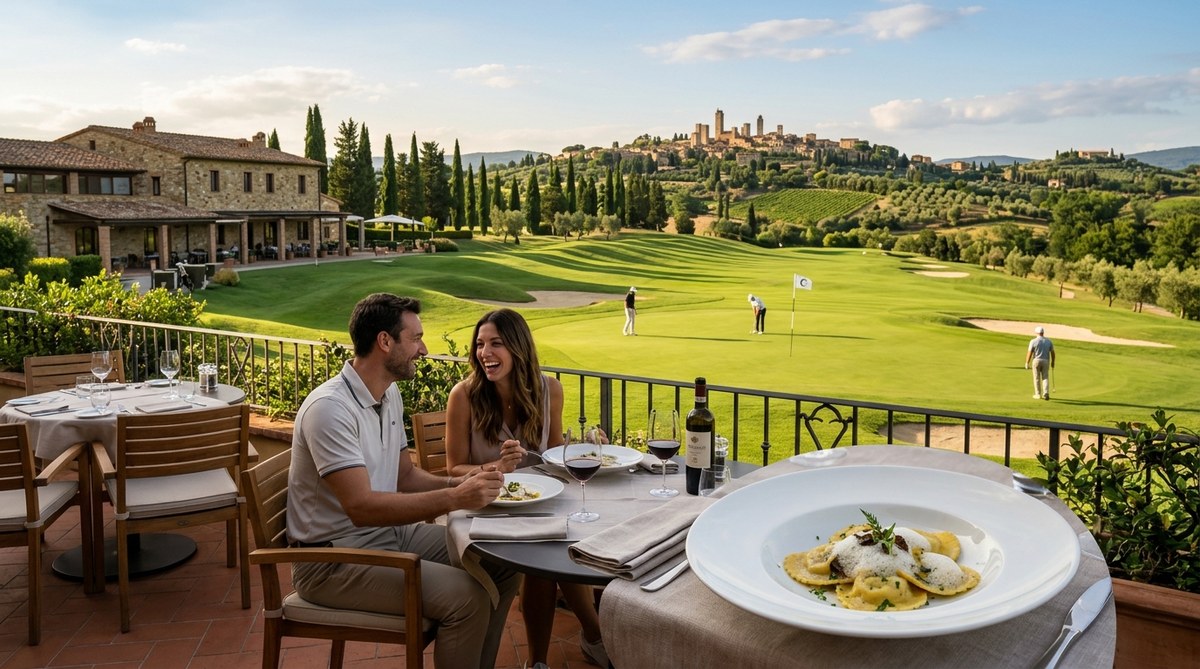
Pairing Precision Golf with World-Class Tuscan Cuisine: Courses with On-Site Michelin-Starred Dining
Picture this: you have just finished eighteen holes on a championship Tuscan course. The sun is low over the cypress trees, the air smells of warm earth and wild herbs, and your muscles feel that pleasant ache of a round well played. Now, instead of driving back to a separate restaurant, you walk fifty paces to a Michelin-starred dining room. Your aperitivo arrives before you have even taken off your glove. This is not a fantasy. This is the reality of Tuscany’s most exclusive golf resorts.
Tuscany now offers a handful of elite golf resorts with on-site Michelin-starred restaurants, meaning you can enjoy world-class dining without leaving the estate. These properties combine championship courses designed by legends, cellar-worthy wine lists, and kitchens run by celebrated chefs. For the discerning golfer who values fine food as much as fairway conditions, this is the ultimate luxury package.
Why Michelin Stars Matter on a Golf Holiday
If you are planning a premium golf break, you already know that the quality of the 19th hole matters. A tired clubhouse sandwich and a warm beer will not cut it when you are spending four figures on a week in Italy. What sets Tuscany apart from other European golf destinations is its ability to offer a genuine culinary pilgrimage without leaving the resort grounds.
The Michelin guide is notoriously strict. A star means outstanding cooking worth a detour. When a golf resort earns that recognition on site, it signals a serious commitment to quality. These are not hotels with a decent restaurant tacked on. These are estates where the kitchen brigade works with the same precision as the greenkeepers.
The Leading Michelin-Starred Golf Courses in Tuscany
Let us look at the resorts that have mastered this pairing. Each one offers something distinct, from ancient monastery settings to modern architectural marvels.
Castiglion del Bosco
This estate in the heart of the Val d’Orcia is perhaps the most complete expression of the Tuscan golf dream. The course, designed by Tom Fazio, winds through olive groves and vineyards with views that stretch to Monte Amiata. On site, you find the two-Michelin-starred restaurant Campo del Drago, run by chef Matteo Temperini.
What makes this place exceptional is the consistency. The same attention to detail that keeps the fairways immaculate also drives the kitchen. Temperini’s menu draws from the estate’s own farm, and the wine list reads like a who’s who of Brunello producers. You can play a morning round, enjoy a long lunch on the terrace, and be back in your villa by three o’clock without ever needing a car.
Royal Golf La Bagnaia
Situated near Siena, this resort offers something different. The course, designed by PGA legend Jim Fazio, is an 18-hole championship layout that has hosted international events. The on-site restaurant, Ristorante La Bagnaia, holds a Michelin star and focuses on modern interpretations of classic Sienese dishes.
The real draw here is the sheer scale of the resort. You have a spa, multiple accommodation options, and a clubhouse that feels more like a private members’ club. The restaurant uses ingredients sourced from the surrounding Crete Senesi, and the tasting menu changes with the seasons. If you want a full resort experience where fine dining is just one part of a larger luxury package, this is a strong choice.
Castello di Casole
This resort occupies a restored 10th century castle, and the dining experience matches the dramatic setting. The property’s restaurant, Ristorante Oliveto, has earned a Michelin star for its refined take on Tuscan tradition. The golf course, while not as famous as some others in the region, offers a beautifully maintained 9-hole layout that suits those who prefer a more relaxed pace.
What Castello di Casole does better than almost anyone is atmosphere. Dining in a castle courtyard after a round of golf, with the lights of the Val d’Orcia twinkling below, is an experience that lingers. The kitchen focuses on local ingredients, and the wine cellar is stocked with rare bottles from small producers.
How to Plan Your Michelin-Starred Golf Trip
Organising a holiday that combines championship golf with fine dining requires some thought. Here is a practical process to get it right.
-
Choose your base resort carefully. Look for properties that offer both a course you want to play and a restaurant you want to eat at. The whole point is convenience, so check that the restaurant is truly on site and not a short drive away.
-
Book your restaurant reservations before you arrive. Michelin-starred dining rooms at golf resorts are popular with both guests and outside visitors. Tables can go weeks in advance, especially during peak seasons like spring and autumn.
-
Plan your rounds around meal times. A late morning tee time followed by a long lunch works beautifully. Alternatively, book an early dinner after an afternoon round. Avoid scheduling a round immediately after a heavy tasting menu.
-
Consider the wine pairing. Tuscan chefs take wine seriously. Most starred restaurants offer pairings that highlight local producers. If you are playing the next morning, pace yourself. A full Brunello pairing with a six course menu will affect your swing.
-
Ask about private dining. Many of these resorts offer chef’s table experiences or private rooms for groups. If you are travelling with a party of golfers, this can elevate the entire trip.
What to Look For in a Michelin-Starred Golf Resort
Not all starred restaurants are created equal. Use this table to compare what different resorts offer.
| Resort | Course Type | Star Rating | Cuisine Style | Best For |
|---|---|---|---|---|
| Castiglion del Bosco | 18-hole championship (Fazio) | Two stars | Modern Tuscan with farm produce | Serious golfers who want the full package |
| Royal Golf La Bagnaia | 18-hole championship (Fazio) | One star | Modern Sienese | Groups who want resort amenities |
| Castello di Casole | 9-hole parkland | One star | Refined traditional | Couples seeking romance and relaxation |
Common Mistakes to Avoid
Even experienced luxury travellers can make errors when combining golf and Michelin dining. Here are the pitfalls to watch for.
-
Assuming all starred restaurants are open every day. Many Tuscan fine dining rooms close on Mondays and Tuesdays, and some shut for a month in winter. Always check the calendar before booking your flights.
-
Booking a tasting menu before a competition round. If you are playing a serious match, a heavy lunch will slow you down. Opt for a lighter menu or save the full degustation for your final evening.
-
Forgetting dress codes. Michelin-starred restaurants in Tuscany expect smart attire. You cannot walk in straight off the course in shorts and spikes. Most resorts have a changing area, so build in time to freshen up.
-
Ignoring the wine list until you sit down. Some of these cellars have bottles that are decades old. If you have a special occasion, call ahead and ask the sommelier to prepare something memorable.
Expert advice: “The best Tuscan golf resorts treat their restaurants as seriously as their fairways. When you book, ask the concierge to arrange a kitchen tour. Seeing the brigade at work before service gives you a real appreciation for the craft, and the chef will often adjust the menu to your preferences.” Marco V., former sommelier at Castiglion del Bosco.
The Social Side of Fine Dining at Golf Resorts
One aspect that often surprises British golfers is how social these dining rooms are. In the UK, clubhouse dining tends to be functional. In Tuscany, the restaurant is a destination in itself. You will find locals who drive an hour just for lunch, wine collectors who book tables to open rare bottles, and couples celebrating anniversaries. The atmosphere is lively, not hushed.
This makes these restaurants perfect for post-round networking or group dinners. If you are organising a corporate golf trip or a society outing, the on-site Michelin star removes the logistical headache of transport. Everyone can eat well, drink well, and walk back to their room.
Why the Combination Works So Well in Tuscany
Tuscany has a head start over other regions. The local food culture is already world class. Olive oil, pecorino cheese, Chianina beef, truffles, and wild boar are not imported luxuries. They grow and graze in the same hills where the golf courses sit. A chef in Tuscany does not need to source ingredients from far away. The best produce is within a few miles of the kitchen door.
This connection between the land, the course, and the table is what makes the Michelin-starred golf courses in Tuscany so special. You are not just playing golf and eating well. You are experiencing a complete sense of place. The soil under your feet on the fairway is the same soil that nourishes the vines and the vegetables. That continuity is rare, and it is worth travelling for.
Planning Your 2026 Visit
The 2026 season looks set to be busy. Tuscan golf tourism has grown steadily, and the Michelin-starred resorts are booking months ahead. If you are serious about a trip, here are some practical pointers.
-
Spring (April to June) and autumn (September to October) offer the best playing conditions and the most pleasant dining weather. Summer can be hot, and many starred restaurants close for a period in August.
-
Book your accommodation and restaurant at the same time. Some resorts offer package deals that include a round of golf and a tasting menu at a reduced rate.
-
Consider a multi course tour. You could spend three nights at Castiglion del Bosco, two at La Bagnaia, and finish at Castello di Casole. Each property is within 90 minutes of the others, and the variety of courses and cuisines keeps the trip fresh.
-
For more ideas on combining sport with culture, read our guide on championship golf courses in Tuscany that challenge even seasoned players. It covers the region’s most demanding layouts.
A Final Word on Value
Yes, these resorts are expensive. A round at Castiglion del Bosco plus a tasting menu with wine pairing will set you back several hundred euros. But compare that to the cost of a separate high end golf course and a separate Michelin-starred restaurant in the same region. You would pay similar amounts and spend extra on taxis and fuel. The on-site model actually offers better value when you factor in convenience, time saved, and the seamless experience.
For the golfer who wants the best of both worlds, there is no better option. Tuscany has perfected the art of pairing precision golf with world-class cuisine. The question is not whether you should go. The question is which resort you will try first.
Savoring the Memory Long After the Round
The beauty of a Michelin-starred golf holiday is that it stays with you. You will remember the 14th hole at Castiglion del Bosco, but you will also remember the pici cacio e pepe that followed it. You will recall the tricky dogleg at La Bagnaia, but also the Chianti Classico that the sommelier recommended. These resorts understand that a great golf trip feeds more than the competitive instinct. It feeds the soul.
When you return home, the photographs of the fairways will share space with pictures of beautifully plated dishes and wine glasses raised in a toast. That is the mark of a trip well spent. So go ahead. Book the tee time. Reserve the table. And let Tuscany show you how golf and gastronomy belong together.