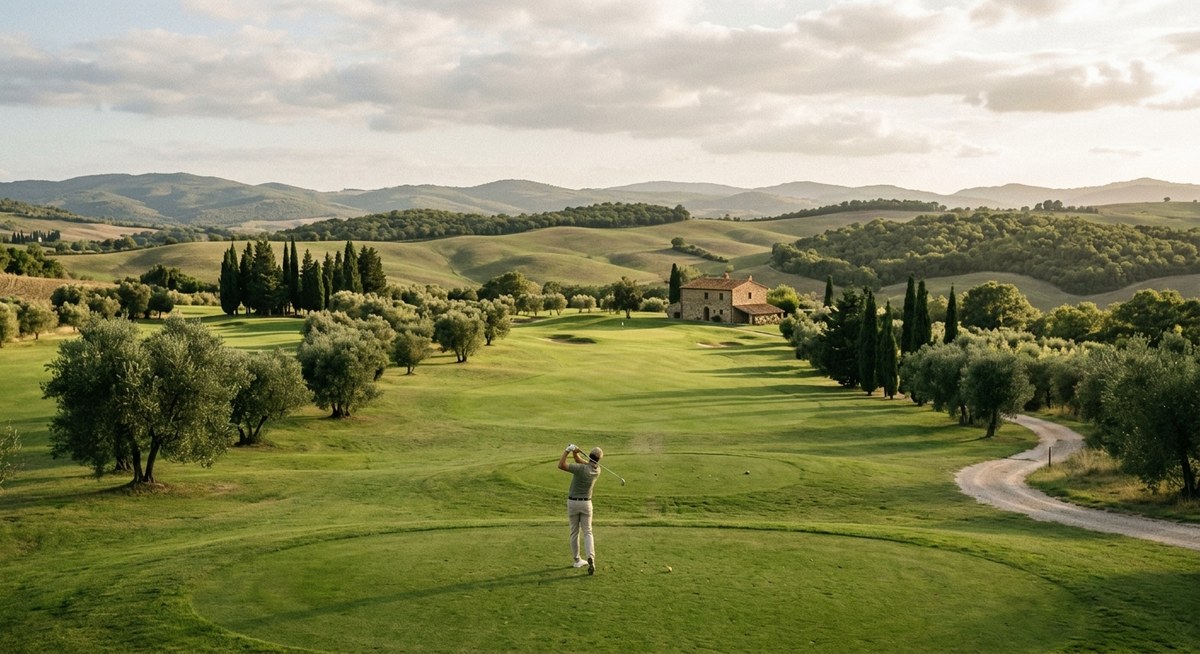
Hidden Gem Golf Courses in Southern Tuscany Away from Tourist Crowds
Most golfers planning a Tuscan trip end up at the same handful of courses near Florence and Siena. They book the famous names, arrive to crowded tee sheets, and leave wondering why their Italian golf dream felt more like a package tour than an authentic experience.
Southern Tuscany tells a different story. The courses here remain largely unknown to international visitors, tucked into landscapes where medieval hilltop towns outnumber tourists and vineyard roads lead to layouts that see more locals than tour groups.
Southern Tuscany’s golf courses offer experienced players peaceful rounds through authentic Italian countryside, far from crowded tourist circuits. From [Maremma](https://en.wikipedia.org/wiki/Maremma)’s coastal layouts to Valdichiana’s rolling farmland courses, these hidden gems combine challenging play with genuine local character, affordable green fees, and easy access to wine country, thermal springs, and medieval villages that define real Tuscan life beyond the guidebooks.
Why Southern Tuscany Remains Golf’s Best Kept Secret
The region south of Siena receives a fraction of the visitors who flood Florence and Pisa. This geographic reality creates something rare in European golf tourism: genuinely peaceful courses where you can book a same-day tee time in peak season.
Golf courses southern Tuscany features occupy three distinct zones. The Maremma coastline runs from Punta Ala to Monte Argentario, offering sea views and Mediterranean breezes. The Val d’Orcia and Crete Senesi provide those iconic rolling hills you see in photographs. The Valdichiana valley, bordering Umbria, delivers farmland courses where cattle graze beside fairways.
Each zone maintains its own character. Coastal courses lean towards links-style play with firm turf and coastal winds. Inland layouts wind through forests and vineyards, with elevation changes that reward strategic thinking over pure distance.
The infrastructure here developed for Italians, not tourists. Clubhouses serve proper espresso and local wine, not international buffets. Starters speak Italian first, English second. Green fees cost 30 to 50 percent less than northern Tuscany equivalents.
This authenticity attracts a specific type of golfer. You want the sport, yes, but also the cultural experience that comes from playing where locals play. You prefer a handshake from a club member over a corporate welcome packet.
Outstanding Layouts Worth Planning Your Trip Around
Royal Golf La Bagnaia sits 12 kilometres south of Siena in the Crete Senesi. Robert Trent Jones II designed this 18-hole layout to follow natural contours through clay hills and oak forests. The course stretches to 6,200 metres from the back tees, with elevation changes that make club selection critical on approach shots.
What sets La Bagnaia apart is its condition. The maintenance rivals championship golf courses in tuscany that challenge even seasoned players, yet tee times remain available even during August. The practice facilities include a covered driving range, short game area, and putting greens that actually match course speeds.
Golf Club Valdichiana, near Cortona, occupies former farmland in the Chiana valley. This 18-hole course plays shorter at 5,800 metres but demands accuracy over length. Narrow fairways lined with mature trees punish wayward drives. Water comes into play on six holes, including a memorable island green on the par-3 14th.
The clubhouse here exemplifies southern Tuscany’s approach to golf hospitality. The restaurant sources ingredients from neighbouring farms. The pro shop stocks Italian brands you won’t find in tourist areas. Members treat visitors like guests, not revenue.
Argentario Golf Club, on the Monte Argentario peninsula, offers the region’s premier coastal experience. The course occupies a nature reserve overlooking the Tyrrhenian Sea, with holes routed through Mediterranean scrubland, umbrella pines, and olive groves. Sea breezes affect play throughout the day, particularly on the exposed back nine.
This layout favours shot-makers who can work the ball both ways. Straight hitters struggle when wind pushes balls toward natural hazards. The greens feature subtle breaks that become treacherous as they firm up in afternoon sun.
Pelagone Golf Club, near Gavorrano in the Maremma hills, combines golf with resort amenities. The 27-hole facility includes three distinct nines that can be played in various combinations. The Red and Blue nines wind through wooded valleys. The White nine climbs into open hillside terrain with views across to the sea.
Green fees here include access to the resort’s thermal pools, fed by natural hot springs. This combination of golf and wellness attracts Italian visitors who spend entire weekends on property.
Planning Your Southern Tuscany Golf Journey
Timing your visit requires understanding regional weather patterns and local tourism cycles. Here’s how to structure your planning:
- Book between April and June or September and October for optimal conditions and fewer crowds
- Arrange tee times directly with clubs rather than through booking platforms to access member rates
- Base yourself in a central location like Montepulciano or Grosseto to access multiple courses within 45 minutes
- Schedule afternoon rounds during summer months when morning heat makes early tee times uncomfortable
- Plan rest days between golf to visit thermal springs, wine estates, and medieval towns
Southern Tuscany’s golf season runs nearly year-round. Coastal courses remain playable through winter, though inland layouts may close temporarily after heavy rain. Summer heat peaks in July and August, when locals abandon courses between noon and 4pm.
The how to plan a week long golf holiday in tuscany without the stress approach works particularly well here. You can combine three or four rounds with non-golf activities that showcase the region’s broader appeal.
What Makes These Courses Different From Tourist Favourites
Golf courses southern Tuscany provides stand apart from northern counterparts in several measurable ways. Understanding these differences helps set appropriate expectations.
| Aspect | Southern Tuscany | Northern Tourist Courses |
|---|---|---|
| Average green fees | €50 to €80 | €90 to €150 |
| Tee time availability | Same-day often possible | Book weeks ahead |
| English fluency | Moderate | Fluent |
| Course traffic | 40 to 80 rounds daily | 120+ rounds daily |
| Clubhouse style | Local, authentic | International, polished |
| Practice facilities | Basic to good | Excellent |
These aren’t value judgments. Some golfers prefer the polish and predictability of established tourist courses. Others want the authentic local experience that comes with occasional communication challenges and simpler amenities.
The golf itself tends toward traditional European design principles. You’ll find fewer water hazards and bunkers than American-style courses, but more strategic routing that uses natural terrain. Tree-lined fairways reward accuracy. Firm conditions favour the ground game.
Southern courses also integrate with their surroundings differently. Northern tourist courses often feel separate from their communities, designed primarily for visitors. Southern layouts function as genuine golf clubs where members play weekly and know the staff by name.
Combining Golf With Southern Tuscany’s Other Attractions
The region’s appeal extends well beyond fairways. Strategic planning lets you experience multiple facets of Tuscan life during a golf-focused trip.
The Maremma coast offers beaches, seafood restaurants, and the Tarot Garden sculpture park. After morning rounds at Argentario, you can swim at Feniglia beach or take a boat to Giglio Island. The area’s why maremma is tuscany’s hidden gem for golf and coastal luxury reputation comes from this combination of activities.
Val d’Orcia provides those postcard landscapes of cypress-lined roads and hilltop villages. Between rounds at La Bagnaia, visit Pienza for pecorino cheese, Montalcino for Brunello wine, or Bagno Vignoni’s Renaissance thermal baths. The valley’s UNESCO status protects its agricultural character, meaning views from 50 years ago remain largely unchanged.
Valdichiana borders both Tuscany and Umbria, creating cultural crossover. Cortona’s Etruscan history and Renaissance art complement golf at Valdichiana club. Montepulciano’s wine cellars and medieval architecture fill non-golf days. The thermal springs at Chianciano Terme soothe muscles after walking 18 holes.
“Southern Tuscany rewards golfers who see their sport as part of a broader travel experience, not the sole focus. The courses here integrate with wine country, thermal culture, and medieval history in ways that northern tourist circuits simply cannot replicate.”
Practical Considerations for International Visitors
Getting to southern Tuscany requires slightly more effort than reaching Florence or Pisa, but improved infrastructure has simplified logistics considerably.
Florence airport (FLR) and Rome Fiumicino (FCO) both work as entry points. Florence sits closer to northern courses, while Rome provides better access to Maremma. Rental cars become essential, as public transport doesn’t serve golf courses effectively.
Driving in rural Tuscany differs from urban Italian driving. Roads are well-maintained but narrow, winding through hills with limited visibility. GPS works reliably, though some courses occupy rural addresses that require specific coordinates rather than street addresses.
Accommodation options range from agriturismi (farm stays) to boutique hotels in historic centres. Staying in towns rather than at golf resorts provides authentic experiences and lower costs. Montepulciano, Grosseto, and Castiglione della Pescaia all offer good bases with multiple courses within 30 to 45 minutes.
The where to stay for the ultimate tuscan golf holiday a resort comparison analysis covers accommodation strategies in depth, but southern Tuscany’s smaller scale makes location less critical than in sprawling northern regions.
Language presents occasional challenges. Golf terminology translates reasonably well, but clubhouse interactions and restaurant dining benefit from basic Italian phrases. Staff at southern courses speak less English than northern tourist destinations, though they compensate with patience and helpfulness.
Course Conditions and Maintenance Standards
Southern Tuscany’s climate creates different turf conditions than golfers from northern Europe or North America might expect. Understanding these differences prevents disappointment and helps you adjust your game.
Summer heat and limited rainfall produce firm, fast conditions from June through September. Fairways play hard, favouring the bump-and-run over high, soft approaches. Greens firm up considerably, making holding surfaces difficult without proper spin or trajectory control.
Courses here use warm-season grasses that thrive in Mediterranean heat but go dormant in winter. Bermuda grass fairways and paspalum greens stay green through summer, then brown from December through February. This dormancy doesn’t affect playability, but it changes the visual experience.
Irrigation systems vary by course. Newer layouts like La Bagnaia maintain consistent moisture levels. Older courses may show dry patches during peak summer. These aren’t maintenance failures but rather adaptations to water conservation requirements.
The maintenance philosophy tends toward firm and fast rather than soft and lush. Greenkeepers prepare courses for skilled players who can control trajectory and spin. High handicappers sometimes struggle with these conditions, particularly around greens where firm turf rejects poorly struck approaches.
Understanding Green Fees and Booking Protocols
Pricing structures at golf courses southern Tuscany follows differ from standardized tourist course models. Learning these systems helps you secure better rates and avoid confusion.
Most courses offer multiple fee tiers. Rack rates apply to walk-up visitors. Reduced rates reward advance bookings, typically 10 to 20 percent off. Some clubs extend member guest rates to visitors who book directly by phone or email rather than through online platforms.
Twilight rates begin around 2pm in summer, 1pm in shoulder seasons. These typically cost 40 to 50 percent less than morning rates. The trade-off involves potentially not finishing 18 holes before dark, though summer daylight extends until 9pm.
Package deals combining multiple rounds often make sense for week-long visits. Booking three or four rounds upfront can reduce per-round costs by 25 percent. Some courses also bundle golf with meals or spa access at affiliated properties.
Payment methods vary. Larger courses accept international credit cards. Smaller clubs may request cash or bank transfers for advance bookings. Confirming payment options when booking prevents arrival complications.
Cancellation policies tend toward flexibility. Most courses allow free cancellation up to 48 hours before tee times. This flexibility reflects lower demand pressure compared to tourist-heavy northern courses.
When Golf Meets Wine Country Culture
Southern Tuscany’s golf courses occupy prime wine-producing territory. The same hills that create interesting golf holes also provide ideal vineyard microclimates.
Montepulciano’s Vino Nobile production centres around Valdichiana golf territory. Montalcino’s Brunello vineyards surround La Bagnaia. Morellino di Scansano comes from Maremma hills near Pelagone. This proximity lets you combine morning golf with afternoon winery visits.
The how tuscan vineyard golf courses combine wine country charm with exceptional play concept reaches its fullest expression here. Unlike northern courses that add vineyards as amenities, southern layouts exist within working wine regions where viticulture predates golf by centuries.
Clubhouse restaurants reflect this wine culture. Lists emphasize local producers, often including bottles unavailable in retail channels. Sommeliers can arrange winery visits and tastings, leveraging relationships with neighbouring estates.
The where to find tuscany’s best wine pairings after your round experience becomes simpler in southern Tuscany. You’re already in wine country, surrounded by cellars and tasting rooms that welcome visitors without the crowds that plague Chianti tourism.
Equipment and Clothing Considerations
Southern Tuscany’s conditions require specific equipment choices and clothing strategies that differ from typical European golf destinations.
Firm turf and fast greens favour lower-spinning golf balls. Premium tour balls often spin too much for these conditions, particularly in summer heat. Mid-compression balls designed for firm conditions perform better for most handicap levels.
Club selection shifts toward lower lofts. The ball flies further in warm, dry air and releases more on firm fairways. What plays as a 7-iron in Scotland might be a 9-iron here. Experienced caddies can help with these adjustments, though southern courses employ fewer caddies than northern tourist destinations.
Clothing needs emphasize sun protection over rain gear. Wide-brimmed hats, UV-rated shirts, and high-SPF sunscreen become essential from May through September. Summer temperatures regularly exceed 30°C, making breathable fabrics critical for comfort during four-hour rounds.
Footwear should prioritize grip on firm, sometimes dusty surfaces. Spikeless shoes with aggressive tread patterns work well. Traditional metal spikes may damage greens during dry periods, and some courses prohibit them entirely.
Cart availability varies. Some courses require walking, others offer carts for additional fees. Confirming cart policies when booking helps you pack appropriately. If walking is mandatory, lightweight carry bags or push carts make sense over full cart bags.
Making the Most of Quieter Courses
The lower traffic at golf courses southern Tuscany creates opportunities that crowded tourist courses cannot match. Understanding how to leverage this advantage enhances your experience.
Pace of play rarely becomes an issue. Five-hour rounds are common, not because of slow play but because groups take time to enjoy surroundings. You can pause to photograph views, practice difficult shots, or simply appreciate the setting without feeling rushed.
Staff availability increases when courses aren’t packed. Pros have time for lessons or club fitting. Restaurant staff can discuss menu details and wine selections. Greenkeepers might explain course setup decisions or upcoming changes.
This relaxed atmosphere particularly benefits golfers traveling with non-playing partners. Spouses or friends can walk along without disturbing other groups, take photos, or join for a few holes. Many southern courses welcome this flexibility in ways that busy northern courses cannot accommodate.
The quieter environment also helps you focus on your game. Without constant distractions from crowded courses, you can work on specific aspects of your play, experiment with different strategies, or simply enjoy golf at a contemplative pace.
Accessibility for Different Skill Levels
Golf courses southern Tuscany spans the full difficulty spectrum, from player-friendly layouts to stern championship tests. Matching your skill level to appropriate courses prevents frustration.
Higher handicappers should prioritize Valdichiana and Pelagone. Both offer multiple tee options that keep holes manageable without sacrificing interest. Wider fairways and fewer forced carries accommodate less consistent ball-striking.
Mid-handicappers find the most options. La Bagnaia, Argentario, and most Maremma courses provide balanced challenges that reward good shots without punishing minor mistakes. These layouts let you score well on your best days while remaining interesting when your game isn’t sharp.
Low handicappers and scratch players should seek out championship tees at La Bagnaia or tackle Argentario in windy conditions. These setups demand consistent ball-striking, creative shot-making, and solid course management.
The table below helps match courses to skill levels:
| Course | Best for Handicap | Key Challenge |
|---|---|---|
| Golf Club Valdichiana | 15 to 28 | Accuracy over distance |
| Pelagone Golf Club | 10 to 25 | Variety across 27 holes |
| Royal Golf La Bagnaia | 5 to 18 | Elevation and length |
| Argentario Golf Club | Scratch to 15 | Wind and firm conditions |
Beyond the Scorecard
The best golf courses southern Tuscany experiences extend beyond the 18th green. Understanding this broader context helps you appreciate what makes these courses special.
After your round, linger at the clubhouse. Order a Negroni or local wine. Strike up conversations with members, who often speak some English and enjoy meeting international visitors. These interactions provide insights into Italian golf culture that guidebooks miss.
Many courses host weekly competitions open to visitors. Playing in these events, even as a non-member, offers authentic experiences and potential friendships. The competitive level varies, but the social atmosphere remains welcoming.
The the art of the 19th hole tuscany’s most luxurious golf clubhouse experiences concept takes different form in southern Tuscany. Luxury here means quality ingredients and genuine hospitality, not marble and crystal.
Some courses organize food and wine events that pair golf with local culture. These might include tournaments followed by winery dinners, cooking classes with club chefs, or truffle hunting expeditions in autumn. Checking course calendars when planning your visit can reveal these special opportunities.
Why This Region Deserves Your Attention
Golf courses southern Tuscany rewards golfers who value authenticity over amenities, peaceful rounds over prestigious names, and cultural immersion over packaged experiences.
You won’t find the manicured perfection of Scotland’s finest or the dramatic elevation of Alpine courses. What you will find is genuine Italian golf culture, played on well-designed courses through landscapes that inspired Renaissance painters, at prices that leave budget for excellent meals and fine wine.
The courses here serve primarily Italian members, not international tourists. This creates different expectations and experiences. English isn’t always spoken fluently. Clubhouses favour substance over style. Tee times remain flexible because demand never overwhelms capacity.
For experienced golfers planning Tuscan trips, this represents opportunity. You can play excellent courses in peaceful settings, then spend evenings in medieval towns that see few tour buses. You can combine your sport with wine tastings, thermal baths, and countryside drives through landscapes that remain largely agricultural.
The planning your first golf holiday in tuscany everything you need to know process becomes simpler when focusing on southern regions. Fewer choices, easier logistics, and lower costs reduce planning stress while increasing authentic experiences.
Your Southern Tuscany Golf Adventure Starts Here
The golf courses scattered across southern Tuscany’s hills and coastline offer something increasingly rare in European golf tourism: genuine discovery.
These aren’t secret spots that will disappear once word spreads. They’re established clubs that simply never attracted mass tourism because they sit outside the Florence-Pisa-Siena triangle where most visitors concentrate their time.
That geographic reality creates your opportunity. You can play excellent golf on uncrowded courses, stay in authentic towns, eat at restaurants where locals outnumber tourists, and experience Tuscany as it actually exists rather than as guidebooks portray it.
Start by choosing one or two courses that match your skill level and interests. Book directly with clubs to access better rates and establish personal connections. Build your trip around golf but leave room for spontaneous discoveries: a winery you pass on the drive to the course, a medieval festival in a hillside village, a thermal spring recommended by your hotel owner.
Southern Tuscany rewards this flexible approach. The region’s smaller scale and slower pace accommodate last-minute changes and unexpected detours. Your golf holiday becomes a genuine Italian experience, not just a series of tee times in a beautiful setting.
Pack your clubs, brush up on basic Italian phrases, and prepare for golf as it should be: challenging, peaceful, and deeply connected to the landscape and culture around it.