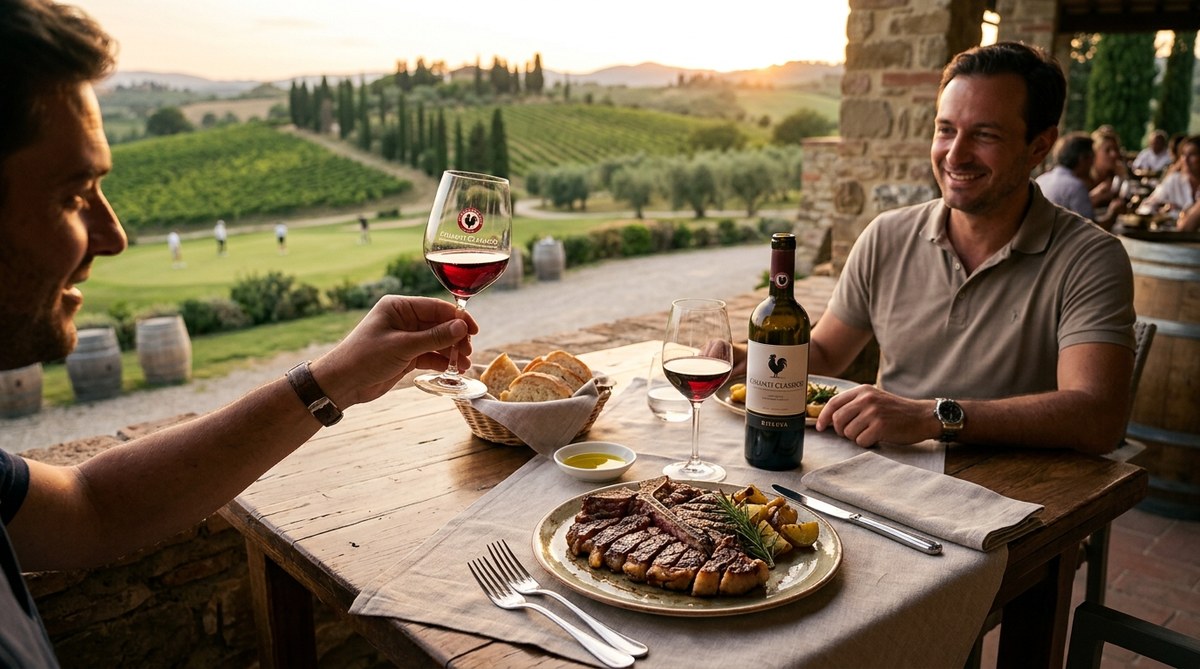
How to Pair Chianti Classico with Your Post-Round Dinner in Tuscany
You have just finished eighteen holes at a Tuscan golf resort. The sun is low over the vineyards, your shoulders are warm, and the clubhouse terrace calls your name. You order a bottle of Chianti Classico without thinking. But what food should follow? This is the moment where a good holiday becomes a great one. The right pairing turns a simple dinner into the memory you carry home.
Chianti Classico is a Sangiovese-based wine with high acidity, firm tannins, and cherry notes. It pairs best with fatty meats, tomato sauces, and aged cheeses. Avoid pairing it with delicate white fish or raw salads. For golfers, the ideal post-round meal is bistecca alla Fiorentina or a hearty pappardelle al cinghiale. The wine’s acidity cuts through fat and cleanses the palate.
Why Chianti Classico Works So Well After a Round
Chianti Classico comes from the historic zone between Florence and Siena. The wine is built for food. Its high acidity and moderate tannins mean it stands up to rich dishes without overwhelming them.
Think about what your body wants after four hours on the course. You have burned energy, maybe dehydrated a little, and your appetite is sharp. A wine that refreshes rather than fatigues is exactly right. Chianti Classico does that. It cleans your palate between bites and keeps you reaching for the next mouthful.
The key characteristics to remember:
- High acidity that cuts through fat
- Cherry and violet aromas
- Firm but not aggressive tannins
- A savoury, earthy finish
These traits make it a natural partner for Tuscan cuisine. And Tuscan cuisine, as you will discover, is built around the same principles.
The Four Great Pairings for Your Post-Round Dinner
Not all Tuscan dishes work equally well with Chianti Classico. Some sing. Some fall flat. Here are the four pairings that deliver every time.
1. Bistecca alla Fiorentina
This is the king of Tuscan steaks. A thick cut of Chianina beef, grilled over hot coals, served rare. The meat is tender, juicy, and full of flavour.
Chianti Classico handles this dish beautifully. The tannins bind with the protein in the meat, softening the wine while the fat coats your mouth. Each sip tastes better than the last.
Order your steak for two people. Ask for it “al sangue” (rare). Let the waiter bring a Chianti Classico Riserva if you want more structure. The extra year or two in oak gives the wine more grip to match the beef.
2. Pappardelle al Cinghiale
Wild boar ragù is a Tuscan classic. The sauce simmers for hours with tomatoes, red wine, and herbs. It is rich, gamey, and deeply satisfying.
Wide pappardelle noodles catch the sauce perfectly. Chianti Classico mirrors the savoury notes of the boar and lifts the tomato acidity. This is comfort food that feels luxurious.
3. Pecorino Cheeses with Honey
After your main course, a cheese board is tempting. Tuscan pecorino ranges from fresh and milky to aged and crumbly. The aged varieties pair especially well with Chianti Classico.
Drizzle a little chestnut honey over the cheese. The sweetness contrasts with the wine’s acidity, and the saltiness of the pecorino softens the tannins. It is a simple trick that transforms both the cheese and the wine.
4. Pappa al Pomodoro
This is bread and tomato soup, but do not underestimate it. Stale bread is softened with crushed tomatoes, basil, garlic, and olive oil. It is humble, fresh, and packed with flavour.
Chianti Classico and tomatoes are a classic match. The wine’s acidity mirrors the tomato’s own brightness. It feels light on the palate, perfect if you do not want a heavy meal after golf.
A Step-by-Step Guide to Ordering Your Pairing
You are at the restaurant. The menu is in Italian. Here is how to handle it.
-
Start with a glass of Chianti Classico while you read the menu. This wakes up your palate and lets you decide if you want a Riserva or a standard bottling.
-
Ask the waiter for the “menù della casa” (house menu). Many Tuscan restaurants offer a fixed price menu that features local dishes. These are often the best value and the most authentic.
-
Choose one protein dish. Do not order two heavy meat courses. The wine will struggle to match both. Pick either the steak or the boar, not both.
-
Order a side of cannellini beans or grilled vegetables. The earthiness of beans works well with Chianti Classico, and greens provide a palate cleanser between sips.
-
Finish with pecorino and honey. It closes the meal elegantly without needing a dessert wine.
Common Mistakes and How to Avoid Them
Even experienced wine drinkers get this wrong. Here is a table of the most frequent errors.
| Mistake | Why It Fails | What to Order Instead |
|---|---|---|
| Pairing with raw fish crudo | The wine’s tannins make fish taste metallic | Grilled seafood or a white wine like Vermentino |
| Serving Chianti Classico too warm | The alcohol becomes prominent and the fruit fades | Serve at 16-18°C, about 20 minutes out of the cellar |
| Ordering it with chocolate dessert | The bitterness clashes with the wine’s tannins | Skip dessert or choose a Vin Santo |
| Drinking it too young without decanting | The wine feels tight and closed | Decant for 30 minutes or choose a slightly older vintage |
| Pairing with a creamy pasta sauce | The cream coats your mouth and dulls the wine | Stick to tomato-based sauces |
Expert advice from a Tuscan sommelier: “If you are unsure, order the Chianti Classico with anything that has tomato, rosemary, or grilled meat. Those three ingredients are the safest bet in Tuscan cooking. Avoid anything with raw egg or very delicate cream sauces.”
How to Choose the Right Chianti Classico for Your Meal
Not every Chianti Classico is the same. The label tells you a lot.
- Chianti Classico (standard): Good for pasta dishes and lighter meats. Drink within 5 years of the vintage.
- Chianti Classico Riserva: Aged at least 24 months. Better with steak and game. Look for vintages 2019 or 2020 now.
- Chianti Classico Gran Selezione: The top tier. Aged 30 months or more. Best for special occasions and the finest steaks.
For a post-round dinner, the Riserva is the sweet spot. It has enough structure to match hearty food but remains approachable enough to enjoy without overthinking.
Bringing the Experience Home
You do not need to be in Tuscany to enjoy this pairing. British butchers now sell Chianina beef from specialist suppliers. Italian delis stock pecorino and good quality pappardelle.
When you buy Chianti Classico in the UK, look for the black rooster seal on the bottle neck. That is the Consorzio’s guarantee of authenticity. A bottle costs between £15 and £30 in most shops. The 2020 and 2021 vintages are drinking beautifully now.
For your next Tuscan golf holiday, plan your dinners around the wine. Book a restaurant that lists its Chianti Classico producers on the menu. Ask the sommelier which vineyard they recommend. The best pairings come from conversation, not from a list.
And when you sit down after a long round, with a glass of ruby red wine in front of you and a plate of something slow cooked and honest, you will understand why Tuscany is not just a place you play golf. It is a place you taste.