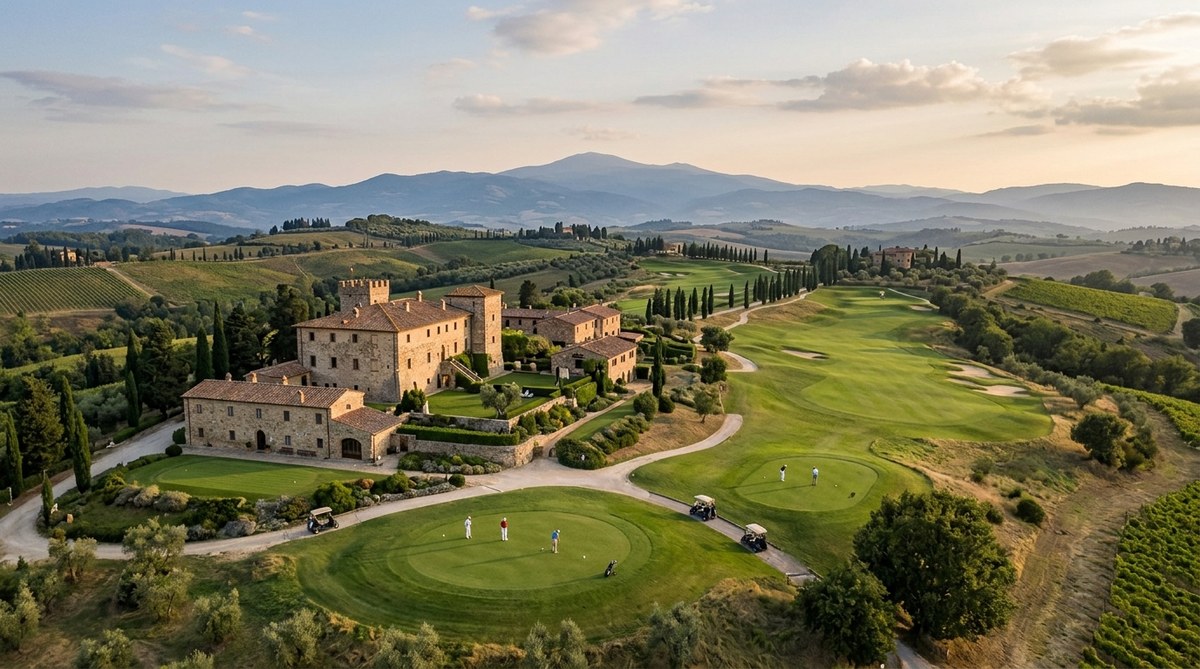
Why Castello di Casole Ranks Among Europe’s Most Exclusive Golf Destinations
Italy’s luxury golf resorts offer something most European destinations can’t match: the perfect marriage of championship-caliber courses and authentic Italian hospitality. You’ll find properties where the greens are maintained to tour standards, yet the 19th hole serves Brunello di Montalcino from the estate’s own cellars. Where your caddie might recommend a trattoria in the next village that’s been family-run for three generations. This is golf at its most refined, without the stuffiness that can plague traditional clubs.
Italy’s best luxury golf resorts combine championship courses designed by legends like Tom Weiskopf with five-star hospitality rooted in Italian tradition. Castello di Casole and Castiglion del Bosco lead Tuscany’s offerings, whilst Verdura Resort dominates Sicily’s coast. Each property delivers exceptional golf alongside wine estates, Michelin-standard dining, and cultural experiences that extend far beyond the fairways, making them stand apart from typical European golf destinations.
What separates Italy’s luxury golf resorts from the rest of Europe
The best luxury golf resorts in Italy don’t just offer great golf. They provide an immersive experience that weaves together sport, culture, gastronomy, and landscape in ways you won’t find elsewhere.
Consider the typical golf resort model. Manicured grounds. Professional service. Perhaps a spa. Fine dining that could be anywhere from Scotland to Spain. Now contrast that with waking up in a restored 10th-century castle, playing a round designed by a major champion through olive groves and vineyards, then ending your day with a wine tasting led by the estate’s own sommelier who sources from vines visible from the 14th green.
That’s the Italian difference.
These properties understand that their guests don’t just want golf. They want stories. They want to return home and tell friends about the truffle hunting excursion before their morning tee time. About the cooking class with a Tuscan nonna who taught them to make pici pasta. About the private tour of Siena‘s Palio stables arranged by the concierge.
“The finest Italian golf resorts recognize that the course is just the beginning. The real luxury lies in how seamlessly they integrate golf into the broader Italian experience of art, food, wine, and landscape.” — Travel + Leisure Resort Review Panel
The courses themselves rival anything you’ll find at St Andrews, Valderrama, or Gleneagles. But the context is distinctly Italian. This isn’t golf imposed on the landscape. It’s golf that emerges from it, following the natural contours of Tuscan hills or Sicilian coastlines.
Castello di Casole and the Tuscan golf resort renaissance
Castello di Casole sits on 4,200 acres of unspoilt Tuscan countryside, about 45 minutes south of Florence. The property has earned recognition as Europe’s top resort by Travel + Leisure readers multiple times, and for good reason.
The golf course here is a par-72 layout that stretches to 6,700 yards from the championship tees. It’s challenging without being punishing. The design respects the rolling terrain, incorporating natural elevation changes that give you stunning vistas of Val d’Elsa on nearly every hole.
What makes Castello di Casole special extends well beyond the course. The property includes a restored medieval castle dating back to the 10th century. The accommodations range from luxury suites in the main castle to private villas scattered across the estate. Each villa comes with its own infinity pool and dedicated concierge service.
The estate produces its own olive oil and wine. You can arrange tastings or tours of the production facilities. The spa uses products derived from estate-grown botanicals. Even the restaurants source ingredients from the property’s organic gardens and nearby farms with which they’ve built relationships over decades.
For golfers, the practice facilities match what you’d expect at a major championship venue. There’s a double-ended driving range, short game area, and putting greens. Private instruction is available from PGA-certified professionals who understand the nuances of the course.
The location provides easy access to Siena (20 minutes), Florence (45 minutes), and smaller hill towns like San Gimignano and Volterra. Many guests split their time between golf and cultural excursions.
Castiglion del Bosco breaks into Golf World’s Top 100
Rosewood Castiglion del Bosco made headlines when it debuted at number 53 in Golf World’s Top 100 World Resorts ranking. That’s the highest new entry in the list’s recent history, and it speaks to the property’s exceptional standards.
The resort occupies a 5,000-acre estate in Montalcino, the heart of Brunello wine country. The course is a Tom Weiskopf design that takes full advantage of the dramatic Tuscan landscape. It plays to 6,400 yards from the back tees, with strategic bunkering and undulating greens that reward thoughtful course management over pure power.
What sets Castiglion del Bosco apart is the integration of wine culture into every aspect of the experience. The estate produces some of Montalcino’s most respected Brunello. The wine cellars date back centuries, and tours reveal not just the modern winemaking process but the historical evolution of viticulture in the region.
The accommodations include suites in the restored borgo (medieval village) and private villas. Each property maintains original architectural details like exposed beam ceilings and terracotta floors whilst incorporating modern luxury amenities.
Dining here rivals Michelin-starred restaurants in Florence or Rome. The executive chef works directly with local producers and the estate’s own gardens. Menus change with the seasons, reflecting what’s actually growing in the surrounding countryside.
The spa offers treatments inspired by traditional Tuscan wellness practices, updated with modern techniques. There’s a focus on products made from local ingredients like grape seed oil, honey, and thermal spring water.
Beyond golf and wine, the resort arranges experiences that connect guests with local culture. Private visits to nearby abbeys. Truffle hunting with trained dogs and expert guides. Hot air balloon rides over the Val d’Orcia at sunrise.
Sicily’s Verdura Resort brings coastal luxury to Italian golf
Verdura Resort on Sicily’s southern coast offers a completely different experience from Tuscany’s inland properties. Here, the Mediterranean provides the backdrop for two championship courses and a 9-hole par-3 layout.
The East and West courses were designed by Kyle Phillips, who also created Kingsbarns in Scotland. Both stretch to over 7,000 yards from the championship tees. The layouts incorporate the coastal terrain, with several holes playing along dramatic cliffs above the sea.
The climate allows year-round golf. Even in winter, temperatures rarely drop below 15°C. Summer can be warm, but morning tee times and sea breezes keep conditions comfortable.
Verdura’s accommodations include rooms, suites, and villas, many with private pools and direct access to the beach. The property spans nearly two miles of coastline, so you’re never far from the water.
The resort takes Sicilian cuisine seriously. Multiple restaurants showcase the island’s distinctive culinary traditions, which blend Italian, Arabic, and Spanish influences. Fresh seafood features prominently, often caught that morning from local boats.
The spa is one of Europe’s largest, at over 4,000 square metres. Treatments draw on Sicily’s thermal spring traditions and use local ingredients like sea salt, citrus, and volcanic minerals.
For non-golfers or rest days, the resort offers extensive amenities. Six tennis courts. A football academy for younger guests. Water sports including sailing, windsurfing, and diving. Cooking classes focused on Sicilian specialties.
The location provides access to some of Sicily’s most significant archaeological sites. The Valley of the Temples at Agrigento is 30 minutes away. Day trips to Mount Etna or the baroque towns of southeastern Sicily are easily arranged.
How to choose the right luxury golf resort for your Italian holiday
Selecting among Italy’s top golf resorts depends on what you value beyond the golf itself. Here’s a framework for making that decision.
Location and accessibility
Consider how you’ll arrive and what else you want to see. Tuscan resorts like Castello di Casole and Castiglion del Bosco put you within easy reach of Florence, Siena, and countless hill towns. You can combine golf with art museums, medieval architecture, and wine country touring.
Verdura Resort in Sicily requires a flight to Palermo or Catania, then a drive. But it offers beach access and proximity to Greek temples and baroque towns you won’t find in Tuscany.
Properties near Florence also work well if you’re planning a multi-city Italian trip. You can easily add Rome or Venice before or after your golf stay.
Course challenge and variety
If you’re a serious golfer who wants championship-level challenge, prioritize resorts with longer, more demanding layouts. Verdura’s two 18-hole courses provide variety within a single property. Castiglion del Bosco’s Weiskopf design rewards strategic thinking.
For groups with mixed abilities, look for resorts that offer multiple tee options or shorter layouts. Castello di Casole’s single course works well for this, as it’s challenging from the tips but playable for higher handicappers from forward tees.
Cultural and culinary priorities
Wine enthusiasts should lean toward Montalcino (Castiglion del Bosco) or Chianti properties. The integration of wine culture runs deeper than at coastal resorts.
If you want beach time or water sports alongside golf, Sicily’s Verdura Resort is the clear choice. Tuscany’s golf resorts are inland, beautiful but landlocked.
For access to major art and architecture, Tuscan properties near Florence and Siena can’t be beaten. You can see Michelangelo’s David, the Uffizi, and the Duomo between rounds.
Comparing Italy’s top golf resorts at a glance
| Resort | Location | Course Designer | Key Strengths | Best For |
|---|---|---|---|---|
| Castello di Casole | Tuscany (Siena) | Estate design | Medieval castle, extensive grounds, family-friendly | Cultural touring, wine country |
| Castiglion del Bosco | Tuscany (Montalcino) | Tom Weiskopf | Brunello wine estate, Golf World Top 100 | Serious golfers, wine enthusiasts |
| Verdura Resort | Sicily (Sciacca) | Kyle Phillips | Two championship courses, beach access | Year-round golf, coastal luxury |
| Argentario Golf Resort | Tuscany (Maremma) | Multiple layouts | Coastal Tuscany, less crowded | Hidden gem seekers, nature lovers |
What makes a golf resort truly luxurious in the Italian context
Luxury in Italy means something different than in Dubai or Las Vegas. It’s not about over-the-top opulence or flashy amenities. Italian luxury is rooted in authenticity, craftsmanship, and a sense of place.
The best properties understand this. They don’t try to be everywhere. They lean into their specific location and heritage.
At Castiglion del Bosco, luxury means staying in a carefully restored medieval building where every stone has history. Where the wine you’re drinking comes from vines you can see from your terrace. Where the chef knows the farmer who grew your dinner’s vegetables by name.
At Verdura, luxury means waking to Mediterranean views, playing a links-style course that could rival Scotland’s best, then ending your day with Sicilian seafood caught that morning.
This approach to luxury extends to service. Italian hospitality is warm and personal, not formal and distant. Staff remember your preferences. They make recommendations based on genuine local knowledge, not a script.
The best resorts also understand that luxury includes space and privacy. These properties occupy vast estates. You’re not crowded into a high-rise or competing for tee times with hundreds of other guests.
Planning your luxury golf holiday in Italy
Booking a stay at one of Italy’s premier golf resorts requires some advance planning. Here’s a step-by-step approach.
-
Determine your travel dates and season preferences. Spring (April to June) and autumn (September to October) offer ideal weather in Tuscany. Sicily’s coastal climate allows comfortable golf even in winter months. Summer can be hot inland but works well on the coast with morning tee times.
-
Decide whether golf is your primary focus or one element of a broader Italian holiday. If you want multiple rounds daily, book directly with the resort and confirm tee time availability in advance. If golf is secondary to cultural touring, choose a property that facilitates day trips.
-
Consider booking a villa rather than a hotel room for stays longer than three nights. Many resorts offer better value and more space in their villa accommodations, especially for couples or small groups. Villas often include private pools, full kitchens, and dedicated concierge service.
-
Arrange ground transportation before arrival. Most luxury golf resorts offer private transfer services from Florence, Pisa, or Rome airports. This costs more than a rental car but eliminates navigation stress and allows you to enjoy wine tastings without driving concerns.
-
Book any special experiences (wine tours, cooking classes, cultural excursions) when you confirm your accommodation. Popular activities fill up, especially during peak season. Resorts can arrange these more easily if they know your interests in advance.
-
Confirm golf equipment policies if you’re not bringing your own clubs. Top resorts offer premium rental sets from brands like Titleist and Callaway. Some include this in package rates; others charge separately.
Beyond the fairways at Italy’s luxury golf resorts
The best golf resorts recognize that even passionate golfers don’t want to play 36 holes every day. They need compelling alternatives for rest days or non-golfing travel companions.
Spa facilities at properties like Verdura and Castiglion del Bosco rival standalone luxury spas. Treatments often incorporate local traditions and ingredients. At Tuscan properties, you might experience a grape-seed scrub or olive oil massage. Sicilian resorts use volcanic minerals and sea salt.
Wine programs go far beyond simple tastings. Where to find Tuscany’s best wine pairings after your round becomes a genuine education in Italian viticulture. You’ll visit cellars, meet winemakers, and understand terroir in ways that transform how you think about wine.
Cooking classes provide hands-on experience with regional cuisine. You’re not just watching demonstrations. You’re making pasta from scratch, learning to select the ripest tomatoes, understanding why Tuscan bread contains no salt.
Cultural excursions arranged by resort concierges access experiences you couldn’t easily organize independently. Private after-hours museum visits. Meetings with local artisans in their workshops. Attendance at festivals or events that don’t appear in guidebooks.
For families, many resorts offer programs that keep younger guests engaged whilst parents golf. These aren’t just childcare. They’re genuine experiences like pizza-making classes, junior golf clinics, or nature walks led by naturalists who explain the local ecosystem.
The role of championship golf courses in Tuscany
Italy’s luxury golf resorts don’t compromise on course quality. The layouts rival anything you’ll find at established European golf destinations.
Tom Weiskopf’s design at Castiglion del Bosco demonstrates this commitment. Weiskopf won the 1973 Open Championship and designed over 70 courses worldwide. His Montalcino layout reflects decades of experience, with strategic bunkering, thoughtful green complexes, and routing that showcases the landscape without overwhelming the golf.
Kyle Phillips brought similar credentials to Verdura. His portfolio includes Kingsbarns, consistently ranked among Scotland’s finest courses. The East and West courses at Verdura display his signature style: natural-looking hazards, generous fairways that reward accurate drives, and greens that allow multiple pin positions.
These designers understood they were working with special landscapes. They didn’t impose generic resort golf on the terrain. They found golf holes within the existing topography.
The result is courses that feel inevitable, as if they’ve always been there. Holes that use natural elevation changes rather than artificial mounding. Hazards that emerge organically from the landscape rather than looking manufactured.
Maintenance standards match the design quality. Greens run true and fast. Fairways are firm but fair. Bunkers are properly raked and edged. These aren’t just pretty courses. They’re serious tests of golf maintained to professional standards.
Understanding the investment in Italian golf luxury
Luxury golf resorts in Italy represent a significant investment compared to standard golf holidays. Nightly rates at properties like Castiglion del Bosco or Verdura Resort start around €800 for rooms and can exceed €2,000 for villas during peak season.
But consider what’s included. These aren’t just hotel rooms. You’re staying in restored historical buildings or architect-designed villas on vast private estates. Breakfast typically includes made-to-order items from local ingredients. Many properties include spa access, fitness facilities, and activities like yoga or guided walks.
Golf packages often provide better value than booking accommodation and tee times separately. Look for offers that bundle rounds, cart fees, and practice facility access. Some resorts include one or more rounds per night of stay in certain packages.
Dining can add substantially to costs if you’re not careful. Resort restaurants, whilst excellent, charge premium prices. Consider mixing resort dining with occasional meals in nearby towns. Your concierge can recommend local trattorias where you’ll eat superbly for a fraction of resort prices.
Wine represents another variable cost. Estate wines at properties like Castiglion del Bosco are expensive but often less than you’d pay for the same bottles in restaurants elsewhere. If wine is important to you, budget accordingly or focus on included tastings rather than buying bottles with dinner nightly.
Many guests find that planning a week-long golf holiday in Tuscany provides better value than shorter stays. Fixed costs like transfers spread across more nights, and resorts often offer discounts for extended bookings.
Why Italian golf resorts excel at personalized service
Service standards at Italy’s luxury golf resorts reflect a different philosophy than you’ll find at corporate hotel chains. There’s less emphasis on standardized procedures and more focus on genuine hospitality.
Staff at properties like Castello di Casole or Castiglion del Bosco tend to stay for years, not months. They develop deep knowledge of the property, the region, and returning guests’ preferences. Your server might remember your coffee order from a visit two years ago. The concierge knows which museum curator to contact for a private viewing.
This continuity creates relationships rather than transactions. You’re not just a guest. You’re someone they’re welcoming into their corner of Italy.
The approach extends to how staff handle requests. Rather than simply saying yes or no, they problem-solve. If a restaurant you wanted to try is fully booked, they’ll call the owner directly and arrange something. If weather threatens your tee time, they’ll suggest alternatives you hadn’t considered.
Language is rarely a barrier. Staff at luxury properties speak excellent English, often along with German, French, and other languages. But there’s an Italian warmth to interactions that transcends language. Gestures, expressions, and genuine interest in your experience communicate even when words might fail.
Seasonal considerations for Italian golf resort stays
Italy’s golf resorts offer different experiences depending on when you visit. Understanding seasonal variations helps you choose the right timing for your preferences.
Spring (April through June) brings mild temperatures, blooming landscapes, and excellent golf conditions throughout Italy. Tuscany’s hills turn vibrant green. Wildflowers appear along fairways. This is peak season for good reason, so book well in advance and expect higher rates.
Summer (July and August) can be hot inland, with temperatures regularly exceeding 30°C. Morning tee times become essential in Tuscany. Sicily’s coastal properties like Verdura fare better, with sea breezes moderating temperatures. Summer is also when Italian families holiday, so resorts can feel busier.
Autumn (September and October) rivals spring as the ideal time for Italian golf. Temperatures moderate. The grape harvest adds special energy to wine country properties. Foliage begins changing color in Tuscany’s hills. Rates often drop slightly after mid-September whilst conditions remain excellent.
Winter (November through March) varies dramatically by location. Tuscany can be cool and occasionally wet, though many days remain perfectly playable. Sicily’s southern coast offers genuine winter golf, with temperatures rarely dropping below 15°C. This is low season, so you’ll find the best rates and smallest crowds.
Consider what else you want to do beyond golf. Spring and autumn are ideal for cultural touring, with comfortable temperatures for walking cities. Summer’s longer days allow more activities but can be crowded at major tourist sites. Winter offers intimacy and value but fewer daylight hours.
How where to stay for the ultimate Tuscan golf holiday shapes your entire experience
Your choice of resort fundamentally determines the character of your Italian golf holiday. Each property offers a distinct experience that extends far beyond the quality of the golf course.
Castello di Casole’s 4,200-acre estate provides space and variety. You can spend a week here without feeling confined. The property supports multiple restaurants, extensive walking trails, horseback riding, and cycling. It’s particularly well-suited for families or groups with varied interests. The single golf course means you’ll play the same layout multiple times if you’re golfing daily, but the course reveals new subtleties with familiarity.
Castiglion del Bosco’s smaller footprint creates a more intimate atmosphere. The restored borgo feels like a private village. The focus on wine culture means you’ll interact frequently with winemaking staff and other guests who share that interest. This property works beautifully for couples or small groups of serious wine enthusiasts who want golf as part of a broader oenological exploration.
Verdura Resort’s coastal setting and two championship courses appeal to dedicated golfers who want variety and year-round conditions. The beach access and water sports make it ideal for groups where some members aren’t passionate about golf. The Sicilian location means you’re experiencing a distinctly different Italy than Tuscany offers, with unique cuisine, archaeology, and cultural influences.
Think about the rhythm you want for your days. Do you want to golf every morning, then spend afternoons on cultural excursions? Do you want to alternate golf days with pure relaxation? Do you need activities for non-golfing companions?
The right resort supports your preferred pace and interests. Planning your first golf holiday in Tuscany becomes easier when you’re clear about these preferences before you book.
The architectural heritage that defines Italian golf luxury
Italian golf resorts occupy properties with genuine historical significance. This isn’t themed architecture or historical pastiche. These are actual castles, villages, and estates that date back centuries.
Castello di Casole’s main structure is a 10th-century castle. Walk through the corridors and you’re touching stones that medieval Tuscans cut and placed a millennium ago. The property’s restoration preserved original architectural elements whilst incorporating modern luxury. Beam ceilings, terracotta floors, stone walls, and arched doorways maintain historical authenticity.
Castiglion del Bosco’s borgo is a restored medieval village. The buildings served various functions over centuries: residences, workshops, storage. Now they house luxury suites and villas, but the bones remain original. You can see where centuries of use wore grooves in stone doorways or smoothed wooden beams.
This architectural heritage creates atmosphere you can’t manufacture. There’s a weight to these spaces, a sense of continuity with the past that modern construction can’t replicate.
The integration of where Renaissance architecture meets modern golf course design creates fascinating contrasts. You might wake in a room with 15th-century frescoed ceilings, then play a course designed using 21st-century agronomy and GPS mapping.
Resorts handle this juxtaposition carefully. Modern amenities like climate control, luxury bathrooms, and technology are incorporated discreetly. You get contemporary comfort without sacrificing historical character.
Making the most of resort amenities beyond golf
Even passionate golfers typically play 18 holes, perhaps 27 on ambitious days. That leaves significant time for other activities, especially given Italy’s long summer daylight.
Start by understanding what’s included in your rate versus what costs extra. Many resorts include fitness centre access, basic spa facilities like saunas and steam rooms, and certain activities like yoga classes or guided walks. But treatments, private instruction, and excursions typically carry additional charges.
Book spa treatments when you confirm your accommodation, not after arrival. Popular time slots fill quickly, especially for couples’ treatments or signature services. Morning slots work well on non-golf days. Late afternoon appointments are perfect after a round.
Take advantage of concierge expertise for planning excursions. They know which hill towns are worth visiting, which museums require advance booking, and which local festivals might coincide with your stay. They can arrange private guides who transform a simple town visit into a genuine cultural education.
Most resorts offer some form of wine experience, but the depth varies. At wine-focused properties like Castiglion del Bosco, consider booking a comprehensive tasting or cellar tour early in your stay. This provides context that enhances casual wine drinking throughout your visit.
Cooking classes tend to be highlights for many guests. They’re social, hands-on, and provide skills you’ll use long after returning home. Book these for rest days or afternoons when you’ve played a morning round.
Navigating Italian golf etiquette and resort culture
Italian golf culture blends international golf etiquette with local hospitality traditions. Understanding a few nuances enhances your experience.
Dress codes at luxury resorts are enforced but not draconian. Collared shirts and tailored shorts or trousers are standard on the course. Denim, cargo shorts, and athletic wear beyond the gym are generally inappropriate. When dining at resort restaurants, smart casual is the minimum. Men might want a blazer for fine dining venues, though ties are rarely required.
Pace of play in Italy tends to be slightly more relaxed than at British or American courses. Four-and-a-half-hour rounds are normal. Don’t interpret this as lack of seriousness. Italians simply view golf as social as well as sporting.
Tipping practices differ from American resorts. Service charges are typically included in rates. Small cash tips for exceptional service are appreciated but not expected at the same levels as in the US. €5-10 for a helpful concierge or attentive server is generous. Caddies, if you use one, should receive €30-50 depending on the round length and service quality.
Mobile phone use on courses follows standard golf etiquette. Keep devices silenced. Take calls only in emergencies, and step away from other players. Photography is generally welcome, and the most scenic golf courses in Tuscany practically demand it, but be mindful of pace and other groups.
Resort staff appreciate attempts to speak Italian, even just basic greetings. “Buongiorno” (good morning), “grazie” (thank you), and “per favore” (please) go a long way. Don’t worry about perfect pronunciation. The effort matters more than accuracy.
What sets apart the art of the 19th hole at Italian resorts
Post-round experiences at Italy’s luxury golf resorts elevate the 19th hole concept beyond a simple bar with beer and crisps. These are destinations in themselves.
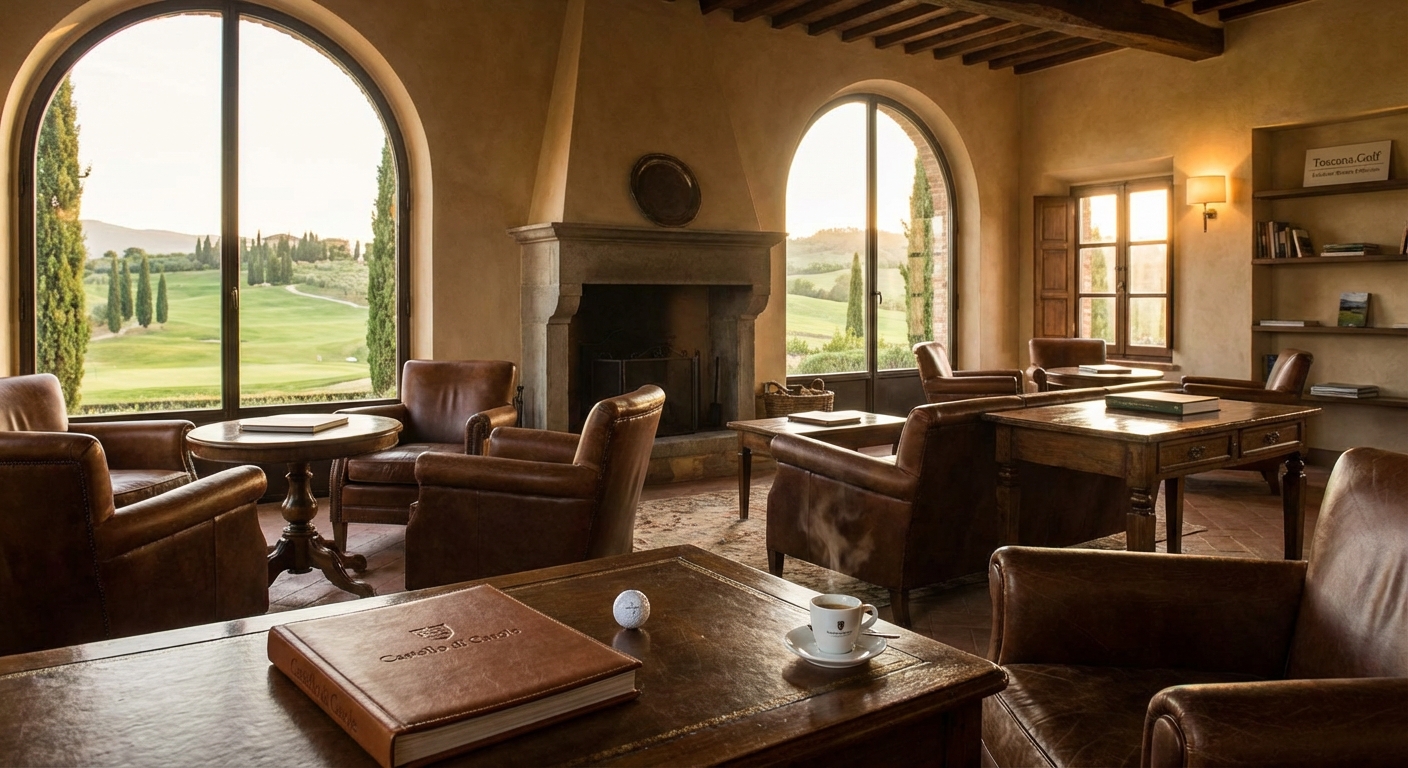
Castello di Casole’s clubhouse overlooks the course and surrounding countryside. The terrace provides sweeping views across Val d’Elsa. The menu features Tuscan specialties made from estate and local ingredients. You might enjoy a Negroni made with the resort’s own gin whilst watching the sun set over olive groves.
Castiglion del Bosco’s approach integrates wine more directly. The 19th hole experience often includes tastings of the estate’s Brunello and other wines. Staff can discuss the vintage you’re drinking, the specific vineyard blocks where the grapes grew, and optimal food pairings. It’s education disguised as relaxation.
Verdura Resort’s multiple dining venues allow variety in your post-round routine. Some days you might want casual fare by the pool. Others, a more formal meal at the main restaurant. The flexibility matches the resort’s overall character.
These spaces are designed for lingering. Comfortable seating. Attentive but unobtrusive service. Menus that work whether you want a light snack or a full meal. The goal is creating an environment where golfers naturally want to spend time recapping their rounds, not rush off to their rooms.
The social aspect matters. You’ll often meet other guests, exchange stories about the course, and share recommendations about the region. This spontaneous interaction is part of the Italian golf resort experience.
Why these resorts matter for the future of European golf
Italy’s luxury golf resorts are redefining what European golf destinations can offer. They’re proving that golf tourism doesn’t require choosing between course quality and cultural depth.
For decades, serious golfers headed to Scotland, Ireland, or Spain for European golf holidays. Italy was an afterthought, somewhere you might play a round whilst primarily focused on art and food.
That’s changing. Properties like Castiglion del Bosco breaking into Golf World’s Top 100 signals that the golf world is recognizing Italian resorts as serious players. These aren’t just pretty courses in nice locations. They’re championship-quality layouts with world-class amenities.
This evolution benefits golfers by expanding options. You can now plan a European golf trip that includes Tuscany or Sicily alongside traditional destinations, knowing the golf won’t be a compromise.
It’s also pushing other European golf destinations to raise their game. When Italian resorts combine top-tier golf with superior food, wine, and cultural access, other regions must respond. The result is better experiences for golfers everywhere.
The Italian model, emphasizing integration of golf into broader cultural and culinary experiences rather than treating golf as isolated from place, offers lessons for golf tourism globally. It suggests that the future of golf travel lies not in generic resort experiences but in properties that offer something unique to their location.
Creating your perfect Italian golf experience
The best luxury golf resorts in Italy deliver experiences that transcend typical golf holidays. You’re not just playing rounds and staying in nice hotels. You’re accessing a way of life that combines sport, culture, cuisine, and landscape in ways that feel both luxurious and authentic.
Start by being honest about your priorities. If golf is paramount and you want to play 36 holes daily on different courses, Verdura’s dual-course setup serves you better than single-course properties. If wine matters as much as golf, Montalcino’s Castiglion del Bosco becomes the obvious choice. If you want easy access to major art cities, Tuscan resorts near Florence and Siena make sense.
Book early, especially for spring and autumn visits. The best resorts have limited rooms and villas, and returning guests often reserve their preferred dates a year in advance.
Work with the resort concierge before arrival to plan key experiences. Don’t wait until check-in to request restaurant reservations or excursions. Share your interests when you book, and let them start crafting your itinerary.
Build in flexibility. Don’t schedule every hour. Leave room for spontaneous discoveries: an unexpected festival in a nearby town, an extra round because conditions are perfect, or simply a long lunch that stretches into evening.
Remember that the golf is just the entry point. The real luxury lies in how these resorts connect you with Italian culture, landscape, and hospitality in ways that feel personal and memorable. You’re not just visiting Italy. You’re experiencing it at its most refined.