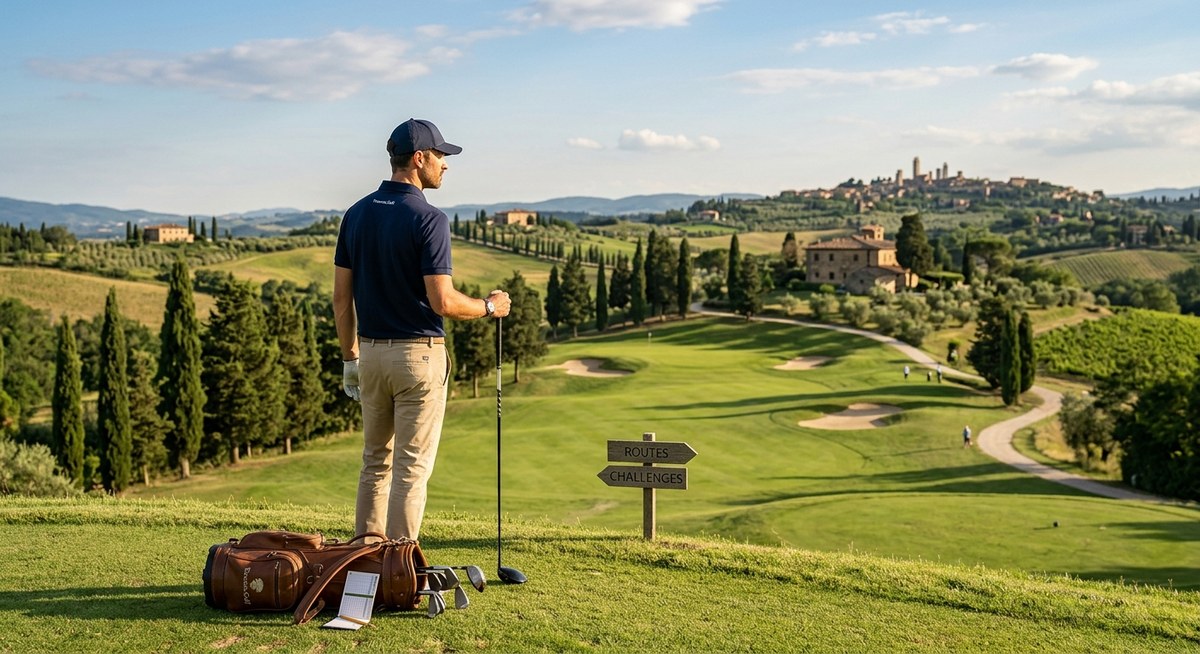
How to Choose the Right Tuscan Golf Course for Your Playing Style and Skill Level
Tuscany feels like a place where every fairway is a painting and every green overlooks a vineyard. But with over a dozen world class courses scattered across rolling hills and coastal plains, the challenge is not finding one. The challenge is picking the right one for your game. If you are an amateur golfer planning your first Tuscan golf holiday, you need more than a list of names. You need a system to match each course to your handicap, your playing style, and the kind of experience you want after the round. This guide will help you choose your Tuscan golf course with confidence, so every drive, chip, and putt feels like it belongs in this landscape.
To choose the right Tuscan golf course, start by knowing your handicap and preferred terrain. Beginners should seek forgiving fairways and shorter layouts, while mid handicappers will enjoy strategic risk reward holes. Low handicappers want championship length and tight greens. Always check slope rating, course style, and resort amenities before booking. Use this guide to match your playing style with Tuscany’s best courses.
Know Your Handicap and Playing Style First
Before you browse course photos or read about clubhouse wines, take a moment to assess your own game. A course that looks stunning on Instagram might leave you frustrated if the layout punishes your weaknesses. Tuscany’s courses vary widely in difficulty, from gentle parkland designs to championship tests carved into hillsides.
Ask yourself these three questions:
- What is my current handicap or typical score range?
- Do I prefer wide fairways or precision target golf?
- Am I comfortable hitting from uneven lies and uphill lies?
Your answers will point you toward the right category. A high handicapper (20+) will enjoy courses like Golf Club La Pinetina near Florence, where the fairways are generous and the rough is forgiving. A mid handicapper (10-19) will appreciate the strategic challenges of a course like Castiglion del Bosco Golf Club, where placement matters more than power. Low handicappers (single figures) should look for championship golf courses in Tuscany that host professional events.
How Course Difficulty Is Measured in Tuscany
Italian courses use the same slope rating and course rating system you know from home. But the numbers can feel different here because of the terrain. A course with a slope of 135 from the white tees might play even harder when the fairway tilts toward a hazard. Always check the rating guide on the club’s website. Then compare it to what you normally play.
Below is a table that matches typical skill levels to course features you will find in Tuscany.
| Skill Level | Ideal Course Length (Yards) | Recommended Slope Range | Key Features to Look For |
|---|---|---|---|
| Beginner (25+ handicap) | 5,000 to 5,600 | Under 115 | Wide fairways, few forced carries, flat greens, practice facilities |
| Intermediate (10-24 handicap) | 5,600 to 6,400 | 115 to 130 | Strategic bunkering, moderate elevation changes, well defined doglegs |
| Advanced (under 10 handicap) | 6,400 to 7,000+ | 130 to 145 | Tight fairways, deep rough, water hazards, undulating greens, multiple tee options |
| Elite (scratch or better) | Over 7,000 | Over 145 | Links style or championship design, fast greens, pressure carries, long carries |
Use this table as a starting point. Then read individual course reviews to see how the slope rating translates to real play.
A Step by Step Process to Choose Your Tuscan Golf Course
Follow these steps to narrow down your options. Each step builds on the last, so you end up with a shortlist that fits your game and your trip.
-
List courses within your driving distance. Tuscany is larger than you think. If you are staying near Siena, do not book a course that is two hours away in Versilia unless you plan a day trip. Use the region guides on this site to see which courses cluster together. For example, if you are based near Florence, look at best golf courses near Florence for combining culture with your game.
-
Check the slope rating and course length for the tees you will play. Most courses offer multiple tee boxes. Choose the set that matches your driving distance, not your ego. If you normally hit your driver 220 yards, a 6,800 yard course from the tips will be a struggle. Look for a course that is 5,800 to 6,200 from the forward or middle tees.
-
Read detailed reviews from other amateurs. Avoid reading only the resort’s own marketing. Find honest feedback about pace of play, condition of bunkers, and how welcoming the staff are. A course that is beautiful but run down will disappoint.
-
Match the course style to your favourite type of golf. Do you love links golf with firm ground and coastal winds? Then consider links style golf in Tuscany coastal courses. Prefer tree lined parkland? Look at inland courses near Chianti or Val d’Orcia. Want vineyard views on every hole? Tuscan vineyard golf courses are a whole category of their own.
-
Factor in post round activities. Your golf holiday is about more than the round. Does the clubhouse offer a good restaurant? Is there a spa for recovery? Are there wine tasting tours nearby? A course that ticks all your golf boxes but sits in a remote area with nothing to do might leave you bored by day three.
Types of Tuscan Courses and Which Suits You
Tuscany’s golf landscape is wonderfully diverse. Here is a quick breakdown of the main course types and the kind of player they suit.
-
Championship courses. Designed for serious golfers. Long, demanding, often with a high green fee. Best for low to mid handicappers who want a test. Examples include Golf Club Ugolino and Castiglion del Bosco.
-
Resort courses. Built as part of a luxury hotel. Usually well maintained but more forgiving. Great for mixed ability groups where some players are beginners. Look at 5 Tuscan resorts that perfectly blend championship golf with spa luxury for options.
-
Vineyard courses. Winding through vineyards and olive groves. Moderate difficulty, stunning scenery. Ideal for couples or golfers who value atmosphere over score. Some have dramatic elevation changes, so check the slope rating if you struggle with hilly terrain.
-
Coastal links. Found near the Maremma coast or Versilia. Exposed to wind, firm fairways, and pot bunkers. Suits players who enjoy a tactical, ground based game. Beginners may find the wind and deep rough challenging.
-
Hidden gem courses. Smaller, quieter, often 9 hole layouts. Perfect for a relaxed round or practice session. Hidden gem golf courses in Southern Tuscany away from crowds can be a treat.
“The best Tuscan golf course for you is the one where you smile at the end of the round, regardless of your score. That means choosing a layout that fits your game, not your ambition.” — experienced Tuscan golf travel consultant
Match Course Design to Your Playing Style
Every golfer has a natural style. Some hit long and straight. Others rely on short game finesse. Tuscany’s courses reward different strengths.
If you are a long hitter who struggles with accuracy, look for courses with generous landing areas and minimal water. Courses in the Chianti region often have wider corridors between vineyards. If you are a short hitter who relies on accuracy, seek flatter courses where you can use your irons off the tee. The Val d’Orcia area has some beautiful, more forgiving layouts.
If you love a walk in nature, choose a woodland course like Golf Club Le Pavoniere. If you want to combine golf with cultural sightseeing, stay near courses close to Florence or Siena. Playing golf in Chianti lets you visit a winery after your round.
Practical Considerations for Your Tuscan Golf Holiday
Beyond the course itself, think about logistics. Tuscany’s roads are winding. Driving 90 minutes after a round and a glass of Chianti is not ideal. Book accommodation that is either on site or a short drive away. Read where to stay for the ultimate Tuscan golf holiday: a resort comparison to find the best base.
Also consider the season. Spring and autumn offer the best playing conditions in 2026. Fairways are firm but not baked, and temperatures hover around 20 degrees. Summer can be hot, especially inland. Coastal courses are cooler but often crowded. Why spring and autumn are the best seasons for Tuscan golf holidays explains the weather patterns.
Finally, check dress code and etiquette. Most Tuscan clubs require collared shirts, tailored shorts or trousers, and soft spikes. Navigating golf club etiquette and dress codes at Tuscany’s premium courses will keep you comfortable.
Your Next Steps to Book the Right Course
Now that you know how to choose a Tuscan golf course that fits your playing style and skill level, it is time to put the plan into action. Write down your handicap, your preferred course features, and the region you want to explore. Then browse our detailed course guides and read honest reviews from other amateur golfers. Book a tee time early, because the best slots fill up months ahead.
A well chosen course will make your Tuscan golf holiday unforgettable. A poor choice will leave you counting the holes until the restaurant opens. Use the steps above, trust your instincts, and remember that in Tuscany, the scenery is always a winner. Even a bad round looks good against a backdrop of cypress trees and hilltop villages.