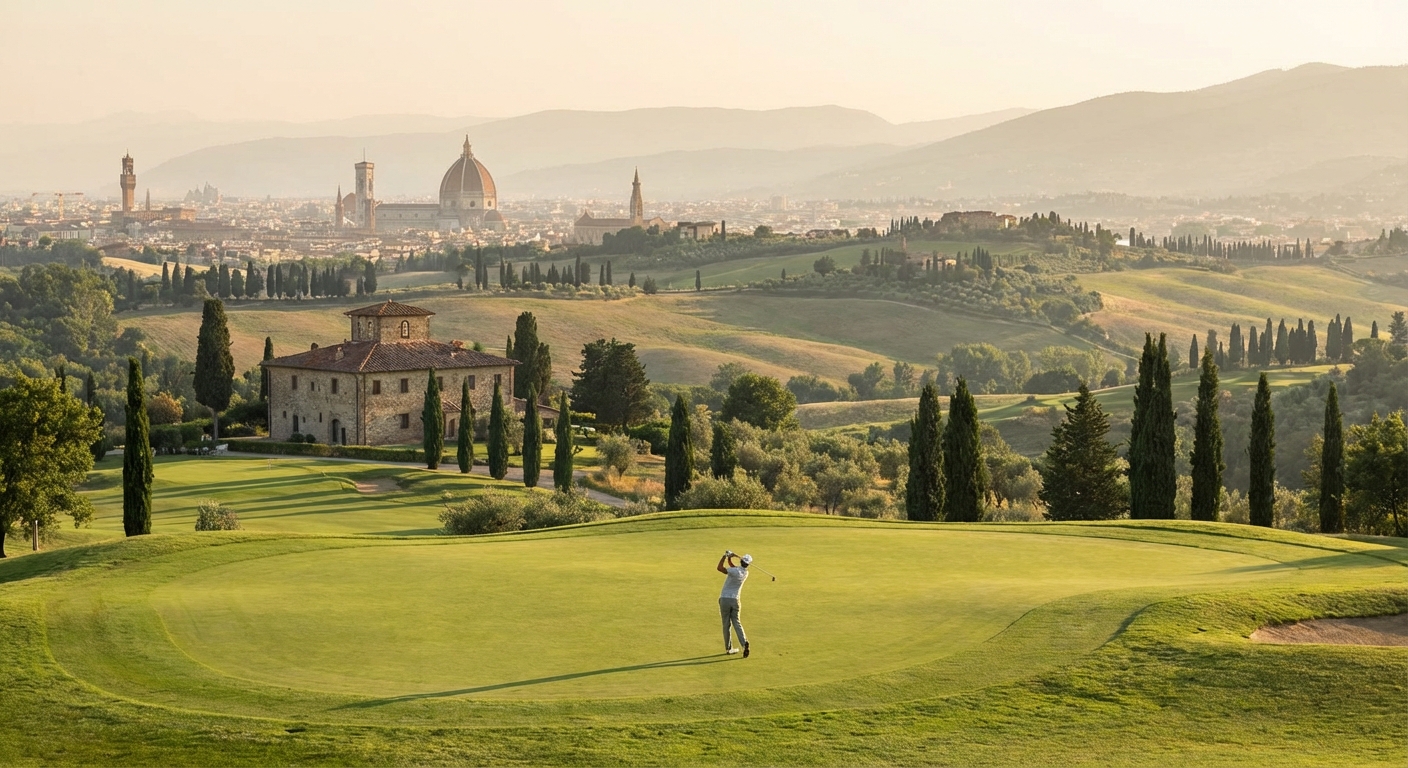
Best Golf Courses Near Florence for Combining Culture with Your Game
Florence isn’t just about the Uffizi and the Duomo. It’s also home to some of Tuscany’s most remarkable golf courses, where you can sink a birdie putt in the morning and stand before a Botticelli by afternoon. The rolling hills surrounding this Renaissance capital offer golfers a rare chance to blend serious play with serious culture, all within easy reach of the city centre.
Florence’s surrounding golf courses offer championship-level play within 30 minutes of world-famous museums, galleries, and historic sites. Golfers can enjoy morning rounds on courses designed by legends like Arnold Palmer, then spend afternoons exploring Renaissance architecture, visiting wine estates, or wandering medieval hilltop towns. This unique combination makes Florence ideal for travellers who refuse to choose between their passion for golf and their love of culture.
Why Florence Works Perfectly for Golf and Culture
Most golf destinations make you choose. Beach resorts or mountain retreats rarely offer much beyond the 19th hole.
Florence is different.
You’re never more than 20 kilometres from a quality course, yet you’re surrounded by art, architecture, and history that draws millions of visitors each year. The logistics work beautifully. Courses open early, museums open later. You can tee off at dawn, finish by lunch, and still have the entire afternoon to wander the Ponte Vecchio or climb the Campanile.
The climate helps too. Spring and autumn offer perfect golfing weather while keeping crowds manageable at cultural sites. Summer mornings are ideal for golf before the midday heat, leaving cooler evenings free for exploring the city.
Top Courses Within Easy Reach of Florence
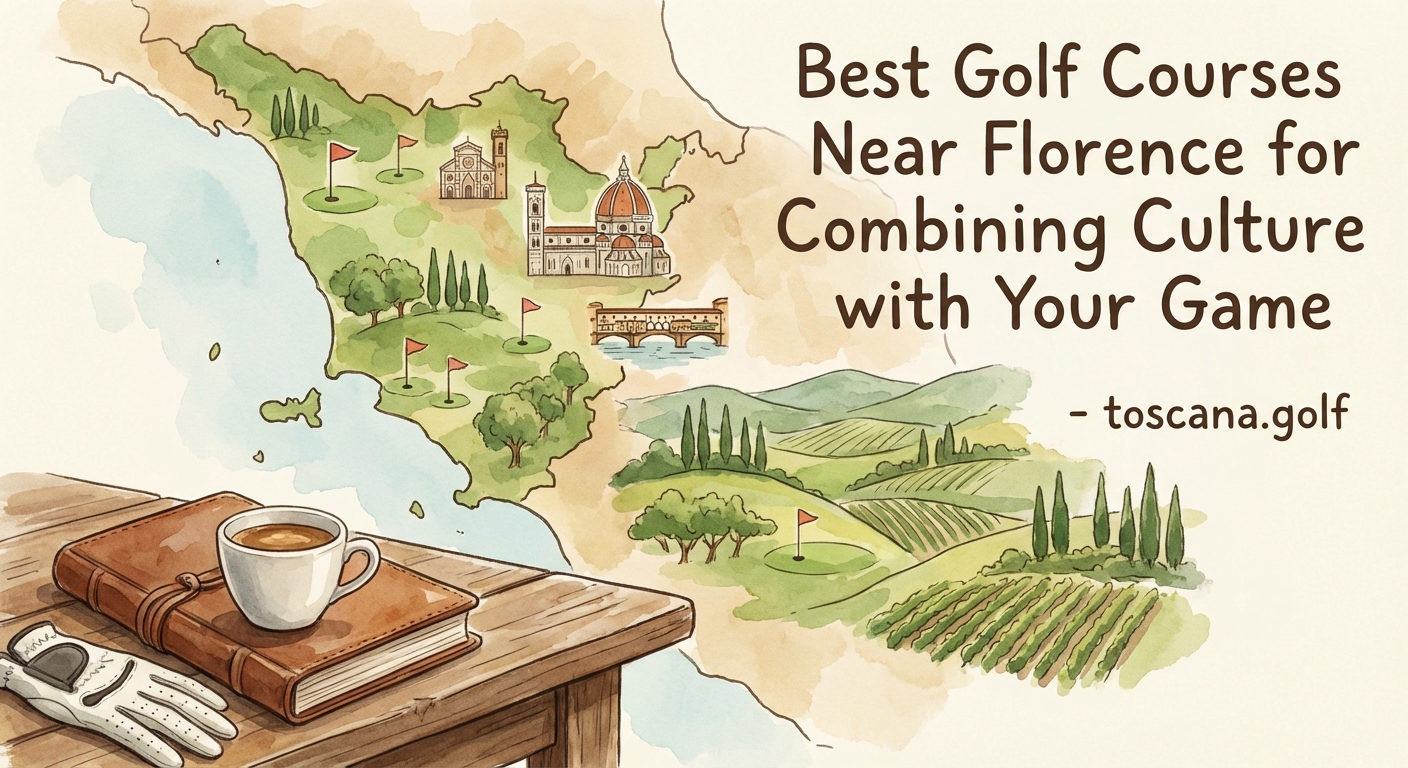
Ugolino Golf Club
Founded in 1889, Ugolino sits just 7 kilometres south of Florence in the Chianti hills. This makes it the closest quality course to the city centre.
The layout winds through cypress-lined fairways with views of medieval towers and Renaissance villas. Par is 72, measuring 5,880 metres from the back tees. It’s not the longest course you’ll play, but accuracy matters more than distance here.
The clubhouse occupies a historic villa, and the terrace overlooks holes 9 and 18. After your round, you’re a 15-minute drive from Piazzale Michelangelo, where you can watch sunset over the entire city.
Golf Club Castelfalfi
Located 45 minutes west of Florence, Castelfalfi offers 27 holes designed by German architect Christoph Städler. The Mountain and Lake nines opened in 2007, with the River nine added later.
This is proper championship golf. The Mountain-Lake combination plays to 6,354 metres with a par of 73. Elevation changes are significant, and several holes require carries over ravines.
What makes Castelfalfi special is the medieval village attached to the resort. The borgo dates to the 12th century and has been carefully restored. You can walk cobblestone streets, dine in a Michelin-recommended restaurant, and stay in converted farmhouses.
It’s also where Renaissance architecture meets modern golf course design in Tuscany, blending historic preservation with contemporary sporting facilities.
Poggio dei Medici Golf & Resort
Thirty minutes north of Florence, Poggio dei Medici delivers an Arnold Palmer Signature Design across rolling Mugello countryside. The course opened in 2000 and quickly became a favourite among serious players.
Par is 73 across 6,450 metres. Water comes into play on several holes, and the bunkering is strategic rather than penal. The back nine is particularly strong, with the par-5 16th offering risk-reward options depending on pin position.
The resort includes a villa-style hotel, making it easy to base yourself here and drive into Florence for afternoon cultural visits. The drive takes you through the same landscape the Medici family travelled centuries ago.
Golf Club Firenze
Don’t confuse this with Ugolino. Golf Club Firenze sits in Grassina, about 10 kilometres southeast of the city centre.
The course plays to 5,450 metres with a par of 70. It’s shorter than championship layouts, but the tight fairways and small greens demand precision. Several holes play uphill, so club selection matters.
This is a members’ club with a traditional feel. Visitors are welcome with advance booking. The proximity to Florence makes it ideal for a morning round before an afternoon at the Accademia or Palazzo Pitti.
Planning Your Days to Maximise Both Interests
Getting the timing right makes all the difference. Here’s how to structure your days for maximum enjoyment.
Morning Golf, Afternoon Culture
- Book tee times between 7:00 and 8:30 AM when courses are quietest and temperatures are coolest.
- Finish your round by noon, allowing time for a shower and light lunch at the clubhouse.
- Arrive in Florence by 2:00 PM, when most tour groups have moved on from major sites.
- Visit one or two museums or churches, then enjoy aperitivo around 6:00 PM.
- Dine late, as Florentines do, savouring the evening without rushing.
This rhythm works particularly well in spring and autumn. Summer heat makes afternoon golf uncomfortable, while winter daylight hours are too short for morning rounds and afternoon sightseeing.
Alternating Days
Some golfers prefer full days dedicated to each pursuit. Play 36 holes one day, then spend the next entirely in Florence without touching a club.
This approach works if you’re staying a week or longer. You can tackle championship golf courses in Tuscany that challenge even seasoned players on golf days, then fully immerse yourself in Renaissance art and architecture on culture days.
Strategic Rest Days
Your body needs recovery, especially if you’re walking 18 holes in hilly terrain. Use these days for lighter cultural activities.
Stroll through the Boboli Gardens. Browse the leather markets at San Lorenzo. Take a cooking class in a Tuscan villa. These experiences complement your golf holiday without demanding the physical intensity of museum marathons or championship rounds.
Cultural Highlights Within 30 Minutes of Major Courses
The geography works beautifully. Most courses sit in zones that also contain significant cultural sites beyond Florence proper.
Near Ugolino
The Certosa del Galluzzo, a 14th-century monastery, sits 3 kilometres from the course. The frescoes in the monks’ cells are extraordinary, and you’ll often have the place nearly to yourself.
Impruneta, famous for its terracotta production since Etruscan times, is 5 kilometres away. Visit workshops where artisans still hand-craft the tiles that top Florence’s iconic domes.
Near Castelfalfi
Volterra, one of Tuscany’s finest Etruscan and medieval towns, is 30 minutes away. The Roman theatre, Etruscan gates, and alabaster workshops make it worth a full afternoon.
San Gimignano, the “medieval Manhattan” with its famous towers, is 20 minutes in the other direction. Arrive late afternoon when day-trippers have left.
Near Poggio dei Medici
The Mugello region itself is culturally rich. Vicchio, birthplace of both Giotto and Fra Angelico, has museums dedicated to both artists.
The Medici villas scattered through these hills are UNESCO World Heritage sites. Villa Cafaggiolo and Villa del Trebbio both sit within 15 minutes of the course.
What Makes Florence Different from Other Golf Destinations
Most golf holidays cluster around coastal resorts or purpose-built golf communities. You play excellent courses but see little beyond manicured fairways and resort architecture.
Florence flips this model. The golf is secondary to the destination, yet the courses are genuinely good. You’re not compromising on quality to access culture. You’re getting both at a high level.
The food culture elevates the experience too. Clubhouse dining often features local wines and seasonal Tuscan cuisine. After golf, you can visit the vineyards that produced your lunch wine or the farms that supplied your pasta.
This integration extends to accommodation. Rather than staying at a golf resort, many visitors base themselves in Florence and drive to courses. You wake in a Renaissance palazzo, play a championship course, then return for evening passeggiata through historic streets.
For those who prefer resort convenience, options like where to stay for the ultimate Tuscan golf holiday provide detailed comparisons of properties that balance golf access with cultural proximity.
Practical Considerations for Combining Both Activities
Logistics matter when you’re juggling tee times and museum hours. Here’s what you need to know.
Transport
Renting a car is essential. Public transport doesn’t serve golf courses well, and taxis become expensive quickly.
Most courses have ample parking. Florence itself is trickier. Park at designated lots on the city outskirts and walk or take a bus into the centre. Trying to drive into the ZTL (limited traffic zone) will earn you a hefty fine.
Booking Strategy
Reserve tee times well in advance, especially for weekend mornings. Ugolino and Poggio dei Medici book up quickly during peak season.
Museum reservations are equally important. The Uffizi and Accademia require advance tickets. Book these around your golf schedule, not the other way around, since tee times are less flexible.
Equipment
Decide whether to bring clubs or rent. Airlines charge £50-75 each way for golf bags. Quality rental sets cost €30-50 per day.
If you’re playing multiple courses, bringing your own clubs makes sense. For one or two rounds, renting is more practical.
Dress Codes
Golf clubs maintain traditional standards. Collared shirts, tailored shorts or trousers, and golf shoes are required. Some clubs don’t allow denim even in the clubhouse.
Florence’s churches enforce dress codes too. Shoulders and knees must be covered. Carry a light shawl or wear trousers that work for both golf clubhouses and cathedrals.
Seasonal Timing for the Best Experience
| Season | Golf Conditions | Cultural Sites | Overall Value |
|---|---|---|---|
| Spring (March-May) | Excellent. Courses lush, temperatures mild. | Moderate crowds, pleasant weather for walking. | Peak season for both activities. |
| Summer (June-August) | Hot afternoons. Morning tee times essential. | Very crowded at major sites. Book everything. | Good for early risers willing to manage heat. |
| Autumn (September-November) | Perfect. Cooler, fewer players, harvest season. | Crowds thin after September. Ideal conditions. | Best overall value and experience. |
| Winter (December-February) | Playable but short days. Some rain. | Quietest museums, shortest queues. | Budget-friendly but limited daylight. |
Autumn deserves special mention. September through early November offers the best combination of weather, availability, and atmosphere. Courses are less busy, museums manageable, and the harvest brings food and wine festivals throughout the region.
This timing also aligns well with planning your first golf holiday in Tuscany, as autumn provides the most forgiving conditions for visitors new to the region.
Common Mistakes and How to Avoid Them
Even experienced travellers make predictable errors when combining golf with cultural tourism. Here’s what to watch for.
Overambitious scheduling. Trying to play 18 holes and visit three museums in one day leaves you exhausted and unable to enjoy either properly. Choose one major activity per day.
Ignoring siesta culture. Many smaller museums and churches close from 12:30 to 3:00 PM. Plan around these hours rather than fighting them.
Underestimating walking. Florence requires kilometres of walking on cobblestones. After 18 holes, your legs are already tired. Pace yourself and wear comfortable shoes.
Skipping smaller courses. Ugolino and Firenze aren’t championship layouts, but their proximity to Florence makes them incredibly convenient. Don’t dismiss them in favour of distant courses that eat up travel time.
Forgetting wine. Tuscany’s wine culture connects directly to both golf and cultural tourism. Many courses sit near excellent wineries. Where to find Tuscany’s best wine pairings after your round helps you make the most of this unique advantage.
Beyond Florence Proper
While this guide focuses on courses near Florence, the broader region offers compelling options worth considering if you have extra days.
The Maremma coast, two hours south, combines links-style golf with Etruscan ruins and thermal springs. Why Maremma is Tuscany’s hidden gem for golf and coastal luxury covers this area in detail.
Siena, an hour south, offers medieval splendour and several quality courses. The Palio horse race, held twice each summer, is one of Italy’s most spectacular cultural events.
The Chianti region between Florence and Siena deserves exploration. How Tuscan vineyard golf courses combine wine country charm with exceptional play details courses set among famous wine estates.
Making the Most of Clubhouse Culture
Italian golf clubs maintain strong social traditions. The clubhouse isn’t just a place to change shoes. It’s where members gather, business gets done, and visitors experience authentic local culture.
Arrive early enough to have coffee on the terrace before your round. Italians take their pre-game rituals seriously.
After golf, don’t rush off. Order a spritz or glass of Chianti and watch other groups finish. You’ll often strike up conversations with members who can recommend hidden cultural gems or local restaurants.
Many clubhouses feature excellent restaurants open to the public. The food often surpasses what you’ll find in tourist-heavy Florence. The art of the 19th hole explores the best clubhouse dining experiences across Tuscany.
“The beauty of golf in Florence is that you’re never just playing golf. Every course sits in a landscape shaped by centuries of art, agriculture, and architecture. You’re not escaping culture to play golf. You’re adding another dimension to your cultural experience.” — Marco Benvenuti, PGA Professional at Ugolino Golf Club
Photography Opportunities On and Off the Course
Golfers who enjoy photography find Florence particularly rewarding. The courses themselves offer stunning vistas, while cultural sites provide endless subjects.
Morning rounds catch the best light on fairways. The golden hour just after dawn illuminates cypress trees and distant villas beautifully. Bring a compact camera that fits in your golf bag.
Several courses rank among the 7 most scenic golf courses in Tuscany for photography enthusiasts, offering compositions that blend sport and landscape.
In Florence, early morning and late afternoon provide the best light for architectural photography. The crowds thin too, making it easier to capture iconic sites without hordes of tourists in frame.
Creating Your Perfect Golf and Culture Itinerary
Here’s a sample week that balances both interests without feeling rushed.
Day 1: Arrive Florence, settle in, evening walk through city centre.
Day 2: Morning round at Ugolino, afternoon at Uffizi Gallery, evening in Oltrarno neighbourhood.
Day 3: Full cultural day, Duomo complex, Accademia, evening cooking class.
Day 4: Morning round at Poggio dei Medici, afternoon visiting Medici villas, dinner at course restaurant.
Day 5: Day trip to Siena, no golf, full cultural immersion.
Day 6: Morning round at Castelfalfi, afternoon exploring the borgo, stay overnight at resort.
Day 7: Leisurely breakfast, visit San Gimignano or Volterra, return to Florence evening.
This pace allows proper recovery while experiencing both championship golf and major cultural sites. Adjust based on your priorities and energy levels.
For help structuring a longer stay, how to plan a week-long golf holiday in Tuscany without the stress provides detailed planning frameworks.
When Golf and Renaissance Art Inform Each Other
Something interesting happens when you spend mornings on perfectly manicured fairways and afternoons studying Renaissance masterpieces. You start noticing connections.
The same principles of proportion, perspective, and composition that govern a Brunelleschi dome apply to golf course architecture. The strategic thinking required to navigate a challenging hole mirrors the intellectual rigour of Renaissance humanism.
Tuscan landscape painting makes more sense after you’ve stood on an elevated tee box watching morning mist lift from cypress-lined valleys. The colours in a Ghirlandaio fresco match exactly the autumn hillsides you drove through to reach the course.
These aren’t forced connections. They emerge naturally when you engage deeply with both pursuits in the same place. Florence offers this integration better than anywhere else.
Why This Combination Creates Lasting Memories
Most golf trips blur together after a few years. You remember good rounds and bad weather, but the destinations fade.
Florence stays with you differently. You remember the specific putt you made on Ugolino’s 18th, but also the Caravaggio you saw that afternoon at the Palatina Gallery. The round at Castelfalfi connects to the medieval tower you climbed in San Gimignano the same day.
The cultural depth gives your golf holiday context and meaning beyond scores. The golf gives you a reason to be active outdoors, balancing the indoor hours museums require.
This combination appeals particularly to golfers travelling with non-golfing partners. Everyone gets what they want without compromise. One person plays golf while the other visits museums, then you reunite for lunch and explore together.
For couples or groups with mixed interests, this flexibility makes Florence ideal. How to plan a golf holiday in Tuscany includes specific advice for coordinating different interests within the same trip.
Where Sport Meets Art in Perfect Balance
Florence proves you don’t need to choose between your passions. The best golf courses near the city offer championship-level play that respects your time, leaving afternoons free for Renaissance masterpieces and evenings for Tuscan wine.
The courses are good enough to satisfy serious players. The cultural offerings are world-class. The food and wine elevate everything. And the landscape ties it all together in a way that feels both natural and extraordinary.
Start planning now. Book your tee times, reserve your museum tickets, and prepare for a golf holiday unlike any other. The fairways and frescoes of Florence are waiting.