How Tuscan Vineyard Golf Courses Combine Wine Country Charm with Exceptional Play
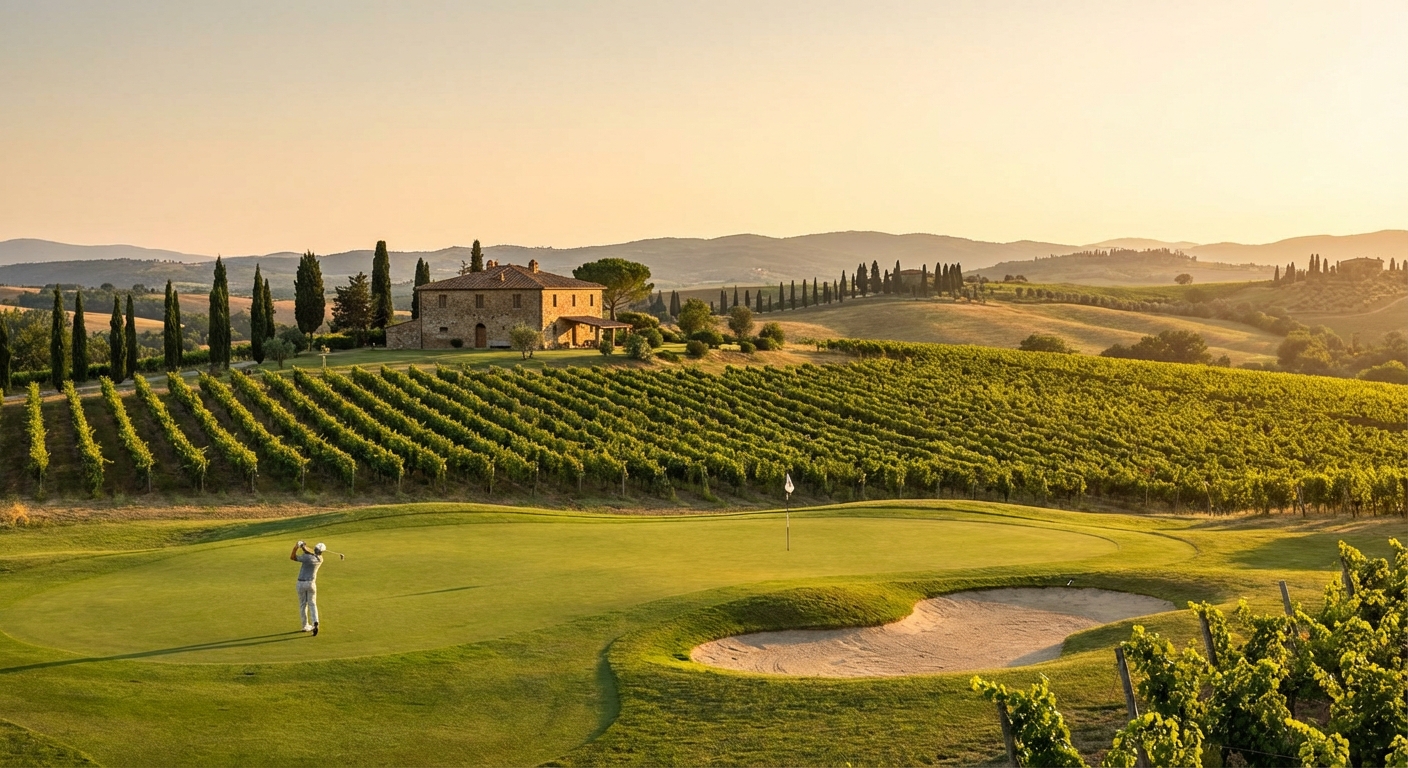
There’s something extraordinary about standing on the first tee with rows of Sangiovese vines stretching toward medieval hilltop villages. Tuscan vineyard golf courses offer more than just another round. They deliver an experience where every hole tells a story of terroir, tradition, and sporting excellence. These aren’t courses that happen to be near wineries. They’re designed to celebrate the landscape that makes Tuscany’s wines legendary.
Tuscan vineyard golf courses combine championship-quality fairways with working wine estates, offering affluent travellers a unique blend of sport and viticulture. From Castiglion del Bosco’s Brunello cellars to coastal Maremma properties, these courses integrate premium play with wine tastings, estate tours, and luxury accommodation. Most properties offer packages that include rounds, cellar visits, and sommelier-led experiences, creating holidays where golf and gastronomy share equal billing.
Where vines meet fairways in Tuscany’s golf landscape
The best vineyard golf courses in Tuscany aren’t accidents of geography. They’re carefully planned estates where course architects worked alongside viticulturists to create layouts that respect both sporting challenge and agricultural heritage.
Castiglion del Bosco sits at the heart of the Brunello di Montalcino region. The Tom Weiskopf-designed course winds through 800 hectares of protected countryside, with fairways carved between ancient olive groves and productive vineyards. You’ll play past vines that produce some of Italy’s most celebrated wines. The estate maintains strict organic farming practices across both golf course and vineyard, ensuring the landscape remains pristine.
In Maremma, Argentario Golf Resort occupies a different viticultural zone entirely. Here, Mediterranean breezes influence both grape growing and course conditions. The fairways follow natural contours through cork oak forests and vineyard parcels producing Morellino di Scansano. It’s a different Tuscany from the postcard-perfect Chianti hills, but equally compelling for golfers who appreciate variety.
Ugolino Golf Course near Florence takes a different approach. Rather than being part of a wine estate, it neighbours historic vineyards in the Chianti Classico zone. The course itself dates to 1934, making it one of Italy’s oldest layouts. Members and visitors can arrange vineyard tours at neighbouring properties, creating a golf and wine experience without the integrated estate model.
Planning your vineyard golf experience step by step
Booking a vineyard golf holiday requires different considerations than a standard resort trip. Here’s how to approach it properly.
-
Choose your wine region first, then select courses. Brunello di Montalcino offers different experiences from Chianti Classico or coastal Maremma. Each zone has distinct characteristics in both wine style and landscape. If you prefer full-bodied, age-worthy reds, focus on Montalcino properties. For earlier-drinking wines and gentler hills, look toward Chianti.
-
Book tee times and cellar visits simultaneously. The best vineyard estates coordinate both experiences. When you reserve your round at Castiglion del Bosco, for example, their concierge can schedule a private tasting with the estate winemaker for later that afternoon. Timing matters because harvest season (late September through October) offers unique experiences but busier schedules.
-
Consider accommodation on the estate versus nearby. Properties like Castiglion del Bosco offer luxury villas and suites directly on property. You’ll wake up with views over the course and vineyards. Other courses work with nearby agriturismi or boutique hotels. Staying on-site maximises convenience but costs more. Nearby accommodation often provides more authentic local experiences and better value.
-
Plan non-golf activities for travel companions. Not everyone in your party may want to play 18 holes daily. Vineyard estates typically offer cooking classes, truffle hunting, spa treatments, and guided tours through medieval towns. Where to stay for the ultimate Tuscan golf holiday covers how different properties cater to mixed-interest groups.
-
Build in rest days between rounds. Tuscan courses often feature significant elevation changes. Even fit golfers find walking these layouts more demanding than flat parkland courses. Schedule wine tours, cultural excursions, or simple relaxation days between your rounds. Your body and your scorecard will thank you.
What makes these courses different from standard resort golf
Vineyard golf courses face unique design constraints that shape how they play. Understanding these differences helps you appreciate what you’re experiencing.
Elevation changes are dramatic and constant. Tuscany’s rolling hills don’t flatten out for golf convenience. You’ll face uphill approaches, downhill tee shots, and sidehill lies throughout your round. Club selection becomes more art than science when you’re hitting from a slope to an elevated green with a 15-metre change in elevation.
Microclimates affect different holes distinctly. A course that winds through vineyard parcels encounters the same weather variations that create different grape-growing zones. One hole might play in full sun with firm conditions whilst the next, sheltered by a hillside, remains softer and cooler. Wind patterns shift as you move through valleys and over ridges.
Hazards incorporate agricultural features. Stone walls that once marked property boundaries now define out-of-bounds areas. Irrigation channels built for vineyards become water hazards. Ancient oak trees protected for centuries create strategic obstacles. These aren’t manufactured challenges. They’re authentic landscape features that happened to suit golf design.
“The best vineyard golf courses don’t fight the landscape. They reveal it. Every hole should make you more aware of why this particular hillside produces exceptional grapes.” — Golf course architect commenting on Tuscan vineyard layouts
Course and wine pairing strategies that work
| Course Type | Wine Style Match | Why It Works | Common Mistake to Avoid |
|---|---|---|---|
| Championship layouts with significant elevation | Full-bodied Brunello or Nobile | Complex wines match challenging golf; both reward patience | Drinking heavy wines at lunch before afternoon round |
| Shorter, strategic courses | Chianti Classico Riserva | Finesse over power in both experiences | Rushing the tasting to get back to golf |
| Links-style coastal courses | Fresh Vermentino or rosato | Sea breezes influence both wine and course conditions | Ignoring white wines in favour of only reds |
| Parkland courses through estates | Super Tuscans and IGT blends | Modern approach to traditional landscape | Assuming estate wine is automatically premium |
The timing of your tastings matters as much as the wine selection. Morning rounds followed by lunch and afternoon cellar visits work better than the reverse. You’ll appreciate the wines more when you’re relaxed rather than focused on an upcoming tee time.
Many estates offer progressive tasting experiences. You might sample younger vintages in the vineyard itself, understanding how terroir influences the grapes. Then move to the cellar for aged reserves, tasting how time develops complexity. Finally, enjoy current releases with a meal that showcases local ingredients.
Where to find Tuscany’s best wine pairings after your round provides detailed guidance on matching specific courses with nearby wine experiences.
The practical realities of vineyard course conditions
Tuscan vineyard golf courses maintain different agronomic standards than you might expect from resort courses in other regions. Understanding why helps set appropriate expectations.
Organic and sustainable practices limit certain maintenance options. Estates committed to organic viticulture extend those principles to golf course management. You won’t find the chemical-dependent perfection common at some resort courses. Fairways may show more variation in grass density. Greens might run slightly slower than pure bentgrass surfaces.
Seasonal variations are pronounced. Spring brings wildflowers and lush conditions but also more unpredictable weather. Summer offers reliable sunshine but firmer, faster surfaces. Autumn provides ideal temperatures and harvest-season atmosphere, though some areas may be busier with vineyard activity. Winter golf is possible but expect limited services and course closures during poor weather.
Walking is encouraged and sometimes required. Many vineyard courses either don’t offer carts or restrict them to specific paths to protect the landscape. The same hills that create dramatic golf holes also make for demanding walks. Consider your fitness level honestly when booking.
Understanding what you’re actually paying for
Vineyard golf course pricing reflects more than just the round itself. Here’s what’s typically included and what costs extra.
- Green fees at top vineyard courses: Expect £150-300 per round depending on season and property prestige
- Estate wine tastings: Often complimentary for overnight guests, £40-80 for visitors
- Private winemaker sessions: £200-400 for small groups with reserve wine access
- Golf and wine packages: Usually offer better value than booking separately, £400-600 per person for two nights with golf and tastings
- Equipment hire: Standard £40-60 for quality clubs, though some estates offer premium brands at higher rates
The best value comes from multi-day packages that bundle accommodation, golf, and wine experiences. Single-round visitors pay premium rates because estates prioritise guests staying on property.
Courses that truly integrate wine country character
Not every golf course near vineyards qualifies as a genuine vineyard golf experience. The difference lies in how deeply the wine culture integrates with the golf offering.
Castiglion del Bosco sets the standard. The course routing deliberately showcases different estate parcels, with holes named for vineyard plots and wine varieties. The clubhouse features an enoteca pouring the estate’s Brunello vintages. Caddies can explain which vines you’re seeing on each hole and how soil changes affect both golf and grape growing.
Argentario Golf Resort in Maremma combines coastal and vineyard character. Several holes play directly through productive vineyard rows. The resort’s restaurant sources ingredients from the estate farm and features an extensive Tuscan wine list emphasising Maremma producers. Why Maremma is Tuscany’s hidden gem for golf and coastal luxury explains what makes this region special for golfers seeking less-travelled destinations.
Poggio dei Medici near Florence takes a different approach. The course occupies a historic Medici hunting estate that now includes vineyards producing Chianti Rufina. The integration feels more subtle, with vineyard views rather than fairways running through active cultivation. It suits golfers who want wine country atmosphere without agricultural activity immediately adjacent to play.
How weather patterns affect both golf and grapes
The same climatic factors that create ideal grape-growing conditions influence your golf experience. Understanding these connections adds depth to your holiday.
Diurnal temperature variation (the difference between day and night temperatures) that helps grapes maintain acidity also means cool mornings even in summer. Pack layers for early tee times. By afternoon, temperatures may climb 15-20 degrees.
Rainfall patterns concentrate in spring and autumn, with dry summers. This matches the grape-growing cycle perfectly but means summer golf plays firm and fast. Greens may be watered separately from fairways to maintain playability whilst respecting water conservation.
Wind exposure varies dramatically by location. Hilltop holes experience stronger breezes that both cool the air and challenge shot-making. Valley holes play more protected but can be warmer. The same wind patterns that moderate temperatures for grape growing will affect your club selection.
Making the most of shoulder season opportunities
Peak summer and harvest season attract the most visitors, but shoulder periods offer distinct advantages for golf-focused travellers.
Late April through May provides excellent conditions with fewer crowds. Vineyards show fresh growth, wildflowers bloom across the landscape, and temperatures suit walking the course comfortably. You’ll miss harvest atmosphere but gain better availability and often lower rates.
October delivers the full vineyard golf experience. Harvest activity creates energy across estates. Grape colours shift from green to purple. Cellar tours show active fermentation. The trade-off is busier properties and premium pricing. Book well in advance if you want October dates.
November offers a middle path. Harvest concludes, crowds thin, but weather often remains pleasant for golf. Some properties close for the season, but those remaining open provide excellent value and unhurried service.
How to plan a week-long golf holiday in Tuscany without the stress walks through seasonal considerations in detail.
Beyond the course and cellar
The best vineyard golf estates recognise that world-class experiences extend beyond fairways and fermentation tanks. Look for properties offering these complementary elements.
Cooking classes using estate ingredients connect you to Tuscan food culture. You might prepare pappa al pomodoro using tomatoes grown on property, or learn proper pici pasta technique from a local chef. These sessions typically include wine pairings featuring estate bottles.
Guided nature walks through the property reveal landscape details you’d miss otherwise. Knowledgeable guides explain how soil composition changes across the estate, why certain slopes face south for optimal sun exposure, and how biodiversity supports both viticulture and golf course health.
Spa treatments incorporating wine therapy sound gimmicky but the better properties offer legitimate wellness experiences. Grape seed scrubs, wine barrel baths, and treatments using estate olive oil provide relaxation after a demanding round.
The art of the 19th hole covers how the best clubhouses extend your enjoyment well after you’ve holed your final putt.
What sets championship vineyard courses apart
Some Tuscan vineyard golf courses offer tournament-quality challenges whilst others focus on recreational enjoyment. Knowing the difference helps you choose appropriately.
Championship golf courses in Tuscany that incorporate vineyard settings demand accurate shot-making and course management. Castiglion del Bosco stretches over 6,700 metres from the back tees with a slope rating that challenges single-digit handicappers. Narrow landing areas, severe green contours, and strategic bunkering punish mistakes.
Mid-handicap golfers often enjoy these courses more from forward tees. The scenery remains spectacular, the wine experiences identical, but the golf becomes enjoyable rather than punishing. Don’t let ego dictate tee selection when you’re meant to be on holiday.
When architecture and viticulture collaborate
The most successful vineyard golf courses result from genuine collaboration between course architects and wine estate managers. Where renaissance architecture meets modern golf course design in Tuscany examines how historical context influences contemporary layouts.
Tom Weiskopf’s work at Castiglion del Bosco exemplifies this approach. He spent extensive time walking the property with estate viticulturists, understanding which parcels produced the finest grapes and therefore couldn’t be disturbed. The routing evolved to showcase rather than disrupt the working agricultural landscape.
Architects working on vineyard properties face constraints that actually improve the final product. They can’t simply move earth to create ideal golf holes. Instead, they must work with existing topography, respect productive vineyard areas, and preserve historical features. These limitations force creativity that results in more interesting, memorable golf.
Capturing the experience beyond your scorecard
The 7 most scenic golf courses in Tuscany for photography enthusiasts includes several vineyard properties where the visual experience rivals the sporting challenge.
Early morning and late afternoon provide the best light for photography. Mist often fills valleys at dawn, creating atmospheric conditions as it burns off. Late afternoon sun illuminates hillsides and casts long shadows that emphasise the landscape’s contours.
Bring a quality camera or ensure your phone has sufficient storage. You’ll want to capture not just golf action but also vineyard details, architectural elements, and the broader landscape. Many estates welcome photography but ask that you avoid disturbing other golfers or vineyard workers.
Why this matters for your next golf holiday
Tuscan vineyard golf courses represent something genuinely different from standard resort golf. They’re not better or worse, just distinct. The question isn’t whether they’re worth visiting but whether they match what you’re seeking from a golf holiday.
If you value setting as much as scorecard, appreciate wine culture, and enjoy experiences where sport integrates with landscape and tradition, these courses deliver something special. Planning your first golf holiday in Tuscany provides the practical framework for turning interest into a booked trip.
The combination of championship golf, world-class wines, and Tuscan hospitality creates holidays that satisfy multiple interests. You’ll return home with stories about brilliant recovery shots and exceptional Brunello vintages in equal measure. That’s exactly the point.