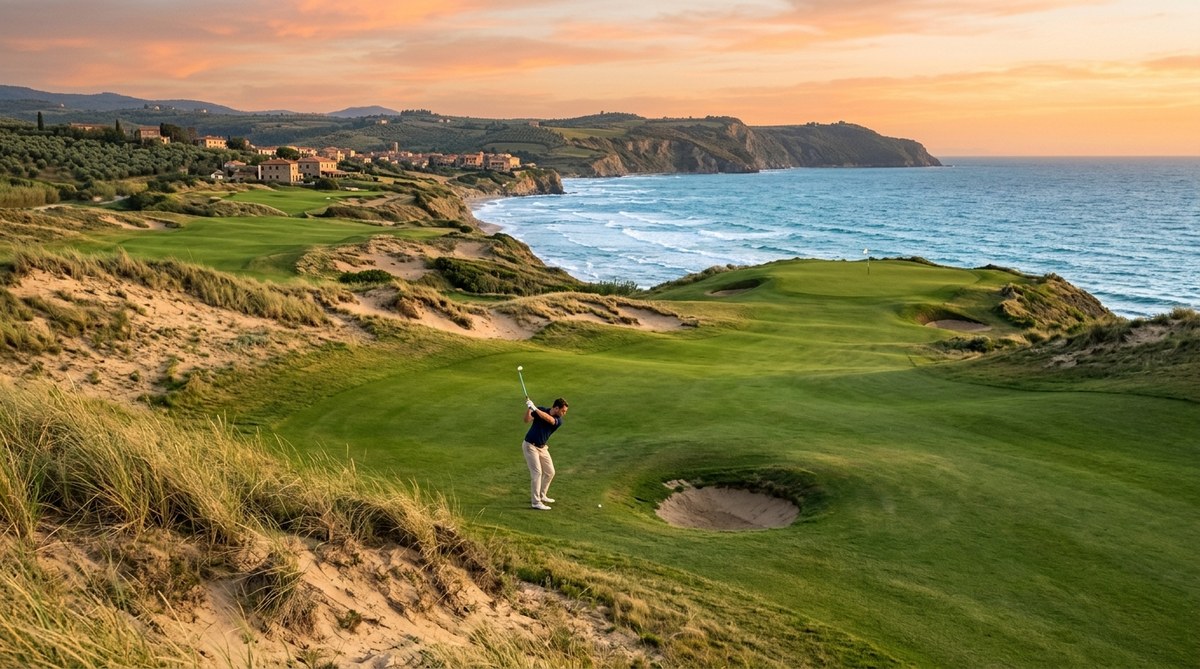
Links-Style Golf in Tuscany: Coastal Courses Worth the Journey
Tuscany offers more than rolling vineyards and Renaissance art. The region has quietly become one of Europe’s most compelling golf destinations, blending world-class course design with landscapes that would distract even the most focused player. Whether you’re after a challenging championship test or a leisurely round followed by exceptional wine, the golf courses in Tuscany deliver experiences you won’t find anywhere else.
Tuscany features over 20 exceptional golf courses spanning Florence, Siena, and the Maremma coast. Top venues include Castelfalfi, Poggio dei Medici, and Argentario Golf Club. Most courses welcome visitors year-round, with spring and autumn offering ideal conditions. Expect green fees from €80 to €200, with resort packages combining accommodation, golf, and wine experiences for the complete Tuscan holiday.
Why Tuscany stands out among European golf destinations
The region’s geography creates natural drama. Courses wind through medieval estates, climb hillsides planted with cypress trees, and stretch along Mediterranean coastline. You’ll tee off with views of 13th-century castles, then finish your round on a terrace overlooking vineyards that have produced wine since Roman times.
The climate helps too. Tuscany enjoys mild winters and long summers, making golf possible nearly every month. Spring brings wildflowers across the fairways. Autumn offers comfortable temperatures and fewer crowds.
What sets Tuscany apart is how golf integrates with the broader holiday experience. Most courses sit within or near luxury resorts that understand their guests want more than just 18 holes. After your morning round, you might tour a working winery, take a cooking class, or simply relax at a spa that uses local thermal waters.
Premier courses near Florence and Siena
The heart of Tuscany concentrates several outstanding venues within easy reach of the region’s cultural centres.
Castelfalfi Golf Club occupies a 1,100-hectare estate in the Montaignana Valley. The course stretches to 6,800 metres from the championship tees, designed to challenge low handicappers whilst remaining playable for higher handicaps from forward tees. Water features prominently on the back nine, where two lakes guard several greens. The clubhouse sits in a restored medieval village, creating an atmosphere you won’t find at modern resort developments.
Poggio dei Medici Golf Resort lies 30 minutes north of Florence. This 18-hole championship layout opened in 1995 and quickly earned recognition for its conditioning and strategic design. The front nine plays through gently rolling terrain, whilst the back nine climbs into hillier ground with elevation changes that test club selection. Many holes frame views of the Mugello Valley. If you’re staying in Florence and want to combine culture with your game, this venue makes an excellent choice.
Royal Golf La Bagnaia near Siena offers a different character. The course plays shorter at just under 6,000 metres, but tight fairways lined with mature trees demand accuracy over length. Several holes run alongside the property’s historic villa, now a luxury hotel. The practice facilities include a double-ended range and excellent short game area.
Coastal courses in the Maremma region
Tuscany’s southern coastline hosts courses that take advantage of Mediterranean views and sea breezes.
Argentario Golf Club sits on a hillside overlooking the Tyrrhenian Sea. The layout features dramatic elevation changes, with several holes playing downhill towards the water. The par-3 5th hole drops nearly 40 metres from tee to green, with the sea forming a stunning backdrop. Wind becomes a factor on exposed holes, adding challenge to what’s already a demanding test. The coastal luxury of the Maremma region attracts golfers seeking a different side of Tuscany.
Golf Club Punta Ala occupies a pine forest peninsula jutting into the Mediterranean. The course opened in 1964, making it one of Tuscany’s oldest. Tall maritime pines line every fairway, creating a links-like feel despite the tree cover. Several holes run close to the shoreline, where you can hear waves breaking between shots. The par-4 6th hole plays directly towards the sea, with out-of-bounds right and trees left leaving little margin for error.
Terme di Saturnia Golf Club combines golf with access to the region’s famous thermal springs. The course plays through rolling countryside dotted with olive groves. After your round, you can soak in naturally heated pools that have attracted visitors since Etruscan times. The resort package makes this an excellent option for couples where one partner might prefer spa treatments to golf.
How to choose the right course for your game
Matching your skill level and preferences to the right venue ensures you’ll enjoy your Tuscan golf experience.
-
Assess your handicap honestly. Championship courses like Castelfalfi and Poggio dei Medici reward good ball-striking but punish wayward shots. If you play to a handicap above 20, you’ll have more fun at shorter, more forgiving layouts.
-
Consider your travel base. Courses near Florence and Siena work well if you’re combining golf with cultural sightseeing. Coastal venues suit dedicated golf holidays where you’ll play multiple rounds.
-
Check seasonal conditions. Summer temperatures can exceed 35°C at inland courses, making early tee times essential. Spring and autumn offer the most comfortable playing conditions across the region.
-
Factor in travel time. Tuscany’s winding roads mean distances take longer than you’d expect. A course showing 50 kilometres from your hotel might require 75 minutes of driving.
“The biggest mistake I see from visiting golfers is underestimating how much the landscape affects play. These aren’t flat parkland courses. You’ll face uneven lies, blind shots, and elevation changes that alter club selection. Take an extra club on uphill approaches and trust your yardage book.” – Marco Benedetti, Head Professional at Castelfalfi
Understanding green fees and booking procedures
Golf in Tuscany costs less than comparable destinations in France or Spain, though prices vary significantly by venue and season.
| Course Type | Peak Season (April-October) | Off-Peak (November-March) | Booking Window |
|---|---|---|---|
| Resort Championship | €150-€200 | €100-€150 | 3-6 months advised |
| Established Private Club | €100-€150 | €70-€100 | 1-3 months sufficient |
| Municipal/Public | €60-€90 | €40-€60 | 2-4 weeks adequate |
Most courses accept online bookings through their websites. Resort courses often bundle green fees with accommodation packages, offering better value than booking separately. Many venues require handicap certificates, typically accepting any recognised national system.
Tee time availability varies by day and season. Weekends book fastest, especially at courses near Florence. If your schedule allows flexibility, weekday rounds offer better availability and sometimes reduced rates.
What to pack for Tuscan golf conditions
The region’s varied terrain and climate require thoughtful preparation.
- Soft spikes are mandatory at all courses
- Sun protection including high-SPF sunscreen and a wide-brimmed hat
- Layers for morning rounds when temperatures start cool
- Extra golf balls, as water hazards and native areas can be unforgiving
- Range finder or GPS device, since many courses lack yardage markers on sprinkler heads
- Comfortable walking shoes if you prefer to walk, though most courses offer carts
- Light rain jacket even in summer, as afternoon thunderstorms occasionally develop
Most clubhouses maintain dress codes requiring collared shirts and prohibiting denim. Standards tend toward the formal side compared to British or American courses.
Combining golf with Tuscany’s wine culture
One of the region’s unique advantages is how seamlessly golf integrates with wine experiences.
Several courses sit within working wine estates. Tuscan vineyard golf courses let you tour cellars and taste wines made metres from the fairways you just played. Castelfalfi produces its own Chianti and Vernaccia. The resort offers guided tastings that explain how Tuscan viticulture evolved over centuries.
Many golf resorts partner with nearby wineries for afternoon tours. After a morning round, you might visit a Super Tuscan producer in Bolgheri or a Brunello estate in Montalcino. These experiences typically include cellar tours, tastings of multiple vintages, and lunch featuring local cuisine.
The best clubhouses understand that the 19th hole experience matters as much as the golf itself. Tuscany’s most luxurious golf clubhouse experiences feature extensive wine lists showcasing regional producers, often with sommeliers who can recommend pairings for traditional Tuscan dishes.
Planning your multi-course golf itinerary
A week in Tuscany allows time to experience several courses whilst enjoying the region’s other attractions.
Day 1-2: Florence Base
Arrive in Florence. Play Poggio dei Medici on day two, allowing time to adjust to travel and local conditions. Spend afternoons in Florence seeing the Duomo, Uffizi Gallery, or simply wandering medieval streets.
Day 3-4: Siena and Chianti
Transfer to Siena. Play Royal Golf La Bagnaia or Castelfalfi. Use free time to tour Chianti wine country, stopping at hilltop villages like San Gimignano.
Day 5-7: Coastal Maremma
Move to the coast. Play Argentario Golf Club and Punta Ala. Balance golf with beach time, seafood dinners, and thermal spa visits at Saturnia.
This routing minimises driving whilst showcasing Tuscany’s geographic diversity. You’ll experience inland countryside courses and coastal layouts, stay in different types of accommodation, and see multiple facets of Tuscan culture.
For those who want a more structured approach, planning a week-long golf holiday removes the guesswork from logistics and bookings.
Common mistakes visiting golfers make
Learning from others’ experiences helps you avoid predictable problems.
Underestimating course difficulty: Tuscan courses often play harder than their yardage suggests. Elevation changes, firm conditions in summer, and strategic bunkering punish poor shots. Don’t let a modest total length fool you into thinking a course will play easy.
Poor timing around Italian holidays: August sees many Italians on holiday, creating crowds at coastal courses and resorts. Easter week also gets busy. Shoulder seasons offer better availability and rates.
Neglecting advance bookings: Popular courses fill weeks ahead during peak season. Assuming you can book upon arrival often leads to disappointment. Secure tee times when you book accommodation.
Skipping practice facilities: Many Tuscan courses feature challenging opening holes. Arriving 45 minutes early to hit balls and roll putts prevents starting your round cold on a demanding first tee shot.
Ignoring local customs: Italian golf culture tends more formal than British or American norms. Dress codes matter. Pace of play expectations exist. Mobile phones should stay silent. Respecting these conventions ensures you’re welcomed back.
Facilities and amenities to expect
Tuscan golf venues generally maintain high standards, though facilities vary by property type.
Resort courses typically offer full-service clubhouses with restaurants, pro shops stocking major brands, locker rooms, and practice areas including ranges, putting greens, and short game zones. Many provide club rentals from quality manufacturers. Cart availability is standard, though walking is permitted and sometimes encouraged.
Smaller private clubs might have more modest facilities. Clubhouses could be simpler, with limited food service. Practice areas might consist of a small range and single putting green. These venues often compensate with character and charm that newer resort courses lack.
Most courses employ English-speaking staff, recognising international visitors form a significant portion of their business. Pro shops can arrange lessons, typically costing €60-€100 per hour. Some courses offer playing lessons where a professional accompanies you for several holes, providing real-time feedback.
The best seasons for Tuscan golf
Timing your visit affects both playing conditions and overall experience.
Spring (March-May): Ideal temperatures ranging 15-25°C. Courses emerge from winter dormancy with fresh growth. Wildflowers bloom across fairways and rough. Occasional rain showers possible but rarely disruptive. This season sees moderate crowds and reasonable green fees.
Summer (June-August): Hot and dry, with temperatures often exceeding 30°C. Courses play firm and fast, adding distance but reducing forgiveness. Early morning tee times essential to avoid midday heat. Coastal courses benefit from sea breezes. Peak season pricing applies. August brings Italian holiday crowds.
Autumn (September-November): Many consider this Tuscany’s finest season. Comfortable temperatures return. Grape harvest creates special atmosphere at vineyard courses. Changing foliage adds visual interest. Fewer tourists mean better availability. Green fees often drop after October.
Winter (December-February): Mild by northern European standards, with daytime highs around 10-15°C. Golf remains possible most days, though some courses close for maintenance. Significant savings on green fees and accommodation. Best for dedicated golfers who prioritise value and don’t mind cooler conditions.
Getting the most from your Tuscan golf experience
Small adjustments to your approach maximise enjoyment and performance.
Rent a car with sufficient boot space for golf bags and luggage. Public transport doesn’t serve most courses well. GPS navigation is essential, as rural course locations can be tricky to find.
Build buffer time into your schedule. Italian roads wind through hills and villages where speed limits drop suddenly. What looks like a 30-minute drive might take 50 minutes. Rushing to tee times creates stress that affects your game.
Embrace the pace of play. Italians approach golf as a social activity, not a race. Five-hour rounds aren’t unusual. If you’re accustomed to faster play, adjust expectations rather than fighting the culture.
Try local specialties at clubhouse restaurants. Tuscan cuisine emphasises simple preparations of excellent ingredients. Ribollita soup, bistecca alla fiorentina, and pici pasta appear on most menus. Pair lunch with a glass of local wine to complete the experience.
Consider resorts that blend championship golf with spa luxury if you’re travelling with a non-golfing partner. These properties ensure everyone enjoys the holiday.
Making your Tuscan golf holiday happen
The region’s golf courses offer something rare: world-class facilities in settings of genuine historical and natural beauty. You won’t find this combination in purpose-built golf destinations that lack cultural depth.
Start by identifying which courses match your priorities. Championship challenge? Coastal views? Vineyard setting? Championship golf courses that challenge seasoned players await if you want a serious test. Those seeking visual drama might prefer the most scenic courses for photography enthusiasts.
Book tee times and accommodation simultaneously, ideally three to six months ahead for peak season travel. Many resorts offer packages that simplify planning whilst providing better value than piecing together separate bookings.
Pack appropriately for varied conditions. Bring layers, sun protection, and extra balls. Confirm handicap certificate requirements with each course.
Most importantly, allow time between rounds to experience Tuscany beyond the golf course. The region’s art, architecture, food, and wine deserve attention. The best golf holidays balance time on the course with cultural experiences that make Tuscany special.
Where your Italian golf story begins
Golf in Tuscany succeeds because the region never tries too hard. The courses fit naturally into landscapes shaped by centuries of agriculture and habitation. You’ll play shots with medieval towers in view, then enjoy wine made from grapes growing beside the fairway.
The golf itself ranges from genuinely challenging championship tests to relaxed resort courses where scenery matters as much as score. Whatever your ability, you’ll find layouts that engage your game whilst showcasing why Tuscany attracts millions of visitors each year.
Start planning now. Research courses that match your interests. Compare resort packages. Block dates on your calendar. The golf courses in Tuscany reward those who make the journey with experiences that blend sport, culture, and landscape in ways few destinations can match.