
How to Plan a Golf Holiday in Tuscany: A Complete Timeline from Booking to Arrival
Planning your first golf trip to Tuscany feels like assembling a puzzle with wine-soaked pieces. You’ve got flights, tee times, accommodation, and that nagging worry you’ll forget something crucial. The good news? Thousands of golfers have walked this path before you, and there’s a rhythm to it that makes the whole process surprisingly manageable once you know the steps.
Planning a Tuscan golf holiday requires a six to twelve month timeline. Book flights and accommodation first, secure tee times three months ahead, arrange car hire and travel insurance eight weeks out, and finalise dining reservations one month before departure. This structured approach prevents last-minute scrambles whilst ensuring you secure the best courses and properties during peak season.
Start with Your Travel Dates and Budget Framework
Your departure date dictates everything else. Spring (April to May) and autumn (September to October) offer the best playing conditions without the August heat or winter rain. These shoulder months also mean lower accommodation rates and more available tee times.
Set a realistic budget before you start browsing. A seven-night Tuscan golf holiday typically runs between £2,500 and £5,000 per person, depending on accommodation standard and course selection. This includes flights, car hire, lodging, green fees, and meals. If you’re travelling with a partner who doesn’t play golf, add another £800 for their activities and experiences.
Break down your budget into categories:
- Flights: £200 to £400 return
- Accommodation: £800 to £2,500 for the week
- Green fees: £400 to £800 for four rounds
- Car hire: £250 to £400
- Dining and wine: £600 to £1,200
- Activities and experiences: £200 to £500
This framework prevents scope creep when you start seeing those gorgeous villa rentals or championship golf courses in Tuscany that challenge even seasoned players.
The Twelve Month Countdown Timeline
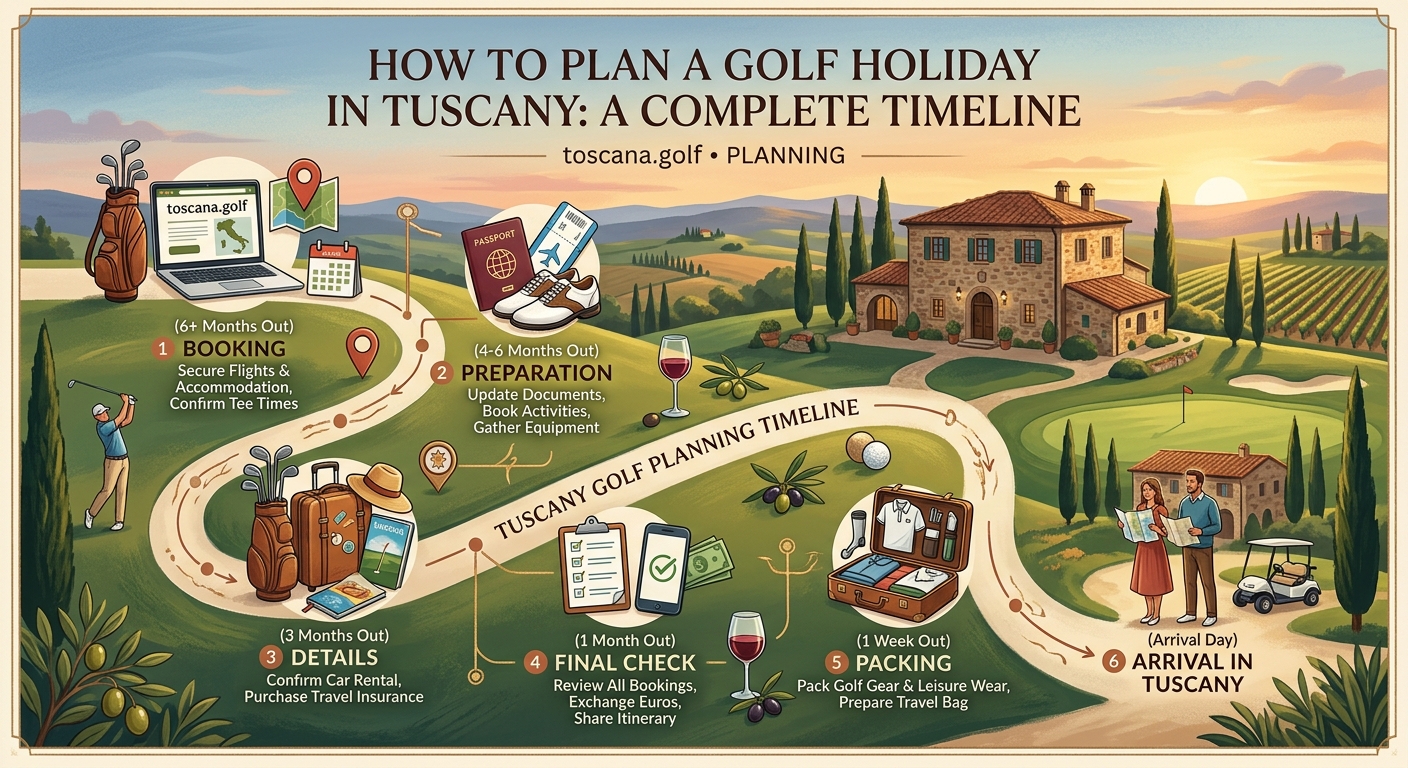
Here’s the practical month-by-month breakdown that takes you from initial planning to standing on the first tee.
Months 12 to 9: Research and Vision Setting
This is your dreaming phase, but with spreadsheets. Research which region of Tuscany suits your style. Florence and Chianti offer cultural immersion with solid golf. The Maremma coastline provides links-style courses and beach access. Val d’Orcia delivers those postcard-perfect rolling hills.
Read course reviews. Watch YouTube walkthroughs. Join the Facebook groups where golfers share recent trip reports. Create a shortlist of six to eight courses you’d like to play.
Decide whether you want a single base or a two-location split. Staying put simplifies logistics. Moving halfway through adds variety but costs time and energy.
Months 8 to 6: Lock Down Flights and Accommodation
Book your flights now. Pisa and Florence airports serve most of Tuscany well. Rome works if you’re starting further south. Tuesday and Wednesday departures typically cost less than weekend flights.
Your accommodation choice shapes the entire trip. Where to stay for the ultimate Tuscan golf holiday: a resort comparison covers the major options, but here’s the summary:
| Accommodation Type | Best For | Typical Cost | Booking Window |
|---|---|---|---|
| Golf resort with course | Convenience, guaranteed tee times | £150-300/night | 6-8 months |
| Countryside villa | Groups, families, cooking at home | £200-500/night total | 8-12 months |
| Boutique hotel in town | Culture, dining scene, flexibility | £120-250/night | 4-6 months |
| Agriturismo farmstay | Authentic experience, wine focus | £80-180/night | 3-6 months |
Properties with on-site courses book fastest. If you want Castelfalfi or Argentario Golf Resort during peak season, reserve nine months ahead.
Months 5 to 4: Secure Your Tee Times
Most Tuscan courses accept bookings three to six months in advance. Some require email requests rather than online booking. Don’t assume you can just show up.
Create a prioritised list of your must-play courses. Contact them directly via email with your preferred dates and times. Morning tee times (8:00 to 10:00) offer cooler temperatures in summer and better course conditions year-round.
Expect to pay green fees in advance or provide credit card details. Cancellation policies vary wildly. Some clubs refund with 48 hours’ notice. Others keep your deposit regardless.
“Book your signature round first. If there’s one course that defines your trip, secure that tee time before anything else. Everything else can flex around it.” — Course booking manager at a major Tuscan golf club
Months 3 to 2: Transportation and Insurance
Arrange your car hire now. You’ll need it unless you’re staying at a resort that shuttles you everywhere. Automatic transmission costs more but reduces stress on winding Tuscan roads. Book through a comparison site, then check the rental company’s direct website for potential savings.
Add all drivers to the insurance. The £8 per day feels expensive until you’re the tired passenger who needs to take over driving.
Travel insurance matters more than you think. Standard policies cover trip cancellation and medical emergencies. Golf-specific add-ons cover equipment loss, hole-in-one celebrations, and unused green fees if you get injured mid-trip.
Month 1: Final Details and Reservations
This is when planning shifts from big decisions to polishing details. Book restaurants for special evenings. Tuscany’s best trattorias fill up, especially on weekends. If you want to experience where to find Tuscany’s best wine pairings after your round, make those reservations now.
Confirm all your tee times via email. Print or save confirmations to your phone. Italian golf clubs sometimes lose bookings in their systems.
Check your clubs are flight-ready. Airline golf bag policies change constantly. Some carriers include golf bags in your standard allowance. Others charge £30 to £60 each way.
Download offline maps for your phone. Tuscan countryside has patchy mobile coverage. Google Maps lets you save entire regions for offline use.
Weeks 2 to 1: Pack and Prepare
Create a packing list that goes beyond golf gear:
- Golf essentials: clubs, shoes, gloves, balls, tees, rangefinder
- Clothing: layers for variable weather, smart casual for evenings
- Sun protection: high SPF sunscreen, hat, sunglasses
- Documents: passport, driving licence, insurance papers, tee time confirmations
- Technology: phone chargers, plug adapters (Italy uses Type L), portable battery
- Comfort items: blister plasters, pain relief, antihistamines
Check the weather forecast but don’t obsess over it. Tuscan weather shifts. Pack for 15°C to 30°C and you’ll manage.
Notify your bank you’re travelling. Nothing kills holiday joy like a frozen credit card when you’re trying to pay a green fee.
Common Planning Mistakes and How to Avoid Them
Even experienced travellers stumble when planning their first Tuscan golf trip. Here are the errors that crop up repeatedly.
Underestimating driving times. That course looks close on the map, but Tuscan roads wind through hills. What Google Maps calls 45 minutes often takes 75. Add 30% to all estimated driving times.
Overscheduling golf days. Playing 18 holes, driving to a new region, and squeezing in a wine tasting sounds feasible on paper. In reality, you’ll be exhausted. Limit yourself to one major activity beyond golf each day.
Ignoring siesta culture. Many courses and restaurants close from 13:00 to 15:30. That “lunch after golf” plan might leave you eating crisps in a car park.
Booking back-to-back early tee times. Your body needs recovery time, especially if you’re playing courses with significant elevation changes. Schedule at least one rest day or late tee time during a week-long trip.
Forgetting about luggage space. You’ll buy wine. Everyone does. Either pack light initially or budget for an extra checked bag on the return flight.
Building Flexibility Into Your Plan
Rigid itineraries crack under Tuscan sun. Weather shifts. You discover a restaurant that demands a return visit. Your back protests after three consecutive days of golf.
Build buffer days into your schedule. If you’re staying seven nights, plan golf for four or five days maximum. Use the gaps for:
- Sleeping in and leisurely breakfasts
- Exploring nearby towns without rushing
- Spa treatments or pool time
- Spontaneous wine tastings
- Simply sitting in a piazza with good coffee
The art of the 19th hole: Tuscany’s most luxurious golf clubhouse experiences often matters as much as the golf itself. Don’t schedule yourself so tightly you can’t enjoy those moments.
Group Travel Considerations
Travelling with three other golfers changes the planning equation. You’ll need larger accommodation, potentially two cars, and coordination that solo travellers skip.
Appoint one person as lead organiser. Shared responsibility sounds democratic but leads to duplicated bookings and missed details. One person books, everyone else reimburses promptly.
Collect deposits early. The friend who promises to “sort you out next week” delays bookings and creates tension. Set a payment deadline and stick to it.
Agree on pace of play expectations before you go. If one person plays off 8 and another off 24, discuss whether you’re comfortable with five-hour rounds. Better to address it at home than on the course.
Solo Golfer Planning Adjustments
Travelling alone offers freedom but requires different preparation. Many courses welcome single players and will pair you with others. Some prefer advance notice.
Budget slightly more for accommodation. Per-person costs rise when you’re not splitting a villa or hotel room. Agriturismo farmstays often offer better solo rates than hotels.
Join online communities before you travel. Facebook groups and forums help you connect with other golfers visiting simultaneously. You might find playing partners or dinner companions.
Consider a structured package for your first solo trip. Companies specialising in Tuscan golf holidays handle logistics whilst giving you independence. You can always go fully independent on trip number two.
When Plans Need to Change
Flight delays happen. Weather cancels rounds. You tweak your ankle on day two. Having contingency plans reduces stress.
Keep a list of alternative courses near your accommodation. If your scheduled course is waterlogged, you can pivot to a backup without scrambling.
Understand cancellation policies for everything you book. Courses, restaurants, and activities all have different rules. Screenshot the terms when you reserve.
Purchase travel insurance that covers golf-specific scenarios. Standard policies might not reimburse unused green fees or cover club damage in transit.
Save emergency contacts: your accommodation, car hire company, travel insurance provider, and the British Consulate in Florence. You probably won’t need them, but having the numbers ready provides peace of mind.
Your Pre-Departure Checklist
One week before you leave, run through this final verification:
- Passport valid for at least six months beyond return date
- All confirmations saved digitally and printed
- Travel insurance active and documents accessible
- Bank and credit card companies notified of travel dates
- Accommodation addresses entered into GPS or maps app
- Golf clubs inspected and travel cover fitted
- Prescriptions filled and packed in carry-on luggage
- Phone set up for international use or local SIM purchased
- Emergency contact list shared with someone at home
- Guidebook or saved articles for non-golf activities
This might feel excessive, but ticking these boxes takes 30 minutes and prevents hours of stress abroad.
Making Your Timeline Work for You
The structure outlined here works for most golfers planning their first Tuscan trip. Your circumstances might demand adjustments. Travelling during off-season? You can compress the timeline. Organising a corporate golf event? Extend it and add contingency planning.
The core principle remains constant: start early, book the non-negotiables first, and leave breathing room for spontaneity. Tuscany rewards the prepared traveller who stays open to unexpected delights.
Your golf holiday planning doesn’t end when you board the plane. It evolves into experiencing the trip you designed. But standing on that first tee, knowing your accommodation is sorted, your next three rounds are booked, and tonight’s restaurant is expecting you, that’s when the planning pays off.
The region’s combination of world-class golf, exceptional food and wine, and stunning landscapes makes it worth the effort. Take it one step at a time, follow the timeline that works for your travel style, and you’ll create a trip that exceeds the version you imagined twelve months earlier.